
Abstract
AimThe incidence of carotid artery stenosis is increasing globally with an aging population. Carotid endarterectomy is a surgical treatment for severe carotid stenosis. However, hypertension, which frequently develops after carotid endarterectomy, significantly increases postoperative morbidity and mortality. While various causes of post-endarterectomy hypertension have been proposed, the exact mechanism remains unclear. This study aims to investigate whether the duration of carotid clamping influences the development of post-endarterectomy hypertension.Methods80 patients who underwent carotid endarterectomy between 2022 and 2024 were included in the study. Eight patients were women (10%), and 72 were men (90%). Their average age was 70.83. The average carotid artery clamp time during the operations was 13.8 minutes. Arterial hypertension values were measured and recorded 1 hour before and 1 hour after the surgery. The relationship between the cross-clamp duration applied to the internal, common, and external carotid arteries during carotid endarterectomy and the subsequent postoperative hypertension values was examined.ResultsIn this study involving 80 patients who underwent carotid endarterectomy, a statistically significant relationship was found between the cross-clamp duration applied to the carotid artery and postoperative hypertension. Significant increases were observed in systolic and diastolic blood pressure values with the cross-clamp duration (P < .001). ConclusionThe prolongation of cross-clamp time during carotid endarterectomy is associated with an increased degree of hypertension observed postoperatively. These findings suggest that efforts to minimize cross-clamp times could reduce the risk of hypertension and improve patient outcomes. Future studies should investigate the effects of different surgical techniques and patient management protocols on hypertension, providing additional data to prevent this complication.
Keywords
Introduction
Carotid artery disease has an essential place among atherosclerotic cardiovascular diseases. Carotid artery stenosis resulting from atherosclerosis is an important global problem in terms of mortality and morbidity in elderly societies. Severe carotid artery stenosis can lead to a decrease in cerebral blood flow, which can lead to severe complications such as ischemic and hemorrhagic stroke and, ultimately, death. Therefore, treatment should be initiated before these complications develop in severe carotid artery stenosis. Despite advances in medical and technological fields, open carotid endarterectomy remains the most frequently performed treatment for severe carotid artery stenosis.1 This surgical procedure is the preferred treatment method and has high success rates. However, these surgeries still carry certain risks of complications. These complications can range from relatively mild conditions such as facial hypoesthesia, hoarseness, and facial asymmetry to more severe outcomes like stroke in serious cases.2 A common complication observed after carotid endarterectomy is arterial hypertension. Like other complications, postoperative hypertension can also be severe. Various reasons have been suggested for the development of hypertension after carotid endarterectomy; however, the exact mechanisms of this hypertension are not fully understood.3 Regardless of the etiology, postoperative hypertension and its severity are associated with increased rates of stroke and mortality.4 Additionally, this hypertensive complication itself can lead to other complications, such as intracranial hemorrhage and stroke.
This study aimed to investigate the effect of cross-clamp duration on postoperative hypertension in patients who underwent carotid endarterectomy. For this purpose, systemic arterial blood pressure values were recorded 1 hour before and 1 hour after surgery for 80 patients who underwent carotid endarterectomy between 2022 and 2024. The relationship between the cross-clamp duration applied to the carotid artery during carotid endarterectomy and postoperative systemic arterial blood pressure values was analyzed.
Materials and Methods
Eighty patients who underwent carotid endarterectomy between 2022 and 2024 were included in the study. This retrospective study was conducted by the principles of the Declaration of Helsinki. Medical records were reviewed from the hospital database for information regarding preoperative, intraoperative, and postoperative periods.
Among the patients, 8 were female (10%), and 72 were male (90%), with an average age of 70.83. The average cross-clamp time for the carotid artery during the surgeries was 13.8 minutes. Blood pressure values were recorded using a cuff on the same arm 1 hour before and 1 hour after surgery. Preoperative blood pressure measurements were taken on the left arm before the patients entered the operating room. For the study, postoperative blood pressure measurements were also taken on the same left arm. The relationship/correlation between the total cross-clamp duration applied to the internal, common, and external carotid arteries during the surgery and the systolic and diastolic arterial blood pressure values recorded one hour before and one hour after the surgery was examined for statistical significance.
Based on the assumption that postoperative hypertension after carotid endarterectomy mainly results from transient carotid sinus baroreceptor dysfunction, we analyzed only the first postoperative hour, when this effect is most evident. To avoid confounding from ICU antihypertensive therapy, blood pressure was measured invasively from the left radial artery with patients supine and head elevated 45°, all performed in the same ICU by a team with identical training.Surgical TechniquePatients included in the study had unilateral carotid artery stenosis of 70% or more. All surgeries were performed by the same surgical team with the classical carotid endarterectomy technique. All carotid endarterectomy procedures were conducted with general anesthesia, without the use of shunts, and employing primary closure techniques. All patients underwent standardized intraoperative hemodynamic management and anesthetic protocols, including the use of general anesthesia, continuous arterial pressure monitoring, and vasoactive agents as clinically indicated. The duration from applying the clamp to the internal carotid artery until its removal was defined as the total cross-clamp time. The study measured the average cross-clamp duration for carotid arteries in 80 cases at 13.8 minutes.Ethical ApprovalThis study was approved by the Ethics Committee of Kastamonu University, Faculty of Medicine (Date: 07.02.2024, Decision No: 22).Statistical AnalysisAll statistical analyses were performed using SPSS 25 software (IBM SPSS Statistics, IBM Corporation, Chicago, IL). The normality of the data distribution was assessed using the Shapiro-Wilk test. Non-parametric tests were employed for data that did not meet the normal distribution. The Wilcoxon signed-rank test compared systolic and diastolic blood pressure values before and after surgery. The relationship between postoperative systolic and diastolic blood pressure and cross-clamp time was analyzed using the Spearman correlation test. Additionally, the relationship between preoperative and postoperative blood pressure values and cross-clamp duration was examined through partial correlation analysis. A P value of <0.05 was considered statistically significant for all analyses. Tables and graphs supported results according to the level of significance.
Reporting GuidelinesThis study was reported according to the STROBE guidelines.
Results
The systolic and diastolic blood pressure values before and after surgery were compared using the Wilcoxon test. The median systolic blood pressure values were 140 mmHg (110–160) preoperatively and 160 mmHg (130–230) postoperatively. The mean values increased from 140.5 ± 13.1 mmHg before surgery to 162.5 ± 24.2 mmHg after surgery. The P value (<0.001) indicates that the increase in postoperative systolic blood pressure is statistically significant.
A similar increase was observed in diastolic blood pressure as well. The median diastolic blood pressure values were 90 mmHg (70–110) preoperatively and 100 mmHg (70–120) postoperatively. The mean values were 89.1 ± 10.3 mmHg before surgery and 100.1 ± 12.1 mmHg after surgery. The P value (<0.001) indicates that the postoperative diastolic blood pressure increase is also statistically significant.
These results indicate a significant increase in systolic and diastolic blood pressure postoperatively. The median systolic blood pressure rose from 140 mmHg to 160 mmHg, and this difference is statistically significant (P < .001). The mean blood pressure values also showed a significant increase after surgery. The median diastolic blood pressure increased from 90 mmHg to 100 mmHg, which is also statistically significant (P < .001). Significant increases were observed in both systolic and diastolic blood pressure values and mean blood pressure values. The P values obtained from the Wilcoxon test for both types of blood pressure were P < .001, indicating a statistically significant difference between preoperative and postoperative blood pressure values. These values are shown in Table 1.
The relationship between carotid cross-clamp duration and postoperative systolic and diastolic blood pressure values in patients undergoing carotid endarterectomy was found to be significant, with correlation coefficients of r = 0.795 (P < .001) for systolic blood pressure and r = 0.756 (P < .001) for diastolic blood pressure. The relationship between the increased blood pressure values after surgery and the clamp duration during the operation was analyzed using the Spearman correlation. The Spearman correlation coefficient (r = 0.765) indicated a strong positive relationship between the duration of the clamp and the increase in postoperative systolic blood pressure compared to preoperative values. This suggests that the postoperative systolic blood pressure also tends to rise as the clamp duration increases. The P value <0.001 demonstrates that this relationship is statistically highly significant. The Spearman correlation coefficient (r = 0.756) indicates a strong positive relationship between the duration of the clamp and postoperative diastolic blood pressure. This implies that the postoperative diastolic blood pressure also rises as the clamp duration increases. The P value <0.001 demonstrates that this relationship is statistically significant. Both postoperative systolic and diastolic blood pressure values show a positive and significant relationship with the clamp duration. Notably, the correlation between systolic blood pressure and clamp time (r = 0.795) is higher than that between diastolic blood pressure and clamp time (r = 0.756).
Partial correlation analysis was conducted to examine the relationship between the clamp duration and preoperative and postoperative blood pressure values. The partial correlation coefficient for systolic blood pressure between preoperative and postoperative values was r = 0.392, which is statistically significant (P < .001). This indicates a moderate positive relationship between preoperative and postoperative systolic blood pressure when controlling for clamp duration. For diastolic blood pressure, the partial correlation coefficient was r = 0.348, which is also statistically significant (P = .002). A positive relationship is observed between the clamp duration and preoperative and postoperative diastolic blood pressure. These results suggest that the clamp duration is related to postoperative blood pressure values, with the relationship being statistically stronger for systolic blood pressure than for diastolic blood pressure. Correlation analyses between clamp duration and blood pressure values are shown in Table 2.
In the multivariate logistic regression analysis, carotid clamp duration above the determined cut-off value was found to be a strong independent predictor of postoperative systolic hypertension (OR = 0.002, 95% CI 0.000–0.039, P < .001). Other variables, including age, hypertension, diabetes mellitus, chronic kidney disease, smoking status, coronary artery disease, preoperative systolic blood pressure, and antihypertensive drug use, were not significantly associated with postoperative systolic hypertension in the adjusted model. These data are shown in Table 3. Receiver operating characteristic (ROC) curve analysis was performed to evaluate the predictive value of clamp duration for postoperative hypertension. The analysis demonstrated excellent discrimination, with an area under the curve (AUC) of 0.930 (95% CI: 0.864–0.995, P < .001). The optimal cut-off value for clamp duration, determined using the Youden index, was 12.5 minutes, yielding a sensitivity of 90.5% and a specificity of 89.5% for predicting clinically significant postoperative hypertension. The predictive value of clamp duration for postoperative hypertension is demonstrated in the ROC curve, as shown in Figure 1.
Among the patients who developed postoperative hypertension, initial management was performed with intravenous nitroglycerin according to ICU protocols. In cases resistant to nitroglycerin, beta-blockers were administered based on the patient’s heart rhythm. Blood pressure was successfully controlled in all cases within the early postoperative period. No cases of intracranial hemorrhage, cerebral hyperperfusion syndrome, or perioperative stroke were observed. No in-hospital mortality occurred.
Discussion
Carotid artery disease is a severe cardiovascular disease. Serious carotid artery stenosis, if left untreated, can lead to a reduction in cerebral blood flow, resulting in severe complications such as ischemic and hemorrhagic strokes, ultimately leading to death. Therefore, particularly in patients with stenosis of 70% or more, surgical interventions may be necessary. Surgical treatment options include open carotid endarterectomy and endovascular treatment methods to improve patients’ quality of life and reduce the risk of complications. The decision for surgical intervention should be based on the patient’s overall condition and the severity of stenosis, tailored to meet individual needs.1
The surgical treatment of carotid artery disease was first described in 1953 by Michael DeBakey, who performed the first carotid endarterectomy technique.5 Since then, carotid endarterectomy has remained one of the safest surgical methods today. However, various complications may occur following carotid artery surgeries.6 These complications can range from mild facial numbness and temporary neurological symptoms to severe outcomes such as myocardial infarction, stroke, or even death.2 Therefore, careful assessment and management of risks during such surgical procedures are critical.
Postoperative hypertension following carotid endarterectomy is one of the common complications associated with carotid endarterectomy. This hypertension has the potential to lead to additional complications, which can range from hematoma formation at the incision site to severe conditions such as cerebral hemorrhage.7,8 Therefore, careful monitoring and management of postoperative hypertension are critical for improving patient outcomes.
Various mechanisms have been suggested regarding the causes of hypertension observed after carotid endarterectomy. One such mechanism is the impairment of cerebral autoregulation following carotid surgery. Anatomically, the baroreceptors located in the carotid bulb are known to have physiological effects on blood pressure and heart rate. Blood pressure regulation is maintained through reflexes initiated by stimuli from the glossopharyngeal neurons in the adventitia via the carotid sinus nerve (Hering’s nerve) to the upper brain.9 Some studies have suggested that surgical manipulation of the carotid bulb alters baroreceptor function, triggering hypertension through humoral or neural mechanisms.10,11 Bunag and colleagues conducted experiments in dogs and concluded that acute bilateral carotid occlusion leads to increased levels of renin and angiotensin. They found that acute cerebral ischemia stimulates the sympathetic nervous system, which promotes renal renin release, elevating angiotensin levels and resulting in hypertension.12
Towne et al. have noted that postoperative hypertension is more common in patients who were hypertensive before surgery. In their study, it was highlighted that the likelihood of developing postoperative hypertension is more significant in patients with preoperative hypertension compared to those who were normotensive before the procedure.7
Demirel and colleagues investigated the effect of the carotid endarterectomy technique on postoperative hypertension. In their study, they concluded that postoperative hypertension was more frequently observed after the eversion technique compared to classical endarterectomy.13 However, Ben and colleagues demonstrated that postoperative hypertension following carotid endarterectomy is not related to the surgical technique.14 Despite all these studies, the cause and mechanism of hypertension after carotid endarterectomy remain unclear.15
In this study, ROC curve analysis was performed to evaluate the predictive value of clamping time for postoperative hypertension. According to the results, the optimal cutoff value for clamping time was 12.5 minutes, providing 90.5% sensitivity and 89.5% specificity in predicting clinically significant postoperative hypertension.
From a clinical perspective, maintaining clamp time below this threshold may substantially reduce the risk of postoperative hypertension and its associated complications, such as cerebral hyperperfusion syndrome, intracranial hemorrhage, and stroke. All cases were performed using the classical carotid endarterectomy technique with primary closure in this study. In the literature, the primary closure technique has been reported to offer advantages in terms of lower restenosis and postoperative complication rates, as well as the absence of early mortality.16,17 The use of this surgical approach in our series may be considered a factor that enhances the reliability of the hemodynamic outcomes obtained in this study.
In this study, the effect of clamping time on postoperative hypertension after carotid endarterectomy was investigated. Studies on the impact of cross-clamp duration on postoperative hypertension are scarce in the literature. Therefore, this study possesses a unique feature. It was found a statistically significant relationship was found between the cross-clamp duration applied to the carotid artery and the occurrence of postoperative hypertension in 80 cases undergoing carotid endarterectomy. After the procedure, substantial increases were observed in systolic and diastolic blood pressure values. Postoperative systolic and diastolic blood pressure values positively and significantly correlated with clamp duration. Notably, the correlation between systolic blood pressure and clamp duration (r = 0.795) was found to be higher than that for diastolic blood pressure (r = 0.756).
Our results are consistent with previous reports indicating that intraoperative factors, including surgical technique and clamp duration, play a pivotal role in postoperative blood pressure variability after carotid endarterectomy.18 The identification of a specific clamp time threshold in our study adds a practical perspective to existing literature, suggesting that procedural timing is not only a technical detail but also a modifiable determinant of early hemodynamic stability. Integrating this consideration into operative planning could complement established perioperative blood pressure management strategies.
Limitations
This study has several limitations. It was conducted in a single center with a limited sample size, which may restrict generalizability. Long-term outcomes were not assessed, and only the first postoperative hour was analyzed, based on the assumption that baroreceptor-mediated hypertensive responses occur predominantly in this period. No additional 6–24-hour blood pressure data were collected; therefore, delayed or prolonged responses after pharmacologic intervention or other variables may not be fully reflected. Future studies with longer and continuous postoperative blood pressure monitoring in larger, multicenter cohorts are needed to confirm these findings.
Conclusion
Although the pathophysiology of hypertension commonly observed after carotid endarterectomy has not yet been fully clarified, its impact on postoperative morbidity and mortality is highly significant. Postoperative hypertension can adversely affect cerebral blood flow, increasing the risk of serious complications such as ischemic or hemorrhagic stroke. Additionally, hypertension may contribute to the development of neurological complications by raising intracranial pressure. Therefore, preventing postoperative hypertension can enhance patient comfort and reduce complication rates.
According to the results of our study, prolonged cross-clamp duration applied to completely occlude blood flow in the joint, internal, and external carotid arteries during carotid endarterectomy is associated with increased arterial hypertension values postoperatively. These findings suggest that longer cross-clamp durations may contribute to the rise in postoperative hypertension. Therefore, the cross-clamp duration during carotid endarterectomy should be kept as short as possible. Extended cross-clamp durations should be considered a critical factor in the management of postoperative hypertension, as this may have significant effects on patients’ overall health and the frequency of postoperative complications.
Declarations
Animal and Human Rights Statement
All procedures performed in this study were in accordance with the ethical standards of the institutional and/or national research committee and with the 1964 Helsinki Declaration and its later amendments or comparable ethical standards.
Informed Consent
Written informed consent was obtained from all participants.
Data Availability
The datasets used and/or analyzed during the current study are not publicly available due to patient privacy reasons but are available from the corresponding author on reasonable request.
Conflict of Interest
The authors declare that there is no conflict of interest.
Funding
None.
Abbreviations
BP: Blood pressure
CAD: Coronary artery disease
CEA: Carotid endarterectomy
CI: Confidence interval
CKD: Chronic kidney disease
DM: Diabetes mellitus
HT: Hypertension
OR: Odds ratio
ROC: Receiver operating characteristic
SD: Standard deviation
References
- Talathi S, Lipsitz EC. Current therapy for carotid webs. Ann Vasc Surg. 2025;113:415-420. doi:10.1016/j.avsg.2024.08.014
- Greenstein AJ, Chassin MR, Wang J, et al. Association between minor and major surgical complications after carotid endarterectomy: results of the New York Carotid Artery Surgery Study. J Vasc Surg. 2007;46(6):1138-1146.Greenstein AJ, Chassin MR, Wang J, et al. Association between minor and major surgical complications after carotid endarterectomy: results of the New York Carotid Artery Surgery Study. J Vasc Surg. 2007;46(6):1138-1146. doi:10.1016/j.jvs.2007.08.026
- Kazantsev AN, Lider RY, Korotkikh AV, et al. Effects of different types of carotid endarterectomy on the course of resistant arterial hypertension. Vascular. 2024;32(2):458-466. doi:10.1177/17085381221140620
- Newman JE, Bown MJ, Sayers RD, et al. Post-carotid endarterectomy hypertension, part 1: association with preoperative clinical, imaging, and physiological parameters. Eur J Vasc Endovasc Surg. 2017;54(5):551-563. doi:10.1016/j.ejvs.2017.01.013
- Uno M. History of carotid artery reconstruction around the world and in Japan. Neurol Med Chir (Tokyo). 2023;63(7):283-294. doi:10.2176/jns-nmc.2022-0362
- Steinmetz E, Cottenet J, Mariet AS, et al. Editor’s choice: stroke and death following carotid endarterectomy or carotid artery stenting: a 10-year nationwide study in France. Eur J Vasc Endovasc Surg. 2025;69(3):359-370. doi:10.1016/j.ejvs.2024.10.031
- Sultan S, Acharya Y, Dulai M, et al. Redefining postoperative hypertension management in carotid surgery: a comprehensive analysis of blood pressure homeostasis and hyperperfusion syndrome in unilateral versus bilateral carotid surgeries and implications for clinical practice. Front Surg. 2024;11:1361963. doi:10.3389/fsurg.2024.1361963
- Teng L, Fang J, Zhang Y. Perioperative baseline β-blockers: an independent protective factor for post-carotid endarterectomy hypertension. Vascular. 2021;29(2):270-279. doi:10.1177/1708538120946538
- Shoja MM, Rai R, Lachkar S, et al. The carotid sinus nerve and the first English translation of Hering’s original research on this nerve. Cureus. 2019;11(1). doi:10.7759/cureus.3898
- Cao Q, Zhang J, Xu G. Hemodynamic changes and baroreflex sensitivity associated with carotid endarterectomy and carotid artery stenting. Interv Neurol. 2015;3(1):13-21.
- Ajduk M, Tudorić I, Sarlija M, et al. Effect of carotid sinus nerve blockade on hemodynamic stability during carotid endarterectomy under local anesthesia. J Vasc Surg. 2011;54(2):386-393. doi:10.1016/j.jvs.2011.02.036
- Tsuda K. Renin-angiotensin system and sympathetic neurotransmitter release in the central nervous system of hypertension. Int J Hypertens. 2012;2012:474870. doi:10.1155/2012/474870
- Demirel S, Bruijnen H, Attigah N, et al. The effect of eversion and conventional-patch technique in carotid surgery on postoperative hypertension. J Vasc Surg. 2011;54(1):80-86. doi:10.1016/j.jvs.2010.11.106
- Ben Ahmed S, Daniel G, Benezit M, et al. Does the technique of carotid endarterectomy determine postoperative hypertension? Ann Vasc Surg. 2015;29(6):1272-1280. doi:10.1016/j.avsg.2015.03.033
- Stoneham MD, Thompson JP. Arterial pressure management and carotid endarterectomy. Br J Anaesth. 2009;102(4):442-452. doi:10.1093/bja/aep012
- Arslantürk O, Keskin E. Revitalizing traditional carotid endarterectomy methods: a comprehensive review of primary closure techniques. Pam Med J. 2025;18(2):418-424.
- Arslanturk O, Keskin E. Timing of carotid revascularization after acute ischemic stroke: a retrospective comparison of endarterectomy and stenting. Med Sci. 2025;14(1):141-147. doi:10.5455/medscience.2024.12.168
- Demirel S, Goossen K, Bruijnen H, et al. Systematic review and meta-analysis of postcarotid endarterectomy hypertension after eversion versus conventional carotid endarterectomy. J Vasc Surg. 2017;65(3):868-882. doi:10.1016/j.jvs.2016.10.087
Tables
Table 1. Blood pressure before and after surgery
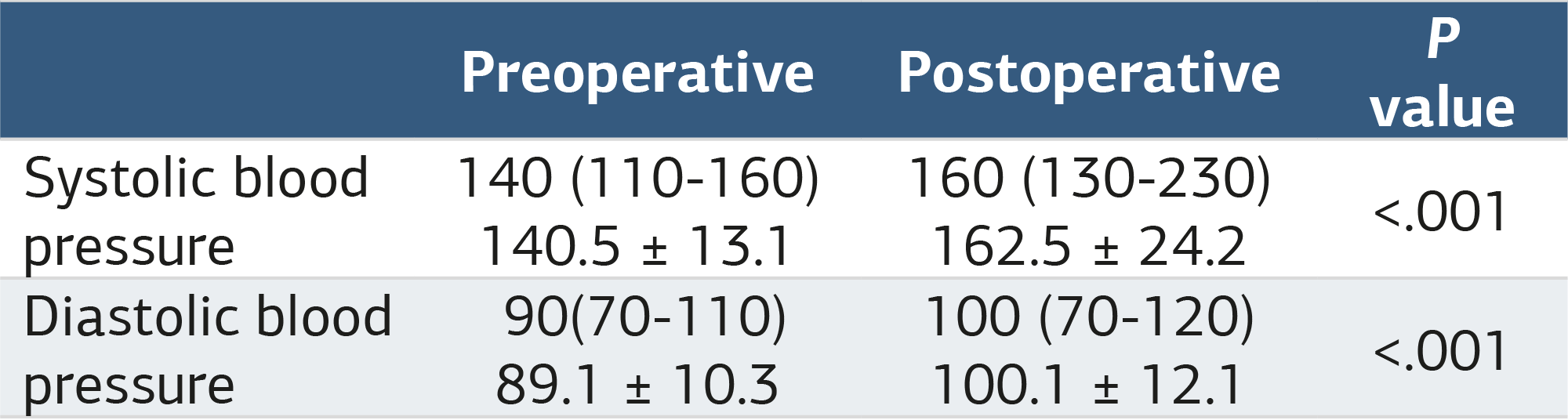
1 Wilcoxon test, median (min-max)/mean ± standard deviation.
Table 2. Correlation between clamp time and blood pressure
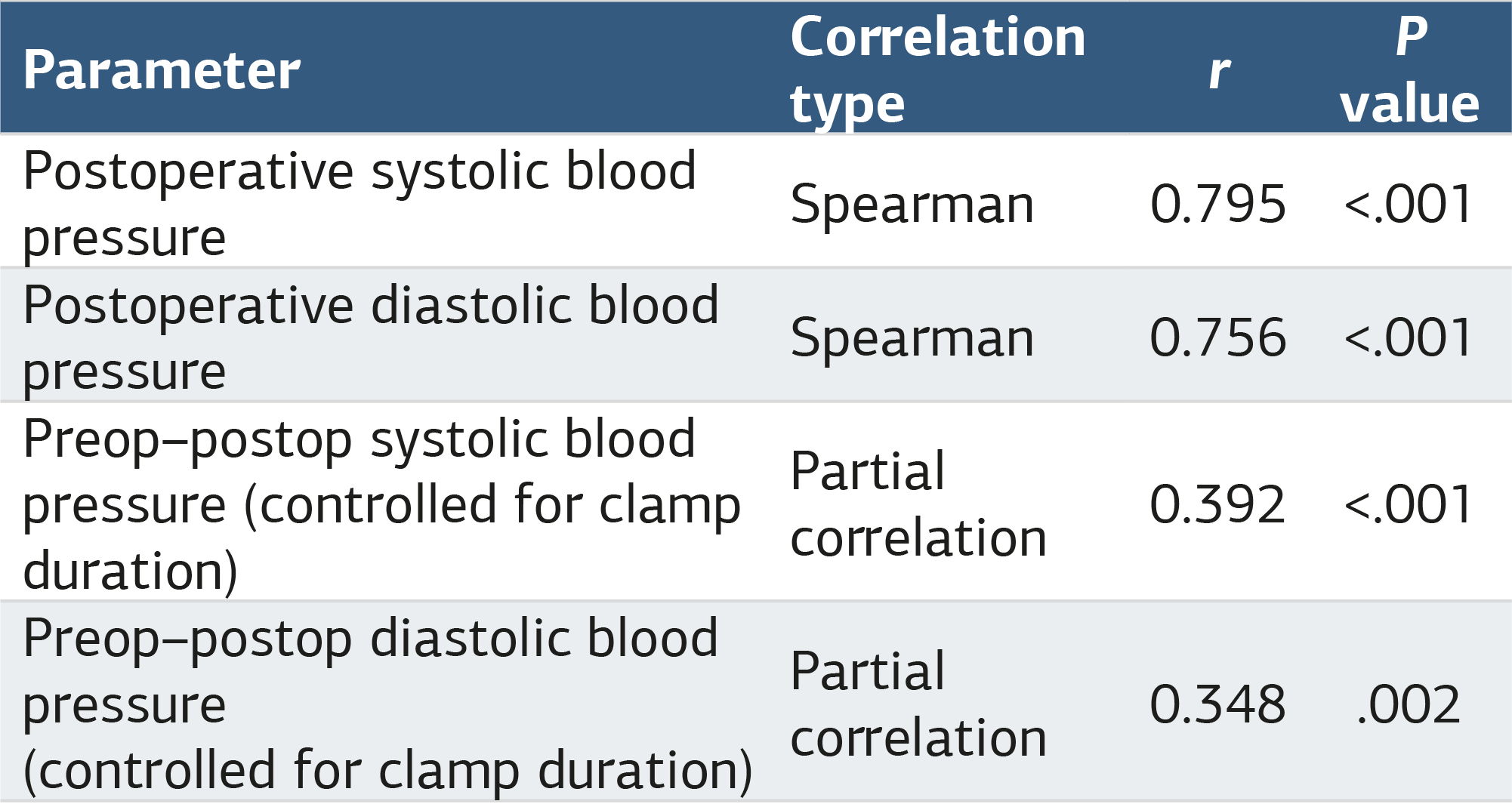
Table 3. Logistic regression for predictors of hypertension
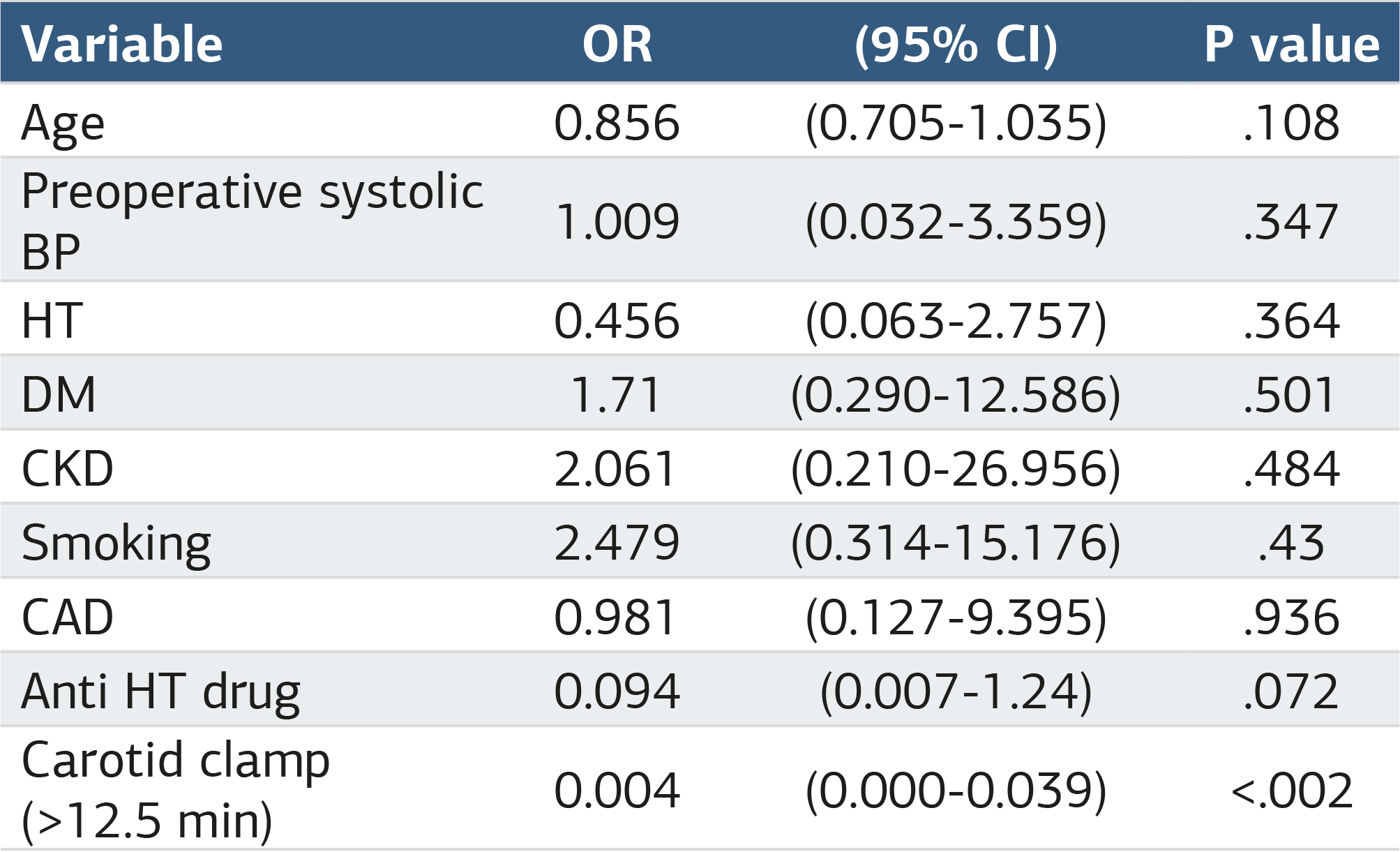
OR: Odds Ratio, CI: Confidence Interval, BP: Blood Pressure, HT: Hypertension, DM: Diabetes Mellitus, CKD: Chronic Kidney Disease, CAD: Coronary Artery Disease.
Figures
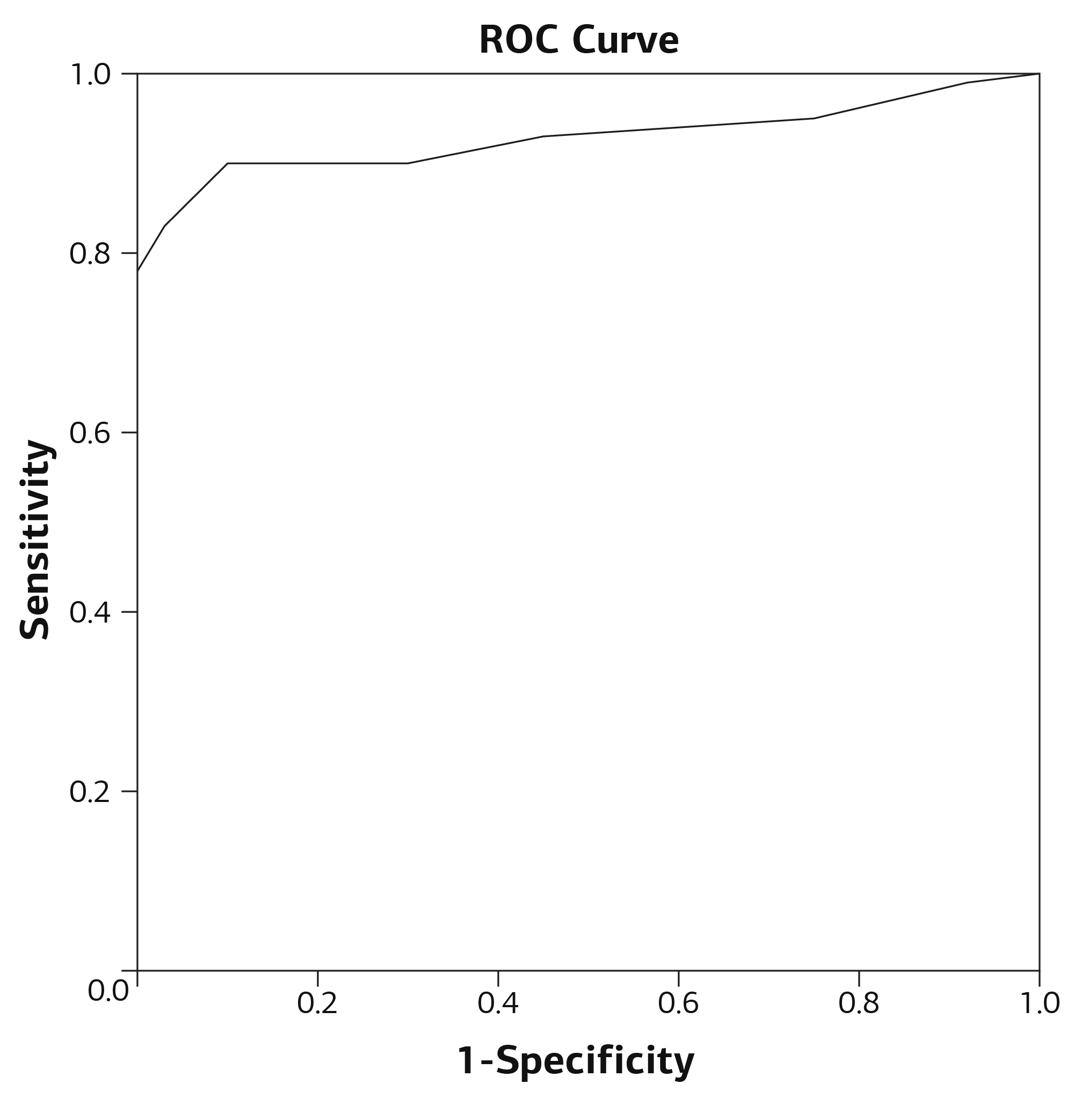
Figure 1. ROC curve of clamp duration predicting postoperative hypertension
Additional Information
Publisher’s Note
Bayrakol MP remains neutral with regard to jurisdictional and institutional claims.
Rights and Permissions

This work is licensed under a Creative Commons Attribution-NonCommercial 4.0 International License (CC BY-NC 4.0). To view a copy of the license, visit https://creativecommons.org/licenses/by-nc/4.0/
About This Article
How to Cite This Article
Güler Gülşen Ersoy. The impact of carotid artery cross-clamp duration on postoperative hypertension following endarterectomy. Ann Clin Anal Med 2025;16(9):673-677. doi:10.4328/ACAM.22830
Publication History
- Received:
- 29.07.2025
- Accepted:
- 29.08.2025
- Published Online:
- 30.08.2025
- Printed:
- 01.09.2025