
Abstract
AimTo compare the efficacy of nepafenac monotherapy with the combination of nepafenac and dexamethasone for preventing pseudophakic cystoid macular edema (PCME), one of the most common complications after cataract surgery.MethodsThis retrospective study included patients who underwent uncomplicated cataract surgery. They were divided into two groups: Group 1 (Monotherapy) received nepafenac alone, while Group 2 (Combination Therapy) received nepafenac with dexamethasone. Postoperative central macular thickness and cystoid changes were monitored using optical coherence tomography (OCT). Statistical analyses were performed to compare the efficacy of both regimens in preventing PCME.ResultsBoth treatment groups were effective in reducing macular thickening and lowering the risk of clinically significant PCME. However, no statistically significant difference in efficacy was found between nepafenac monotherapy and combination therapy. This finding suggests that adding dexamethasone did not confer a measurable advantage in preventing PCME compared with nepafenac alone.ConclusionOur study demonstrates that nepafenac monotherapy is as effective as combination therapy for PCME prophylaxis. The lack of additional benefit from the combination suggests that monotherapy may be a more practical approach, as it can improve patient compliance, reduce side effects, and simplify the treatment regimen. Although our study has limitations, including a small sample size and the use of a single NSAID, our findings contribute to the literature supporting NSAID monotherapy in postoperative cataract management. Larger, randomized controlled trials are needed to confirm these results.
Keywords
Introduction
Cataract surgery is the most frequently performed intraocular procedure.1 One common complication is PCME, which can cause a significant decrease in visual acuity.2 Cystoid macular edema, first reported by Irvine in 1953, was demonstrated by Gass with fluorescein fundus angiography (FFA) 13 years later, and thus, CM developing following cataract surgery was named Irvine-Gass syndrome (IGS).3,4 The incidence of clinically significant pseudophakic cystoid macular edema varies between 1% and 2%.5 In most of the patients, edema resolves spontaneously within the first year.6 Various treatment options include NSAIDs and corticosteroids. Pseudophakic cystoid macular edema can also occur after both complicated and uncomplicated cataract surgery. Underlying predisposing causes, such as diabetes, retinal vein occlusion, epiretinal membrane, uveitis, and posterior capsule rupture, may increase the incidence of PCME.1 The pathogenesis of PCME remains incompletely elucidated.7 However, it has been reported that inflammation is the underlying cause.8 Inflammatory mediators released during cataract surgery break down the blood-retinal barrier and cause the development of cystoid macular edema (CME). Topical nonsteroidal anti-inflammatory drops are effective in preventing and treating cystoid macular edema.9-11 Nevanac® (nepafenac 0.1%) has received approval from the Food and Drug Administration (FDA) for managing pain and inflammation related to phacoemulsification.12 Nepafenac, a prodrug, is converted to the active metabolite amfenac via hydrolysis in ocular structures such as the iris, retina, and choroid.13,14 It exhibits better corneal permeability, leading to higher concentrations of the drug within the eye compared to other NSAIDs.13,14
Importantly, nepafenac provides long-lasting inhibition of prostaglandin synthesis when compared to other NSAIDs.13 Both steroids and non-steroids suppress inflammation by blocking the arachidonic acid pathway through COX inhibition.15 In addition to that, steroids also inhibit the lipoxygenase pathway.15 Corticosteroids are effective in suppressing postoperative inflammation and are therefore used topically for approximately 4-6 weeks after cataract surgery.15 However, they may be insufficient to suppress PCME.16-18 When steroids and nonsteroidal drugs are used together, they reduce postoperative inflammation with a synergistic effect.9,10
This study aims to compare the efficacy of nepafenac alone or in combination with dexamethasone in reducing PCME incidence.
Materials and Methods
A retrospective analysis was conducted on patients undergoing cataract surgery at the Department of Ophthalmology, Çanakkale Onsekiz Mart University, between March 2022 and February 2023. A total of 47 patients were included in the study.Drug Information● Nepafenac (Nevanac® 0.1%): Manufactured by Alcon, it is an NSAID used to reduce pain and inflammation post-surgery.
● Dexamethasone (Maxidex® 0.1%): Manufactured by Alcon, it is a corticosteroid used to control inflammation.
Patients were divided into two groups:
-Group 1: Nepafenac monotherapy (26 patients)
-Group 2: Combination therapy with Nepafenac and Dexamethasone (21 patients)
Cases of uncomplicated cataract surgery were included in the study, regardless of whether they were performed by residents or experienced surgeons. Postoperative follow-ups were conducted at day 1, week 1, and month 1. The primary outcome measure was the reduction in macular edema as assessed by Optical Coherence Tomography (OCT).17 Statistical analyses were conducted using SPSS version 26.0.12. In addition, patients with vitreomacular interface disorders such as epiretinal membrane and vitreomacular traction were excluded from the study. The study enrolled healthy participants without systemic diseases (e.g., hypertension or diabetes), ocular conditions (e.g., glaucoma or uveitis), prior intraocular surgery, or use of topical/systemic medications.17 All types of age-related cataract, including nuclear, cortical, or posterior subcapsular, were included in the study; however, cataracts caused by trauma or uveitis, which could increase the risk of cystoid macular edema (CME), were excluded.16 Intraocular pressure measurement with Goldman applanation tonometry, optical coherence tomography (OCT), best-corrected visual acuity with the Snellen chart, and a complete biomicroscopic and funduscopic examination with dilated fundus examination were performed in all patients before and after surgery.15 All patients received routine antibiotics and corticosteroid topical eye drops after surgery. Nepafenac 0.1% and/or prednisolone acetate eye drops were started topically four times daily for one month in patients who presented with cystoid edema on optical coherence tomography at the 1st month postoperative examination.10 The diagnosis of macular edema in OCT was evaluated by a single ophthalmologist (C.Ö.). A 10% increase in central macular thickness was accepted as the cutoff value for macular edema.18 Exclusion criteria included patients with systemic diseases (e.g., diabetes, hypertension), prior intraocular surgeries, or ocular conditions (e.g., glaucoma, uveitis).17Ethical ApprovalEthical approval was not required.
Statistical AnalysisStatistical analysis was done using SPSS version 26.0 (IBM Corp., USA).12 All continuous variables were expressed as means ± standard deviations, and categorical variables were expressed as proportions. As the data were not normally distributed, non-parametric tests were conducted to determine statistical significance. Between-group analyses were performed using the Mann–Whitney test. For correlation analysis between functional and anatomical differences, Spearman’s correlation test was used.Reporting GuidelinesThe study was reported in accordance with the STROBE guidelines.
Results
In this study, patients were divided into 2 groups. Group 1 consisted of 26 patients who received only topical 0.1% nepafenac sterile eye drops, and Group 2 consisted of 21 patients who received a combination of 0.1% nepafenac and 0.1% dexamethasone sterile eye drops. Group 1 consists of 26 patients; 19 (73.07%) were male, and 7 (26.92%) were female. Group 2 consists of 21 patients; 12 (57.14%) were male, and 9 (42.85%) were female. The mean age of group 1 was 72,6 ± 6.3, and group 2 was 68,3 ± 6.2. In group 1, ten (38.46%) eyes were right, and sixteen eyes were left (61.53%); in group 2, ten eyes were right ( 47.61%), and eleven eyes were left (52.38%) (Table 1). No statistically significant difference was found in the reduction of macular edema between Group 1 and Group 2 (P > .05). While the mean value of edema (anatomical) in group 1, 1st month, and 3rd month was 118.46 μm (SD 142.23), the mean value in group 2 was 129.33 μm (SD 89.23). Baseline demographic and clinical characteristics of patients in both treatment groups (Table 1). A very weak inverse correlation was found between the 3rd-month increase in visual acuity and the decrease in edema level (P value < 0.37). The difference in visual acuity improvement between the two treatments was not statistically significant in patients who received Group 1 and Group 2 (P value 0.59). There was no statistically significant correlation between anatomical and functional differences (Table 2). Table 2 presents the mean anatomical and functional differences between Group 1 and Group 2. The measurements are given in micrometers (m) for anatomical differences and in standardized units for functional differences. Comparison of mean central macular thickness (CMT) between Group 1 and Group 2 at baseline, 1 month, and 3 months postoperatively. Data are presented as mean ± standard deviation. No statistically significant difference was observed between the groups (P > .05).
Discussion
This study aligns with previous research indicating that NSAIDs and corticosteroids can reduce PCME.10,16,19 Despite the high visual expectations following uneventful cataract surgery, the occurrence of cystoid macular edema remains a prominent source of patient dissatisfaction despite favorable surgical outcomes.2 Despite this, the purpose of this study was to assess the efficacy of topical nepafenac, both as monotherapy and in combination with steroids, in patients who developed cystoid macular edema following uneventful cataract surgery. Understanding the underlying cause and pathophysiology of retinal macular edema is essential for effective treatment.6 In the study by Kessel et al. (1996), which investigated the effects of NSAIDs and steroids on PCME, they found low-quality evidence that NSAIDs were no more effective than steroids, and that intraocular pressure increased in the group receiving topical steroids.20 In our study, no significant difference was found between the use of topical steroids and nonsteroids in PCME. Another shortcoming of our study is that intraocular pressures were not measured after topical steroid use. Also, patients using only topical steroids were not compared with patients receiving topical nonsteroidal and combined therapy.
Russo et al. concluded that NSAIDs and steroids are synergistically effective in the treatment of PCME.19 In our study, however, it did not indicate a synergistic effect. The small number of patients included in the study may have affected the results. Walter et al., in accordance with the literature, showed that NSAIDs were superior to steroids alone.21
In our study, non-steroidal anti-inflammatory drugs were found to be superior, but a patient group in which only steroids were used was not formed. The difference in this study is that it has been shown that topical NSAIDs, which are started a few days before the preoperative period and applied for 1 month postoperatively, are advantageous when compared to the use of only NSAIDs and/or steroids postoperatively. Although bromfenac was the NSAID used in some studies prior to surgery, pharmacokinetic studies suggest that nepafenac achieves higher intraocular concentrations and may offer superior bioavailability.14 Therefore, considering the side effect profile of nepafenac, there are studies showing that it is more effective than other NSAIDs.22,23 It has been shown that nepafenac reaches peak concentration in aqueous humor in a shorter time than bromfenac and ketorolac, and its ocular bioavailability is higher than that of other drugs.13,14 The absence of a statistically significant difference between the two groups in our study allowed us to conclude that a single treatment would be sufficient. In a previously published case series, functional and anatomical improvement was reported in three patients with acute pseudophakic cystoid macular edema (PCME) who were treated with topical NSAIDs alone or in combination with corticosteroids.24 Clinical recovery was observed in all patients except one, who had chronic hemorrhagic edema. All patients received topical nepafenac 0.1%, which was associated with notable therapeutic benefit. Topical nepafenac 0.3% has been shown to be more effective than placebo in preventing PCME among patients with perioperative risk factors; however, no significant difference was observed in patients without such risk factors.16 In our study, 0.1% nepafenac was used to treat acute pseudophakic cystoid macular edema (PCME), and patients with known risk factors were excluded. In contrast, another study included a group receiving 0.3% nepafenac, allowing comparison of its efficacy relative to the 0.1% concentration. Both studies demonstrated improvements in functional and anatomical outcomes. Also, the benefits of perioperative use of NSAIDs are that they do not cause perioperative mydriasis, do not cause an increase in intraocular pressure, and reduce endothelial cell loss.23 In conclusion, it is well established that increasing the number of prescribed topical medications negatively impacts patient adherence to treatment regimens.25 As the number of drugs used increases, the side effect profile expands.25 Although some differences have been reported between the efficacy of Nevanac (nepafenac) monotherapy and its combination with Maxidex (dexamethasone), Nevanac alone remains beneficial and is consistent with findings reported in the literature.10,16,25 This study is one of the few to comparatively assess the efficacy of nepafenac monotherapy versus its combination with dexamethasone in patients developing pseudophakic cystoid macular edema (PCME) after uneventful cataract surgery.19-21 Although no statistically significant difference was observed between the two treatment approaches, the findings highlight that nepafenac monotherapy may offer a sufficient and simplified therapeutic strategy by reducing drug load and minimizing potential side effects. There are four main limitations of our study. First, in our study, all drops were started in patients with PCME on OCT at the 1st month after surgery. Therefore, no comment can be made on the effectiveness of starting it early, either before or after surgery. Although several studies in the literature suggest that preoperative administration of NSAIDs may be beneficial in preventing PCME, there is currently no clear consensus regarding the optimal timing, duration, or dosage of such prophylaxis.20 Secondly, one type of topical NSAID (nepafenac) was preferred for treatment. Thirdly, a small number of patients were excluded from the study due to the exclusion criteria. Fourth, PCME was defined solely based on OCT. Patients who could not be detected on OCT but may have been diagnosed via fluorescein angiography (FFA) were excluded from the study. However, using a single standardized diagnostic method may be more useful for clearly defining PCME.
Limitations
This review is limited by the heterogeneity of the included studies, small sample sizes, and a lack of high-quality long-term evidence, which limit the strength and generalizability of the conclusions.
Conclusion
LSTR therapy shows promising clinical and radiographic outcomes in the management of non-vital primary teeth. However, the heterogeneity of existing studies and limited high-quality evidence prevent definitive conclusions. Standardized protocols and well-designed long-term studies are needed to confirm its efficacy and safety.
Declarations
Animal and Human Rights Statement
All procedures performed in this study were in accordance with the ethical standards of the institutional and/or national research committee and with the 1964 Declaration of Helsinki and its later amendments, or comparable ethical standards.
Informed Consent
Written informed consent was obtained from all participants.
Data Availability
The datasets used and/or analyzed during the current study are not publicly available due to patient privacy reasons, but are available from the corresponding author on reasonable request
Conflict of Interest
The authors declare no conflict of interest.
Funding
None.
Author Contributions (CRediT Taxonomy)
Conceptualization: C.Ö.P.
Methodology: C.Ö.P., E.A. Literature Search: C.Ö.P., E.A.
Data Curation: C.Ö.P., F.A.
Writing – Original Draft Preparation: C.Ö.P.
Writing – Review & Editing: C.Ö.P., E.A.
Supervision: B.T., İ.E.
AI Usage Disclosure
No artificial intelligence tools were used in the preparation of this manuscript.
Abbreviations
CTZ: Chloramphenicol, tetracycline, and zinc oxide
LSTR: Lesion sterilization and tissue repair
MP: Macrogol and propylene glycol
RCT: Randomized controlled trial
SPT: Single-visit pulp therapy
References
- Chu CJ, Johnston RL, Buscombe C, et al. Risk factors and ıncidence of macular edema after cataract surgery: a database study of 81,984 eyes. Ophthalmology. 2016;123:316-23. doi:10.1016/j.ophtha.2015.10.001
- Flach AJ. The incidence, pathogenesis and treatment of cystoid macular edema following cataract surgery. Trans Am Ophthalmol Soc. 1998;96:557-634.
- Irvine SR. A newly defined vitreous syndrome following cataract surgery. Am J Ophthalmol. 1953;36:599-619. doi:10.1016/0002-9394(53)90302-x
- Gass JDM, Norton EWD. Cystoid macular edema and papilledema following cataract extraction: a fluorescein fundoscopic and angiographic study. Arch Ophthalmol. 1966;76:646-61. doi:10.1001/archopht.1966.03850010648005
- Henderson BA, Kim JY, Ament CS, et al. Clinical pseudophakic cystoid macular edema. Risk factors for development and duration after treatment. J Cataract Refract Surg. 2007;33:1550-8. doi:10.1016/j.jcrs.2007.05.013
- Shelsta HN, Jampol LM. Pharmacologic therapy of pseudophakic cystoid macular edema: 2010 update. Retina. 2011;31:4-12. doi:10.1097/iae.0b013e3181fd9740
- Milch FA, Yannuzzi LA. Medical and surgical treatment of aphakic cystoid macular edema. Int Ophthalmol Clin. 1987;27:205-17. doi:10.1097/00004397-198702730-00009
- Benitah NR, Arroyo JG. Pseudophakic cystoid macular edema. Int Ophthalmol Clin. 2010;50:139-53. doi:10.1097/iio.0b013e3181c551da
- Laurell CG, Zetterström C. Effects of dexamethasone, diclofenac, or placebo on the inflammatory response after cataract surgery. Br J Ophthalmol. 2002;86:1380–4. doi:10.1136/bjo.86.12.1380
- Zaczek A, Artzen D, Laurell CG, et al. Nepafenac 0.1% plus dexamethasone 0.1% versus dexamethasone alone: effect on macular swelling after cataract surgery. J Cataract Refract Surg. 2014;40:1498-505. doi:10.1016/j.jcrs.2013.12.023
- Flach AJ, Stegman RC, Graham J, et al. Prophylaxis of aphakic cystoid macular edema without corticosteroids. A paired-comparison, placebo-controlled double-masked study. Ophthalmology. 1990;97:1253-8. doi:10.1016/s0161-6420(90)32423-5
- Sarfraz MH, Haq RI, Mehboob MA. Effect of topical nepafenac in prevention of macular edema after cataract surgery in patients with non-proliferative diabetic retinopathy. Pak J Med Sci. 2017;33(1):210-4. doi:10.12669/pjms.331.11644
- Ke TL, Graff G, Spellman JM, et al. Nepafenac, a unique nonsteroidal prodrug with potential utility in the treatment of trauma-induced ocular inflammation: II. In vitro bioactivation and permeation of external ocular barriers. Inflammation. 2000;24:371-84. doi:10.1023/a:1007001131987
- Walters T, Raizman M, Ernest P, et al. In vivo pharmacokinetics and in vitro pharmacodynamics of nepafenac, amfenac, ketorolac, and bromfenac. J Cataract Refract Surg. 2007;33:1539-45. doi:10.1016/j.jcrs.2007.05.015
- El-Harazi SM, Feldman RM. Control of intra-ocular inflammation associated with cataract surgery. Curr Opin Ophthalmol. 2001;12(1):4-8. doi:10.1097/00055735-200102000-00002
- McCafferty S, Harris A, Kew C, et al. Pseudophakic cystoid macular edema prevention and risk factors: prospective study with adjunctive once daily topical nepafenac 0.3% versus placebo. BMC Ophthalmol. 2017;17(1):16. doi:10.1186/s12886-017-0405-7
- Singh R, Alpern L, Jaffe GJ, et al. Evaluation of nepafenac in prevention of macular edema following cataract surgery in patients with diabetic retinopathy. Clin Ophthalmol. 2012;6:1259-69. doi:10.2147/opth.s31902
- Pollack A, Staurenghi G, Sager D, et al. Prospective randomised clinical trial to evaluate the safety and efficacy of nepafenac 0.1% treatment for the prevention of macular oedema associated with cataract surgery in patients with diabetic retinopathy. Br J Ophthalmol. 2017;101:423-7. doi:10.1136/bjophthalmol-2016-308617
- Tzelikis PF, Vieira M, Hida WT, et al. Comparison of ketorolac 0.4% and nepafenac 0.1% for the prevention of cystoid macular oedema after phacoemulsification: prospective placebo-controlled randomised study. Br J Ophthalmol. 2015;99(5):654-8. doi:10.1136/bjophthalmol-2014-305803
- Kessel L, Tendal B, Jørgensen KJ, et al. Post-cataract prevention of inflammation and macular edema by steroid and nonsteroidal anti-inflammatory eye drops: a systematic review. Ophthalmology. 2014;121:1915-24. doi:10.1016/j.ophtha.2014.04.035
- Walter KA, Lee RY, Chen K, Komanski C. Incidence of cystoid macular edema following routine cataract surgery using NSAIDs alone or with corticosteroids. Arq Bras Oftalmol. 2020;83(1):55-61. doi:10.5935/0004-2749.20200010
- Hovanesian J, Holland E. Tolerability and toxicity of topically applied nepafenac 0.3% compared with generic ketorolac 0.5%. J Cataract Refract Surg. 2019;45:174-80. doi:10.1016/j.jcrs.2018.08.039
- Nardi M, Lobo C, Bereczki A, et al. Analgesic and anti-inflammatory effectiveness of nepafenac 0.1% for cataract surgery. Clin Ophthalmol. 2007;1(4):527-33.
- Hariprasad SM, Callanan D, Gainey S, et al. Cystoid and diabetic macular edema treated with nepafenac 0.1%. J Ocul Pharmacol Ther. 2007;23:585-9. doi:10.1089/jop.2007.0062
- Modi SS, Lehmann RP, Walters TR, et al. Once-daily nepafenac ophthalmic suspension 0.3% to prevent and treat ocular inflammation and pain after cataract surgery: phase 3 study. J Cataract Refract Surg. 2014;40:203-11. doi:10.1016/j.jcrs.2013.07.042
Tables
Table 1. Demographic and Clinical Characteristics of Group 1 and Group 2 (Excluding Patients with IGS)
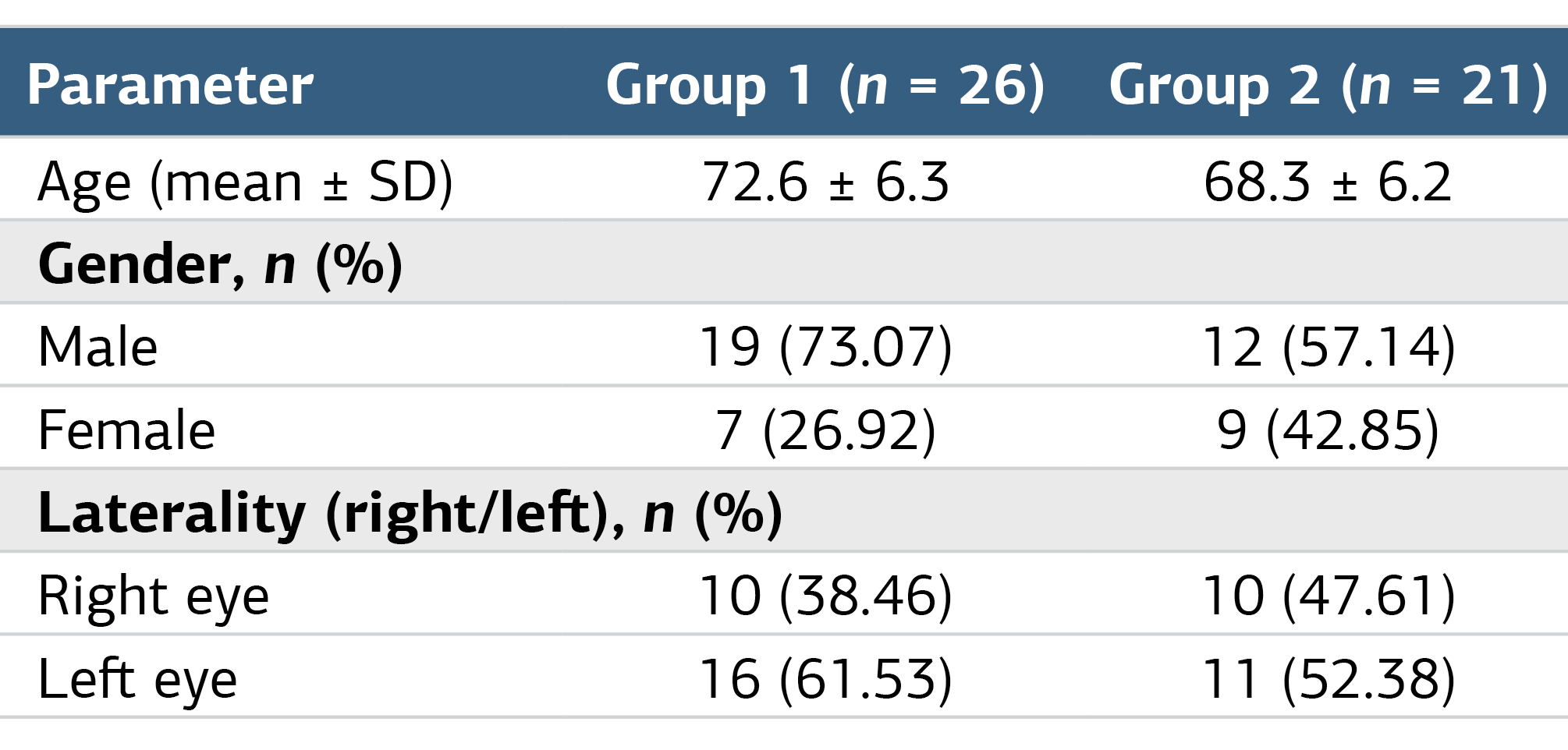
IGS: Irvine–Gass syndrome; SD: Standard deviation
Table 2. Mean Anatomical and Functional Differences Between Group 1 and Group 2

Additional Information
Publisher’s Note
Bayrakol MP remains neutral with regard to jurisdictional and institutional claims.
Rights and Permissions

This work is licensed under a Creative Commons Attribution-NonCommercial 4.0 International License (CC BY-NC 4.0). To view a copy of the license, visit https://creativecommons.org/licenses/by-nc/4.0/
About This Article
How to Cite This Article
Cansu Özcan Pehlivan, Esra Arıcan, Burak Turgut, İsmail Erşan, Furkan Alyörük. Comparison of the efficacy of nepafenac with or without dexamethasone for preventing pseudophakic cystoid macular edema. Ann Clin Anal Med 2026;17(10):1022-1026. doi:10.4328/ACAM.22875
Publication History
- Received:
- 01.09.2025
- Accepted:
- 03.11.2025
- Published Online:
- 11.03.2026
- Printed:
- 01.10.2026