
Abstract
AimStenotrophomonas maltophilia (SM) is an opportunistic pathogen that commonly causes severe infections in individuals with weakened immune systems and is resistant to multiple drugs. Although TMP-SMX is the standard treatment, the emergence of resistance and adverse effects necessitates the investigation of alternative therapeutic approaches. Levofloxacin may serve as a viable alternative. The goal of this study is to compare the therapeutic benefits and risks of TMP-SMX and levofloxacin for the treatment of SM infections.MethodsA retrospective cohort study was carried out in a tertiary care hospital between August 2020 and June 2023. The study included 54 adult patients diagnosed with SM infections, treated with either TMP-SMX or levofloxacin. The study compared clinical and microbiological outcomes, 30-day mortality, and hospital stay between the groups.ResultsOut of 54 patients, 41 (75.93%) were administered levofloxacin, with the remaining 13 (24.07%) treated with TMP-SMX. The overall recovery rate was 87.04%, with levofloxacin (87.80%) and TMP-SMX (84.62%) showing comparable outcomes (p=>0.999). There was no difference in 30-day mortality rates (5.00% versus 7.69%, P > .99).ConclusionLevofloxacin and TMP-SMX are equally effective for SM infections, achieving similar clinical results. The results indicate that levofloxacin is a promising option, particularly in environments with growing resistance to TMP-SMX. To ensure these findings are reliable, further studies are necessary with a more diverse patient population.
Keywords
Introduction
As an opportunistic pathogen, Stenotrophomonas maltophilia (SM), a non-fermentative Gram-negative bacillus, is increasingly recognized as a threat, particularly in healthcare settings. This organism often infects immunocompromised individuals, those with malignancies, cystic fibrosis, or those subjected to prolonged mechanical ventilation or invasive medical devices.1 Although historically seen as having low virulence, SM’s multidrug resistance (MDR) has elevated its clinical significance, making it one of the toughest pathogens to combat in contemporary infectious disease management.1 SM infections are on the rise worldwide, contributing significantly to hospital-acquired pneumonia, bloodstream infections, and urinary tract infections.2-4 The mortality rate of SM bacteremia is alarmingly high, ranging between 14% and 69%, emphasizing the urgent requirement for effective therapeutic options.3,5,6
Trimethoprim-sulfamethoxazole (TMP-SMX) has served as a key treatment for SM infections for decades.1,3,7 Its past effectiveness and impressive in vitro results have established it as the leading treatment for most invasive SM infections. Despite its benefits, TMP-SMX is not without limitations. Adverse effects like kidney problems, allergic reactions, and bone marrow suppression, together with growing drug resistance, have led to the search for new treatments.3,5,7 Concerns about the reliability of TMP-SMX as a first-line treatment have been raised because of its resistance rate, which has been reported as high as 30% in recent surveillance studies.1,5 In situations where TMP-SMX resistance is present or administration is not feasible because of severe allergies or other clinical factors, quinolones are frequently employed as an alternative therapeutic strategy.5,6 Levofloxacin, a broad-spectrum fluoroquinolone, is a possible replacement for TMP-SMX in treating SM infections.5-8 A meta-analysis by Ko et al.,6 including 663 individuals, found no significant difference between the TMP-SMX and levofloxacin groups. Levofloxacin’s mechanism of action differs from TMP-SMX, targeting bacterial DNA gyrase and topoisomerase IV.1 Studies conducted in laboratory settings indicate that levofloxacin is highly effective against various pathogens, and its pharmacokinetic and pharmacodynamic profile make it a promising treatment choice for respiratory and bloodstream infections.4,5,8
Despite their widespread use, a lack of comparative studies limits our understanding of the effectiveness and safety of TMP-SMX and levofloxacin in clinical settings.2,5 This research focuses on comparing real-world data for TMP-SMX and levofloxacin, highlighting the effectiveness of levofloxacin as a viable alternative treatment.
Materials and Methods
This single-center, retrospective cohort analysis was performed in the infectious diseases inpatient clinic of Basaksehir Cam and Sakura City Hospital, a tertiary care teaching hospital, between August 2020 and June 2024. This research was conducted in accordance with the Declaration of Helsinki and granted ethical clearance by the institutional review board (IRB No: 22.11.2023.619).
The hospital’s microbiology database served as the source for identifying patients. The inclusion criteria were being older than 18 years old, having a positive culture for SM from a clinically significant sterile or non-sterile site (e.g., blood, respiratory secretions, urine, or wound), and receipt of either TMP-SMX or levofloxacin as monotherapy for at least 48 hours. Exclusion criteria included the following: patients who were admitted to the intensive care unit (ICU), those with concomitant infections and/or receiving antibiotic therapy for other reasons, patients with colonization, individuals receiving combination therapy, and patients with incomplete data. (Figure 1)
Data collected included demographic factors (age, sex, health conditions such as diabetes, kidney disease, cancer, organ transplant), infection details (location, source, culture), and use of medical devices (catheters, ventilators). All SM isolates were tested in the hospital’s microbiology laboratory. The antibiotic susceptibility testing for TMP-SMX was performed using the disk diffusion method, and the test results were evaluated according to EUCAST criteria (EUCAST v.14). Since TMP-SMX resistance is rare, isolates found to be resistant by the disk diffusion method were retested using an automated antibiotic susceptibility testing device (Phoenix, BD). The MIC range for TMP-SMX in this device is 2–8 µg/mL. As there are no clinical breakpoint values in EUCAST, but levofloxacin has clinical relevance, its antibiotic susceptibility testing was performed using the disk diffusion method, and the results were evaluated according to CLSI criteria (CLSI M100 31st Edition).
Quality control was achieved by adding reference strains (e.g., Escherichia coli ATCC 25922) to all batches of susceptibility tests. Discrepancies in vitro susceptibility and clinical results were recorded for analysis. Participants’ Charlson Comorbidity Index scores were calculated. The daily dosage of TMP-SMX ranged from 8 to 12 milligrams (mg) per kilogram (kg), whereas levofloxacin had a daily dose of 750 mg. Route of administration (intravenous [IV] or oral [PO]) and duration of antibiotic therapy data were gathered.
The main goal of treatment is symptom resolution within 30 days without increasing or changing antibiotic therapy. The secondary endpoints of the study included microbiological eradication (negative follow-up cultures within 7 days of completing therapy), 30-day All-Cause Mortality, and Length of Hospital Stay. Given the relatively small sample size (n = 54) and the imbalance between treatment groups (41 levofloxacin vs. 13 TMP-SMX), the statistical power of our analysis was limited, and this is acknowledged as a methodological constraint.Ethical ApprovalThis study was approved by the Ethics Committee of Turkiye Basaksehir Cam and Sakura City Hospital (Date: 22.11.2023, Decision No: 619).Statistical AnalysisData manipulation, visualization, and reporting were carried out using various R packages in version 4.3.3 for statistical analysis. Reusable object-oriented structures were built with the R6 package, resulting in greater flexibility and modularity for statistical workflows.
Descriptive statistics were computed for all variables to provide a comprehensive overview of the sample. To check for normal distribution, the Shapiro-Wilk test was applied to the numerical data. The mean and standard deviation (SD) were used to summarise parametric data. Median (minimum-maximum) intervals provided a summary of the nonparametric data. A summary of categorical data was presented with n (number of observations) and percentage frequency.
Relationships and differences between groups were analyzed using inferential statistics to conclude. Tests were chosen to consider the normality of the numerical data (determined via the Shapiro-Wilk test) and their compatibility with the test’s prerequisites. For normally distributed numerical data, the t-test is suitable for comparing two independent groups, whereas ANOVA facilitates comparisons across multiple groups. In cases of non-normal data distribution, the Wilcoxon rank-sum test was employed for two-group comparisons, and the Kruskal-Wallis test was used for comparisons involving over two groups.
Chi-squared tests were employed for analysis of categorical data with larger samples (minimum five observations per cell), while Fisher’s exact test was used for smaller samples. Any P value above 0.050 was considered significant.Reporting GuidelinesThis study was reported according to the STROBE guidelines.
Results
Fifty-four patients participated in the study. A median age of 63 years (range: 21–88 years) was observed among participants, 27.78% (n = 15) of whom were female. Cardiovascular disease (35.19%), neurological disease (27.78%), diabetes mellitus (24.07%), and pulmonary disease (22.22%) were the most frequent comorbidities. Solid malignancies were observed in 27.78% of study participants, hematologic malignancies in 7.41%, and chronic kidney disease in 24.07%. The median score for the Charlson Comorbidity Index was 4 (0–11). A summary of the participants’ demographic and clinical profiles is provided in Table 1.
The most common infection sites were the urinary tract (40.74%), pneumonia (37.04%), soft tissue (11.11%), and bacteremia (9.26%). Intravenous antibiotics were administered to the majority of patients (83.33%), while oral antibiotics were given to the remaining 16.67%. Antibiotic usage was dominated by levofloxacin (75.93%, n=41), while trimethoprim-sulfamethoxazole (TMP-SMX) was the second most used at 24.07% (n = 13). The mean treatment duration was 11.28 ± 4.34 days.
Sensitivity rates for all patients were 94.44% for TMP-SMX and 90.74% for levofloxacin. The study showed a recovery rate of 87.04% among patients, and a 30-day mortality rate of 5.56% (n = 3) (Table 1).
The comparative data for patients given TMP-SMX and levofloxacin are presented in Table 2. Patients receiving levofloxacin (n = 41) and TMP-SMX (n = 13) were similar in baseline characteristics, including age, sex, and comorbidities like cardiovascular, neurological, and pulmonary disease. Participants receiving levofloxacin showed a significantly higher sensitivity (100%) to levofloxacin (P < .001). When compared to TMP-SMX, levofloxacin showed equal effectiveness in treating SM (87.80%, n=36 vs. 84.62%, n=11). Both groups showed similar 30-day mortality rates (5.00% vs. 7.69%), as seen in Table 2.
Discussion
We discovered that levofloxacin and TMP-SMX showed similar clinical outcomes in our cohort, resulting in comparable recovery and mortality rates. However, due to the small sample size and wide confidence intervals, these findings cannot establish equivalence, and the results should be interpreted with caution. Moreover, the retrospective and single-center design of this study introduces potential selection bias and restricts the generalizability of our findings. Therefore, the observed similarity between TMP-SMX and levofloxacin should not be considered conclusive but rather hypothesis-generating.
The sensitivity differences observed highlight levofloxacin’s potential benefits, particularly in environments with rising TMP-SMX resistance. The resistance rate for TMP-SMX was lower in our study at 5.56% compared to the 20.3% reported in a study from our country.1 In line with our research, that study1 observed a levofloxacin resistance rate of only 7.6%. The presence of intensive care unit patients in Cıkman et al.’s study might explain the variation in resistance values for TMP-SMX.1 Prior antibiotic use might be linked to an increased risk of infection, with resistant strains in intensive care unit patients.
Mortality rates for SM bacteremia, ranging from 14% to 69%, emphasize the critical need for effective treatment strategies.4-11 The mortality rate in our study (5.5%) was lower than in the literature. Mortality rate variation is influenced by multiple factors, such as participant age, status (inpatient or ICU), and primary diagnosis (e.g., cystic fibrosis, malignancies).1,4,5,7 Even though the groups responded differently to antibiotics, their clinical outcomes were comparable. Recovery rates were similar in both groups, with 87.80% in the levofloxacin group and 84.62% in the TMP-SMX group, revealing no statistically significant difference. In both groups, 30-day mortality was low and comparable (5.00% for levofloxacin, 7.69% for TMP-SMX). A study revealed that the mortality rate of SM was 27.5% in the TMP-SMX treatment group and 20% in the levofloxacin treatment group.7 Earlier systematic reviews have confirmed this finding, indicating that fluoroquinolones, such as levofloxacin, exhibit increased effectiveness against SM and may decrease mortality when employed as first-line treatment.2,6,7 The current study, along with other studies.1,4,6,7,12,13 suggests that both antibiotics can be effective in treating SM infections if they prove sensitivity to the infection in vitro.
The favorable PK/PD properties of levofloxacin lead to its efficacy in treating SM infections. Its high concentration in respiratory secretions and tissues makes it effective for pulmonary infections, a common site of SM colonization and infection.1,5,9,14 Our study shows that pulmonary infections are a frequent site of SM, and levofloxacin appears to be as successful as TMP-SMX in treating these infections and achieving survival. Notably, Monte Carlo simulations and PK/PD models suggest that fluoroquinolones, like levofloxacin, are better at achieving optimal target concentrations compared to TMP-SMX.1,3,15 These findings back up their use as the favored choice in severe cases or when TMP-SMX is not an option.
Limitations
The small sample size and the single-center nature of the study may restrict the generalizability of the results. In addition, retrospective medical records at our institution did not consistently capture detailed adverse event data (e.g., nephrotoxicity, cytopenia, QT prolongation); therefore, safety outcomes could not be systematically assessed, which constitutes another important limitation. Furthermore, the retrospective design of the analysis may introduce selection bias, underscoring the need for prospective randomized controlled trials to confirm the efficacy of levofloxacin in larger and more diverse populations
Conclusion
Our study highlights levofloxacin as a workable treatment option for SM infections, demonstrating similar clinical outcomes to TMP-SMX in our limited cohort, with improved antimicrobial sensitivity. However, these findings should be interpreted with caution and require confirmation in larger, prospective, multicenter studies. These findings point to levofloxacin as a possible treatment for SM infections, particularly in environments where resistance to TMP-SMX is a major issue. Future research should confirm these findings in larger groups and examine the long-term effects of levofloxacin on drug resistance and patient health.
Declarations
Animal and Human Rights Statement
All procedures performed in this study were in accordance with the ethical standards of the institutional and/or national research committee and with the 1964 Helsinki Declaration and its later amendments or comparable ethical standards.
Informed Consent
The requirement for informed consent was waived by the ethics committee.
Data Availability
The datasets used and/or analyzed during the current study are not publicly available due to patient privacy reasons but are available from the corresponding author on reasonable request.
Conflict of Interest
The authors declare that there is no conflict of interest.
Funding
None.
Abbreviations
EUCAST: European Committee on Antimicrobial Susceptibility Testing
ICU: Intensive care unit
SM: Stenotrophomonas maltophilia
TMP-SMX: Trimethoprim-sulfamethoxazole
References
- Cikman A, Parlak M, Bayram Y, Guducuoglu H, Berktas M. Antibiotic resistance of Stenotrophomonas maltophilia strains isolated from various clinical specimens. Afr Health Sci. 2016;16(1):149-152.
- Maraolo AE, Licciardi F, Gentile I, et al. Stenotrophomonas maltophilia infections: a systematic review and meta-analysis of comparative efficacy of available treatments, with critical assessment of novel therapeutic options. Antibiotics (Basel). 2023;12(5):742.
- Falagas ME, Valkimadi PE, Huang YT, Matthaiou DK, Hsueh PR. Therapeutic options for Stenotrophomonas maltophilia infections beyond co-trimoxazole: a systematic review. J Antimicrob Chemother. 2008;62(5):889-894. doi:10.1093/jac/dkn301
- Almangour TA, Alkherb Z, Alruwaite S, et al. Trimethoprim-sulfamethoxazole versus levofloxacin for the treatment of Stenotrophomonas maltophilia infections: a multicentre cohort study. J Glob Antimicrob Resist. 2024;38:42-48. doi:10.1016/j.jgar.2024.05.016
- Gibb J, Wong DW. Antimicrobial treatment strategies for Stenotrophomonas maltophilia: a focus on novel therapies. Antibiotics (Basel). 2021;10(10):1052.
- Ko JH, Kang CI, Cornejo-Juarez P, et al. Fluoroquinolones versus trimethoprim-sulfamethoxazole for the treatment of Stenotrophomonas maltophilia infections: a systematic review and meta-analysis. Clin Microbiol Infect. 2019;25(5):546-554. doi:10.1016/j.cmi.2018.11.008
- Cho SY, Kang CI, Kim J, et al. Can levofloxacin be a useful alternative to trimethoprim-sulfamethoxazole for treating Stenotrophomonas maltophilia bacteremia? Antimicrob Agents Chemother. 2014;58(1):581-583. doi:10.1128/aac.01682-13
- Sarzynski SH, Warner S, Sun J, et al. Trimethoprim-sulfamethoxazole versus levofloxacin for Stenotrophomonas maltophilia infections: a retrospective comparative effectiveness study of electronic health records from 154 US hospitals. Open Forum Infect Dis. 2022;9(2).
- Wang YL, Scipione MR, Dubrovskaya Y, Papadopoulos J. Monotherapy with fluoroquinolone or trimethoprim-sulfamethoxazole for treatment of Stenotrophomonas maltophilia infections. Antimicrob Agents Chemother. 2014;58(1):176-182. doi:10.1128/aac.01324-13
- Lai JJ, Lin YC, Lee JH, et al. Appropriate antibiotic therapy is a predictor of outcome in intensive care unit patients with Stenotrophomonas maltophilia bloodstream infection. J Microbiol Immunol Infect. 2023;56(3):624-633. doi:10.1016/j.jmii.2023.03.001
- Tanuma M, Kawagoe K, Sato H, Tanaka M. Risk factors and clinical characteristics for Stenotrophomonas maltophilia infection: a retrospective study in Tokyo. J Pharm Health Care Sci. 2025;11(1):429. doi:10.1186/s40780-025-00429-2
- Tamma PD, Heil EL, Justo JA, et al. 2024 Infectious Diseases Society of America guidance on the treatment of antimicrobial-resistant gram-negative infections. Clin Infect Dis. 2024;78(6). doi:10.1093/cid/ciae403
- Banar M, Sattari-Maraji A, Bayatinejad G, et al. Global prevalence and antibiotic resistance in clinical isolates of Stenotrophomonas maltophilia: a systematic review and meta-analysis. Front Med (Lausanne). 2023;10:1163439. doi:10.3389/fmed.2023.1163439
- Ebara H, Hagiya H, Haruki Y, Kondo E, Otsuka F. Clinical characteristics of Stenotrophomonas maltophilia bacteremia: a regional report and a review of a Japanese case series. Intern Med. 2017;56(2):137-142. doi:10.2169/internalmedicine.56.6141
- Barrasa H, Moran MA, Fernandez-Ciriza L, et al. Optimizing antibiotic therapy for Stenotrophomonas maltophilia infections in critically ill patients: a pharmacokinetic/pharmacodynamic approach. Antibiotics (Basel). 2024;13(6):623.
Tables
Table 1. Demographic characteristics of participants (n = 54)
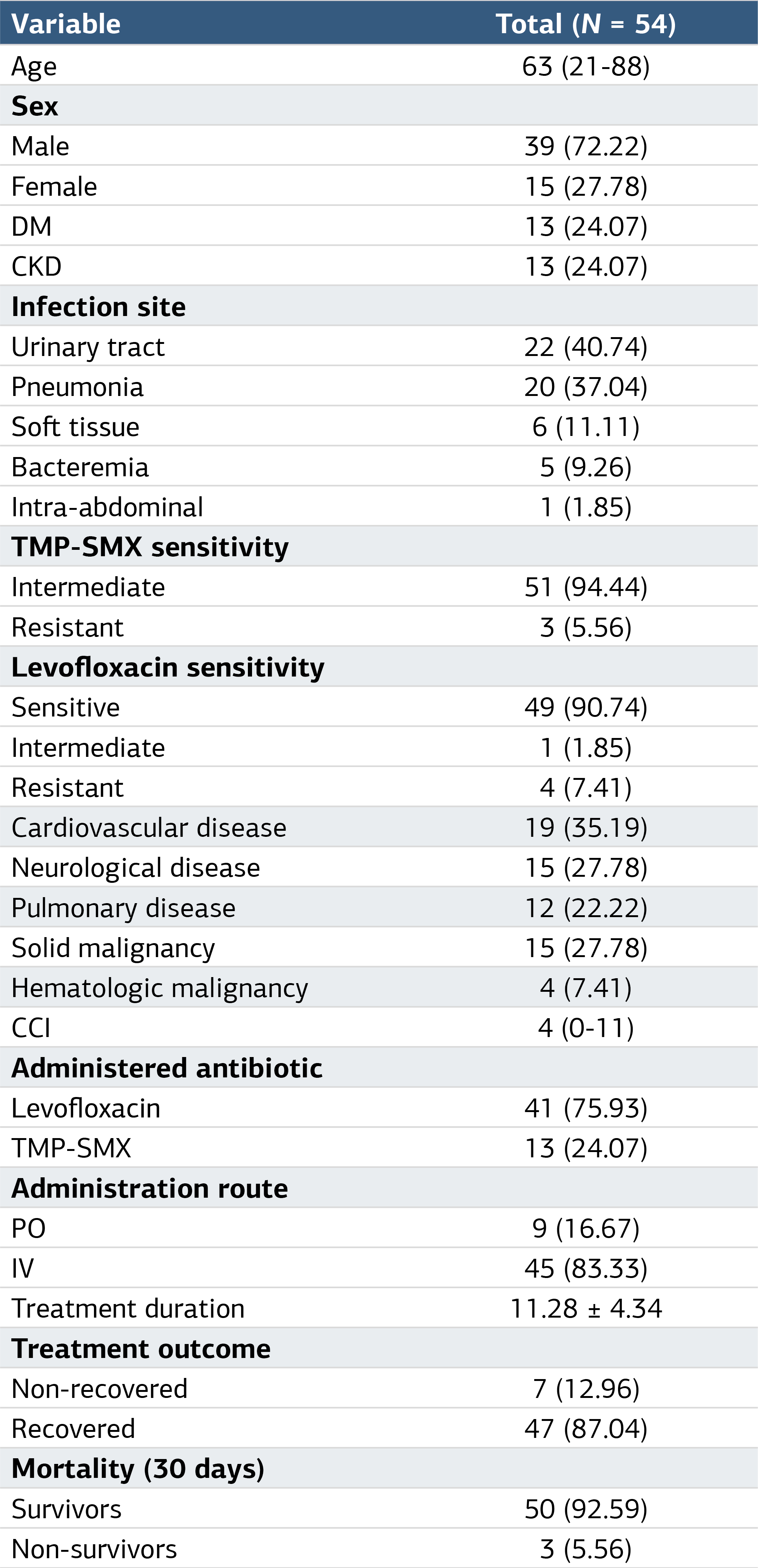
Numeric variables are presented as median (minimum-maximum) or mean ± SD. Categorical variables are presented as count and percentage [n (%)]. CCI: Charlson Comorbidity Index, CKD: Chronic Kidney Disease, DM: Diabetes Mellitus, IV: Intravenous, PO: Per Oral, TMP-SMX: Trimethoprim/sulfamethoxazole
Table 2. Analysis according to antibiotic administered
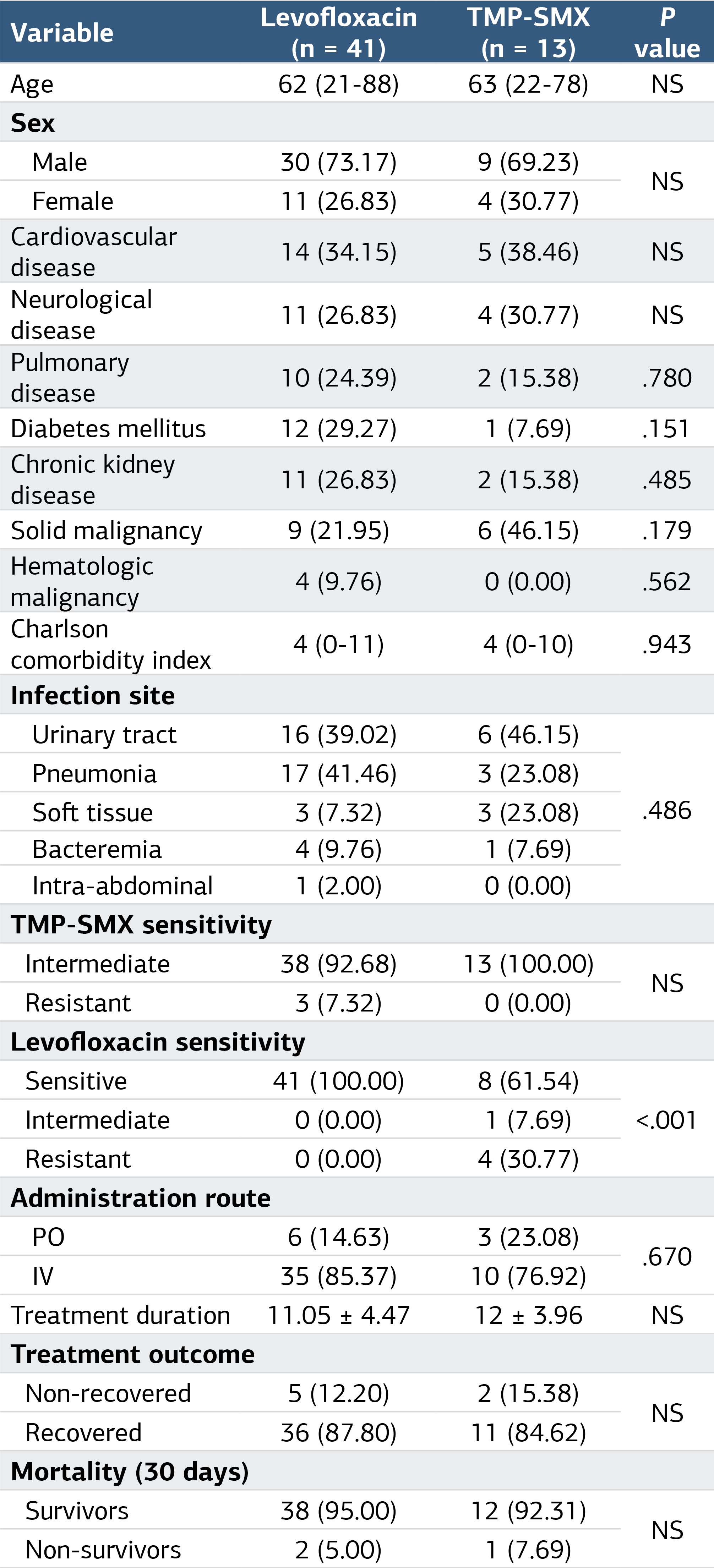
Categorical variables are presented as count and percentage [n (%)]. P values below 0.05 were bolded to indicate statistical significance. NS (non-significant): P > .99. IV: Intravenous, PO: Per Oral, TMP-SMX: Trimethoprim/sulfamethoxazole
Figures
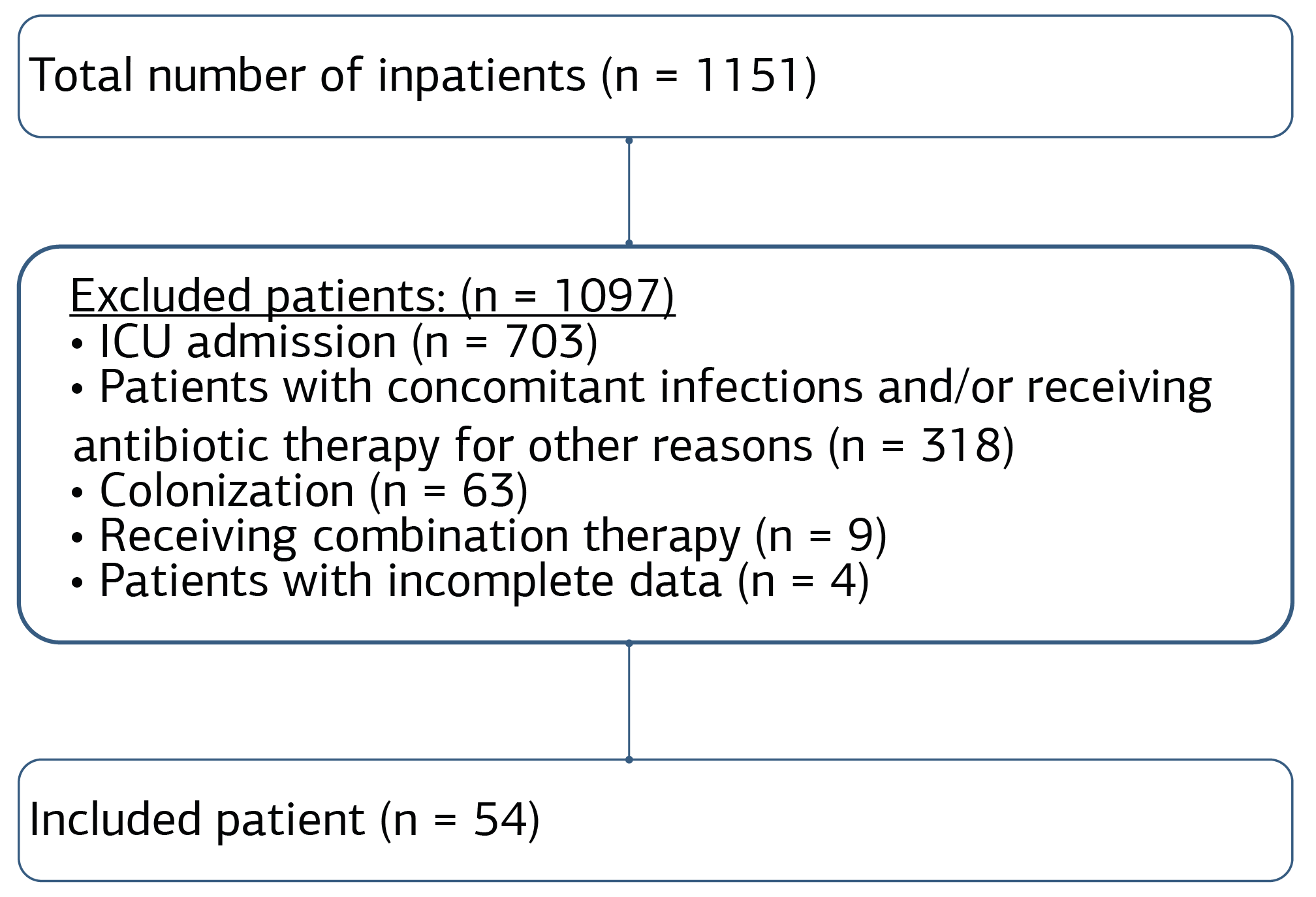
Figure 1. Patient inclusion and exclusion flowchart
Additional Information
Publisher’s Note
Bayrakol MP remains neutral with regard to jurisdictional and institutional claims.
Rights and Permissions

This work is licensed under a Creative Commons Attribution-NonCommercial 4.0 International License (CC BY-NC 4.0). To view a copy of the license, visit https://creativecommons.org/licenses/by-nc/4.0/
About This Article
How to Cite This Article
Onur Özalp, Yusuf Yiğit, Beyza Öncel, Ramazan Korkusuz. Levofloxacin as a potential substitute for trimethoprim-sulfamethoxazole in stenotrophomonas maltophilia infections: a retrospective cohort study. Ann Clin Anal Med 2025;16(Suppl 3):172-176. doi:10.4328/ACAM.22890
Publication History
- Received:
- 11.09.2025
- Accepted:
- 13.10.2025
- Published Online:
- 22.10.2025
- Printed:
- 25.10.2025