
Declarations
Ethics Declarations
The authors declare that all procedures performed in this study were conducted in accordance with institutional, national, and international ethical standards.
Animal and Human Rights Statement
All procedures involving human participants were conducted in accordance with the Declaration of Helsinki and its later amendments.
Informed Consent
Due to the retrospective nature of the study and the use of anonymized data, informed consent was waived by the Ethics Committee.
Data Availability
The datasets used and/or analyzed during the current study are not publicly available due to patient privacy reasons but are available from the corresponding author on reasonable request.
Conflict of Interest
The authors declare that there is no conflict of interest.
Funding
None.
Author Contributions (CRediT Taxonomy)
Conceptualization: İ.O.Y., N.A.
Methodology: İ.O.Y., O.Y.
Software: O.Y.
Validation: M.G.A., N.S.
Formal Analysis: O.Y., İ.O.Y.
Investigation: T.A., M.D.
Data Curation: T.A., M.D.
Writing – Original Draft: İ.O.Y., O.Y.
Writing – Review & Editing: N.A., M.G.A., N.S.
Supervision: N.S.
References
- Klingler HC, Remzi M, Janetschek G, Kratzik C, Marberger MJ. Comparison of open versus laparoscopic pyeloplasty techniques in treatment of uretero-pelvic junction obstruction. Eur Urol. 2003;44(3):340-345. doi:10.1016/s0302-2838(03)00297-5
- Braga LHP, Lorenzo AJ, Bägli DJ, et al. Risk factors for recurrent ureteropelvic junction obstruction after open pyeloplasty in a large pediatric cohort. J Urol. 2008;180(4 Suppl):1684-1687. doi:10.1016/j.juro.2008.03.086
- Ceyhan E, Ileri F, Ceylan T, Aydin AM, Dogan HS, Tekgul S. Predictors of recurrence and complications in pediatric pyeloplasty. Urology. 2019;126:187-191. doi:10.1016/j.urology.2019.01.014
- Suarez-Ibarrola R, Hein S, Reis G, et al. Current and future applications of machine and deep learning in urology: a review of the literature on urolithiasis, renal cell carcinoma, and bladder and prostate cancer. World J Urol. 2020;38(10):2329-2347. doi:10.1007/s00345-019-03000-5
- Blum ES, Porras AR, Biggs E, et al. Early detection of ureteropelvic junction obstruction using signal analysis and machine learning: a dynamic solution to a dynamic problem. J Urol. 2018;199(3):847-852. doi:10.1016/j.juro.2017.09.147
- Drysdale E, Khondker A, Kim JK, et al. Personalized application of machine learning algorithms to identify pediatric patients at risk for recurrent ureteropelvic junction obstruction after dismembered pyeloplasty. World J Urol. 2022;40(2):593-599. doi:10.1007/s00345-021-03879-z
- Dindo D, Demartines N, Clavien PA. Classification of surgical complications: a new proposal with evaluation in a cohort of 6336 patients and results of a survey. Ann Surg. 2004;240(2):205-213. doi:10.1097/01.sla.0000133083.54934.ae
- Breiman L. Random forests. Mach Learn. 2001;45(1):5-32. doi:10.1023/a:1010933404324
- Pedregosa F, Varoquaux G, Gramfort A, et al. Scikit-learn: machine learning in python. J Mach Learn Res. 2011;12(85):2825-2830.
- Danuser H, Ackermann DK, Böhlen D, Studer UE. Endopyelotomy for primary ureteropelvic junction obstruction: risk factors determine the success rate. J Urol. 1998;159(1):56-61. doi:10.1016/s0022-5347(01)64011-4
- Elbaset MA, Ezzat O, Elgamal M, et al. Supranormal differential renal function in adults with ureteropelvic junction obstruction: does it really exist? Indian J Urol. 2020;36(3):205-211. doi:10.4103/iju.iju_109_20
- Bai K, Hou Y, Zhang Z, et al. Ability of volume measures of hydronephrosis to predict need for surgery and evaluate renal function in children with ureteropelvic junction obstruction. Int J Urol. 2022;29(3):235-241. doi:10.1111/iju.14755
- Alici CA, Tokar B. Prediction of surgical necessity in children with ureteropelvic junction obstruction using machine learning. Ir J Med Sci. 2025;194(2):583-590. doi:10.1007/s11845-025-03895-7
- Mohan D, Jain V, Dayalani AN. Pelvic uretero junction obstruction detection using machine learning algorithm. In: 2025 Fifth International Conference on Advances in Electrical, Computing, Communication and Sustainable Technologies (ICAECT); 2025:1-7. doi:10.1109/icaect63952.2025.10958942
Figures
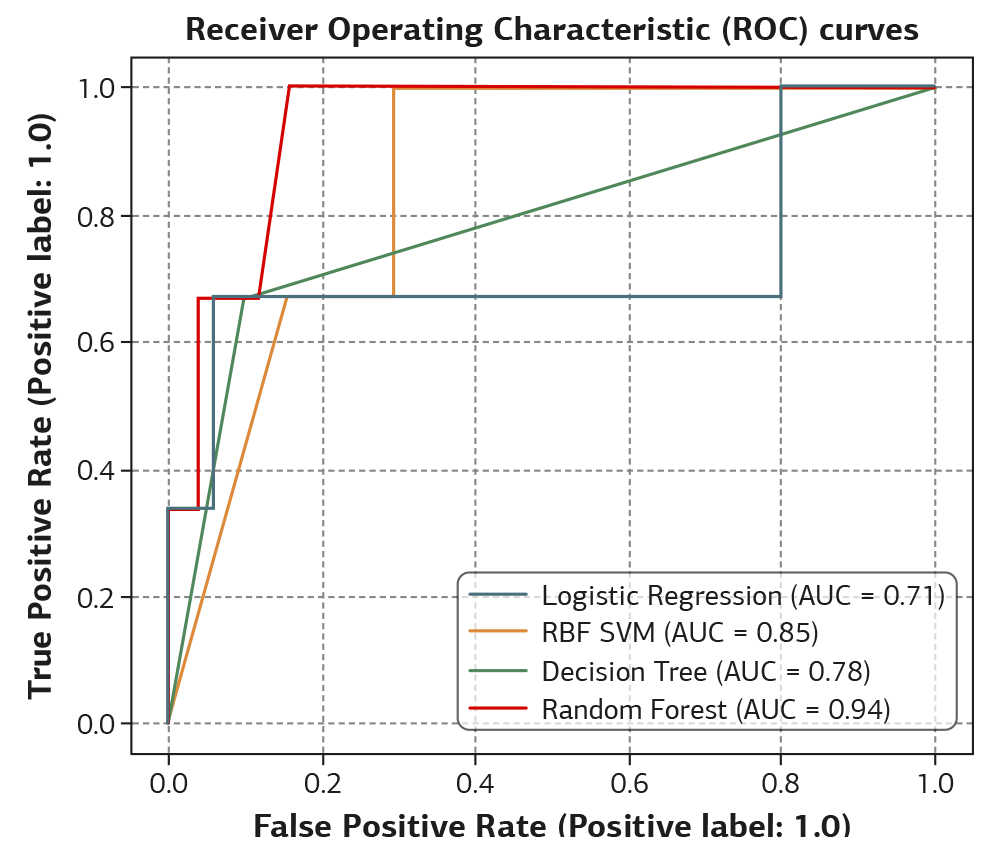
Figure 1. Receiver operating characteristic (ROC) curves comparison of the alghoritms
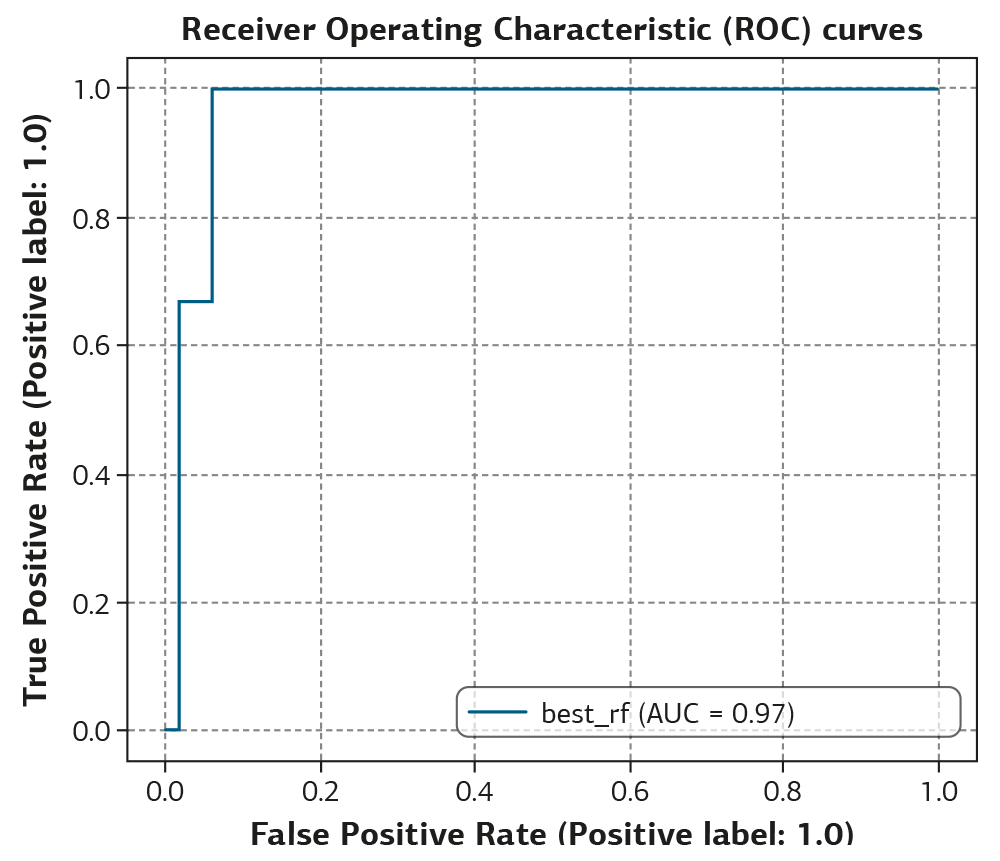
Figure 2. Best random forest model receiver operating characteristics curve
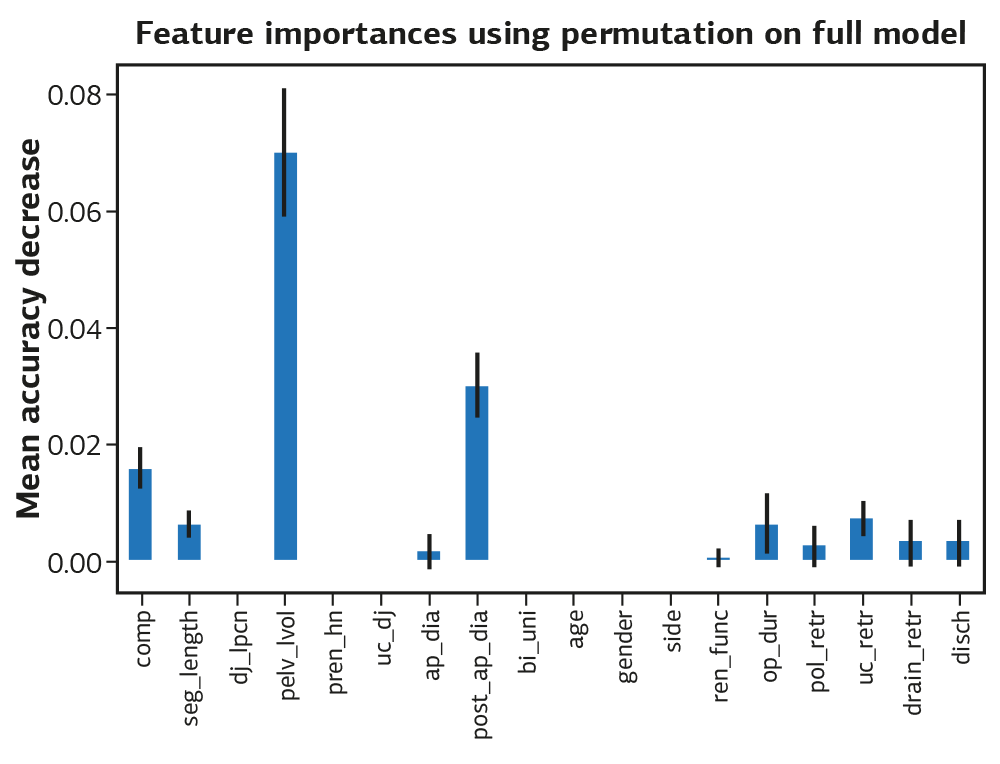
Figure 3. Decision tree training
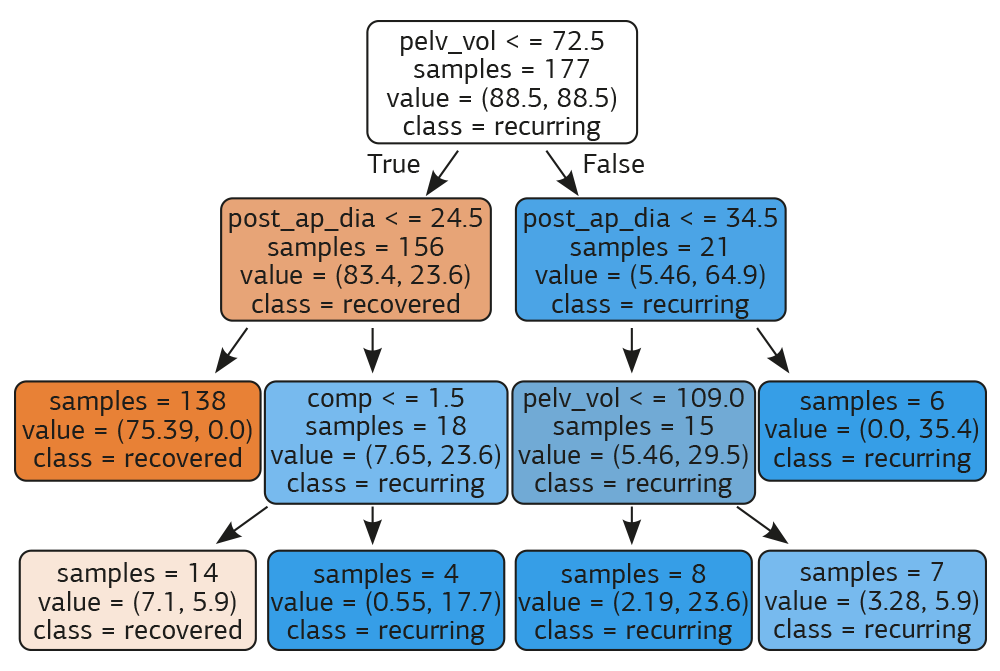
Figure 4. Feature importance analysis
Tables
About This Article
How to Cite This Article
İsmail Onder Yilmaz, Nebil Akdogan, Mehmet Gurkan Arikan, Ozgur Yilmaz, Tunahan Ates, Mutlu Deger, Nihat Satar. Intraoperative pelvic urine volume as a machine learning predictor of recurrence after pediatric pyeloplasty. Ann Clin Anal Med 2026;17(6):566-571. doi:10.4328/ACAM.22901
Publication History
- Received:
- 16.09.2025
- Accepted:
- 03.11.2025
- Published Online:
- 06.12.2025
- Printed:
- 01.06.2026