
Abstract
AimUrethral stricture is a clinical condition characterized by fibrosis of the urethral mucosa, often recurrent, and frequently requiring hospitalization and surgical intervention. Various inflammatory markers, such as the Systemic Inflammatory Index, have been reported to increase in recurrent urethral strictures and be effective in predicting recurrence. This study aimed to evaluate the role of inflammatory processes and markers in patients who underwent internal urethrotomy and to determine their relationship with recurrence.MethodsMale patients aged 18–80 years who underwent urethral surgery and had complete data were included in the study. Hemogram parameters, platelet-to-lymphocyte ratio (PLR), neutrophil-to-lymphocyte ratio (NLR), AST/ALT ratio, and patient comorbidities were analyzed. Patients were divided into recurrent and non-recurrent groups after internal urethrotomy.ResultsRecurrence was statistically higher in patients with diabetes mellitus (P < .05). No significant differences were observed between the groups in laboratory parameters such as WBC, lymphocyte, and platelet counts, or in ratios such as AST/ALT, PLR, and NLR. However, CRP levels were significantly higher in the recurrent group compared to the non-recurrent group (P < .05). ConclusionThe recurrence rate of urethral stricture was higher in patients with chronic diseases such as diabetes mellitus and hypertension. Our findings suggest that the presence of diabetes mellitus increases the likelihood of recurrence following internal urethrotomy and that elevated CRP levels at admission may be a predictive marker for recurrence.
Keywords
Introduction
Urethral stricture is a clinical condition that develops as a result of fibrosis of the urethral mucosa, often recurrent in nature, and frequently requiring hospitalization and surgical intervention.1 In addition to inflammation, etiological factors include sexually transmitted infections, iatrogenic urethral trauma (such as catheterization), perineal trauma, and a history of prostate surgery.2,3 The incidence of urethral stricture is reported to be between 23 and 63 per 10,000 individuals, with the most common localization being the bulbar urethra among anterior urethral strictures.4 Treatment options include internal urethrotomy, urethral dilatation, and open surgery such as urethroplasty.2,4 Despite a reported success rate of 8–77% for internal urethrotomy, the recurrence rate of urethral stricture remains high.3,4 One of the reasons for this high recurrence is that internal urethrotomy itself contributes to scar formation.4
In recent years, inflammation has been shown to be closely associated with urethral stricture, and inflammatory processes are considered significant contributing factors in its pathogenesis.5 In an experimental rat model of urethral stricture, inflammatory parameters were found to be increased, with a marked and severe inflammatory response demonstrated in the stricture group.5,6 Furthermore, urethral inflammation and infiltration of inflammatory cells have been identified as key factors in the development of stricture.7 Elevated inflammatory markers, such as the Systemic Inflammatory Index (SII), have also been reported in recurrent urethral stricture, and these markers may play an important role in predicting recurrence.6 Several studies have recognized systemic inflammatory markers as reflections of the body’s overall inflammatory response.8-16
Based on this background, the present study aimed to evaluate inflammatory processes and markers in patients who underwent internal urethrotomy for urethral stricture, comparing those with and without recurrence during follow-up, in order to determine their potential role in predicting recurrence.
Materials and Methods
This retrospective study was conducted at the Department of Urology, Aksaray Training and Research Hospital, between January 2022 and January 2025. The study population consisted of male patients over the age of 18 who were diagnosed with urethral stricture and underwent internal urethrotomy. Inclusion criteria were male patients aged 18–80 years with complete clinical and laboratory data who had undergone urethral surgery. Exclusion criteria included patients with active counts, the neutrophil-to-lymphocyte ratio (NLR) as the ratio of neutrophil to lymphocyte counts, and the AST/ALT ratio (De Ritis ratio) as the ratio of aspartate aminotransferase to alanine aminotransferase.
Patients were divided into five groups based on comorbidities: diabetes mellitus (DM), hypertension (HT), coronary artery disease (CAD), chronic obstructive pulmonary disease (COPD), and others. They were further classified into two groups according to recurrence: patients who developed urethral stricture within six months or later after internal urethrotomy (recurrence group) and those who did not (non-recurrence group). Inflammatory markers were compared between the two groups.
The study was conducted in accordance with the principles of the Declaration of Helsinki. Owing to its retrospective design, informed consent was not required.Ethical ApprovalThe study was approved by the Ethics Committee of Aksaray University (Date: 14.08.2025, Decision No: 2025/62).Statistical AnalysisThe data were analyzed using the Statistical Package for the Social Sciences (SPSS) for Windows, version 22.0 (IBM Corp., Armonk, NY, USA). Descriptive statistics were used for the demographic characteristics of the patients. The Chi-square test and Mann-Whitney U test were employed to compare the proportions of categorical variables. The association between chronic diseases and recurrence was evaluated using the Chi-square test. Numerical data were expressed as mean ± standard deviation (SD) and minimum–maximum values. A P value of <0.05 was considered the threshold for statistical significance in all analyses.
Reporting GuidelinesThis study was reported according to the STROBE guideline.
Results
A total of 79 patients were included in the study, consisting of 41 patients with recurrent urethral stricture (UD) after the first internal urethrotomy and 38 patients without recurrence. The study flow diagram is presented in Figure 1. The mean age of patients in the recurrent UD group was 65.6 ±16.7 years, which was not significantly different compared to the non-recurrent group (P = .134).
In the recurrent group, diabetes mellitus (DM) was present in 28 patients (68.2%), which was significantly higher compared to the non-recurrent group (P < .05). The comparison of demographic characteristics between the two groups is summarized in Table 1.
No significant differences were observed between the two groups in laboratory parameters such as WBC, lymphocyte, and platelet counts, or in ratios including AST/ALT, PLR, and NLR. However, CRP levels were found to be significantly higher in the recurrent group compared to the non-recurrent group (P < .05).
The comparison of laboratory values between the two groups is presented in Table 2.
Discussion
Urethral stricture is one of the oldest and most challenging diseases in urology. It is most frequently seen between the ages of 20 and 70, while it is rare outside this age range. This contradicts the notion that the incidence of stricture increases proportionally with age, particularly after the age of 55.17 The success of treatment depends not only on the choice of modality but also on the location and length of the stricture.18 Internal urethrotomy is generally the first-line treatment, whereas open urethroplasty remains the most effective option in recurrent cases. While primary strictures are often idiopathic or iatrogenic, multiple factors contribute to recurrence. Identifying these factors and implementing preventive measures may reduce recurrence rates. Chronic comorbidities such as diabetes mellitus (DM) and hypertension (HT) have been associated with higher recurrence rates.5
In our study, we found that DM was a significant factor increasing recurrence after internal urethrotomy, and elevated CRP levels at admission were also higher in the recurrence group. Kinnaird et al. reported in a series of 604 patients that the mean age of patients with recurrent urethral stricture was 44.5 years, and being over 50 years was a risk factor for recurrence.2 Similarly, Blaschko et al. found the median age of recurrence cases to be 44 (11–75), and Van Dyke et al. reported a mean age of 51.6 years.19,20 In contrast, the mean age in our study was 65.6 years, which is higher compared to previous studies; this may be related to our exclusion criteria.
Chapman et al., in a series of 595 patients who underwent bulbar urethroplasty, identified DM, HT, obesity, and infectious diseases as risk factors for recurrence.21 Gul et al. also reported that the frequency of DM and HT was higher in patients with recurrent stricture.22 In line with these studies, we demonstrated that DM was more frequent in patients with recurrence compared to those without recurrence.
Bagchi et al., in a study of 105 patients, reported higher CRP levels in patients with recurrent stricture (11.54 ± 3.64) compared to those with successful outcomes.23 Similarly, Tokuç et al. found that CRP levels in patients with recurrence were 4.5±2.1, nearly twice as high as in non-recurrent cases.24 Consistent with these findings, our study also showed that CRP levels were significantly elevated in patients with recurrence.
Gul et al. reported that PLR, but not NLR, was a risk factor for urethral stricture developing after transurethral resection of the prostate.25 In contrast, Urkmez et al., in a study of 512 patients with recurrent stricture, found that NLR was elevated and could predict recurrence after surgery.18 Another study reported that PLR and SII were significant predictors of recurrence, while NLR was not.23 As seen, no specific inflammatory marker has yet been universally accepted for predicting recurrent urethral stricture. In agreement with this, our study found no significant differences in NLR or PLR between patients with and without recurrence.
This study has some limitations. First, it was conducted at a single center with a relatively small sample size, which may limit the generalizability of the findings. Second, due to its retrospective design, certain clinical data could not be fully evaluated. Finally, long-term follow-up data were not available; therefore, late complications could not be assessed. Future studies with larger populations and prospective designs will be necessary to strengthen the clinical utility of inflammatory markers in predicting recurrent urethral stricture.
Limitations
This study has several limitations. First, its retrospective design may have introduced selection bias and limited the ability to establish causal relationships. Second, the sample size was relatively small and derived from a single center, which may restrict the generalizability of the results. Third, only a limited number of inflammatory markers were evaluated; other systemic or local inflammatory parameters that might influence recurrence risk were not assessed. Additionally, the follow-up duration and patient adherence to postoperative care may have affected recurrence rates. Therefore, larger, prospective, and multicenter studies are needed to confirm these findings and clarify the underlying mechanisms.
Conclusion
In conclusion, urethral stricture is a frequent ailment in men, and more than half of those who undergo internal urethrotomy have a recurrence during follow-up. In our investigation, CRP levels were considerably greater in individuals with recurrent urethral stricture, but other inflammatory markers revealed no significant changes. Furthermore, diabetes mellitus was associated with an increased risk of recurrence. These data imply that increased CRP levels and diabetes mellitus may be objective predictors of recurrence following internal urethrotomy. Prospective, multicenter investigations are required to validate these findings and further understand their therapeutic value.
Declarations
Animal and Human Rights Statement
All procedures performed in this study were in accordance with the ethical standards of the institutional and/or national research committee and with the 1964 Helsinki Declaration and its later amendments or comparable ethical standards.
Informed Consent
Not required.
Data Availability
The datasets used and/or analyzed during the current study are not publicly available due to patient privacy reasons but are available from the corresponding author on reasonable request.
Conflict of Interest
The authors declare that there is no conflict of interest.
Funding
None.
Abbreviations
ALT: Alanine aminotransferase
AST: Aspartate aminotransferase
CRP: C-reactive protein
DM: Diabetes mellitus
HT: Hypertension
NLR: Neutrophil-to-lymphocyte ratio
PLR: Platelet-to-lymphocyte ratio
SD: Standard deviation
WBC: White blood cell
References
- Lumen N, Campos-Juanatey F, Greenwell T, et al. European Association of Urology guidelines on urethral stricture disease (part 1): management of male urethral stricture disease. Eur Urol. 2021;80(2):190-200. doi:10.1016/j.eururo.2021.05.022
- Kinnaird AS, Levine MA, Ambati D, Zorn JD, Rourke KF. Stricture length and etiology as preoperative independent predictors of recurrence after urethroplasty: a multivariate analysis of 604 urethroplasties. Can Urol Assoc J. 2014;8(5-6). doi:10.5489/cuaj.1661
- McGeorge S, Chung A, Desai DJ. Trends in urethral stricture management over 2 decades. BJU Int. 2019;124(1):37-41. doi:10.1111/bju.14875
- Diamond DA, Ji X, Bauer SB, et al. What is the optimal surgical strategy for bulbous urethral stricture in boys? J Urol. 2009;182(4):1755-1758. doi:10.1016/j.juro.2009.02.082
- Özsoy E, Kutluhan MA, Tokuç E, et al. Predictive value of systemic immune-inflammation index in recurrent urethral strictures. Urologia. 2023;90(3):510-515. doi:10.1177/03915603221132033
- Ergün O, Tepebaşi MY, Onaran İ, et al. Standardizing urethral stricture models in rats: a comprehensive study on histomorphologic and molecular approach. Int Urol Nephrol. 2024;56(9):2945-2954. doi:10.1007/s11255-024-04034-4
- Aydın A, Oltulu P, Balasar M, et al. The role of prostate inflammation in the pathogenesis of urethral strictures occurring after transurethral resections. Rev Int Androl. 2022;20(2):86-95. doi:10.1016/j.androl.2020.10.009
- Akbulut Yağcı B, Erdal H. Can pan-immune inflammation value and systemic inflammatory response index be used clinically to predict inflammation in patients with cataract? Ann Clin Anal Med. 2023;14(12):1064-1067.
- Karaoglanoglu S, Erdal H, Sonmez MK. Can pan-immune inflammation value and systemic inflammatory response index be used clinically to predict inflammation in patients with non-small cell lung cancer? EJMI. 2024;8(1):54-57. doi:10.14744/ejmi.2023.39651
- Yasar E, Erdal H, Tuncer SC, Yagcı BA. The use of calprotectin and other inflammatory parameters in the investigation of pseudoexfoliation syndrome concomitant glaucoma and systemic diseases. Indian J Ophthalmol. 2024;72(suppl 3):393-397. doi:10.4103/ijo.ijo_914_23
- Günaydın FE, Erdal H. Is there a relationship between systemic immune-inflammatory indices and asthma? Ann Clin Anal Med. 2023;14(9):840-843
- Erdal H, Günaydın FE. Are pan-immune inflammation value and systemic inflammatory response index clinically useful to predict in patients with chronic spontaneous urticaria? Ann Clin Anal Med. 2023;14(10):897-900. doi:10.4328/acam.21799
- Erdal H, Kılıc AO, Akbulut Yagcı B, et al. Can the pan-immune inflammation value, systemic inflammatory response index, and other hematological inflammatory indices be clinically used to predict pseudoexfoliation? J Clin Pract Res. 2024;46(1):19-23. doi:10.14744/cpr.2024.36036
- Genc SO, Erdal H. Evaluating hematological inflammatory markers as predictors of preeclampsia. Clin Exp Obstet Gynecol. 2024;51(7):163. doi:10.31083/j.ceog5107163
- Akbulut Yagci B, Erdal H, Uyar E, Deniz M. Evaluation of progression predictability with systemic inflammatory biomarkers in keratoconus patients. Med Sci. 2025;14(2):314-317. doi:10.5455/medscience.2024.10.133
- Erdal H, Giynas Ayhan M, Inanli I. Evaluation of calprotectin and other inflammatory parameters in patients with schizophrenia. Bratisl Med J. 2025;126(10):2674-2679. doi:10.1007/s44411-025-00235-0
- Palminteri E, Berdondini E, Verze P, De Nunzio C, Vitarelli A, Carmignani L. Contemporary urethral stricture characteristics in the developed world. Urology. 2013;81(1):191-197. doi:10.1016/j.urology.2012.08.062
- Urkmez A, Topaktas R, Ozsoy E, et al. Is neutrophil to lymphocyte ratio a predictive factor for recurrence of urethral stricture? Rev Assoc Med Bras. 2019;65(12):1448-1453. doi:10.1590/1806-9282.65.12.1448
- Blaschko SD, McAninch JW, Myers JB, Schlomer BJ, Breyer BN. Repeat urethroplasty after failed urethral reconstruction: outcome analysis of 130 patients. J Urol. 2012;188(6):2260-2264. doi:10.1016/j.juro.2012.07.101
- VanDyke M, Joshi E, Ceballos B, et al. Efficacy of the Optilume paclitaxel drug-coated balloon after urethroplasty: short-term results from a multicenter study. Ther Adv Urol. 2025;17:17562872241312522. doi:10.1177/17562872241312522
- Chapman D, Kinnaird A, Rourke K. Independent predictors of stricture recurrence following urethroplasty for isolated bulbar urethral strictures. J Urol. 2017;198(5):1107-1112. doi:10.1016/j.juro.2017.05.006
- Gul A, Ekici O, Zengin S, Barali D, Keskin T. Investigation of risk factors in the development of recurrent urethral stricture after internal urethrotomy. World J Clin Cases. 2024;12(14):2324-2332. doi:10.12998/wjcc.v12.i14.2324
- Bagchi PK, Saurabh N, Phukan M, Barua SK, Sarma D, Puthenveetil RT. Significance of inflammatory biomarkers and urethral histology in patients with urethral stricture disease in relation to treatment outcome: a single centre prospective study in the north-eastern part of India. Afr J Urol. 2022;28(1):1. doi:10.1186/s12301-021-00252-9
- Tokuç E, Eksi M, Kayar R, et al. Inflammation indexes and machine-learning algorithm in predicting urethroplasty success. Investig Clin Urol. 2024;65(3):240-247.
- Gül M, Altıntaş E, Kaynar M, Buğday MS, Göktaş S. The predictive value of platelet to lymphocyte and neutrophil to lymphocyte ratio in determining urethral stricture after transurethral resection of prostate. Turk J Urol. 2017;43(3):325-329.
Tables
Table 1. Comparison of demographic characteristics of the patients
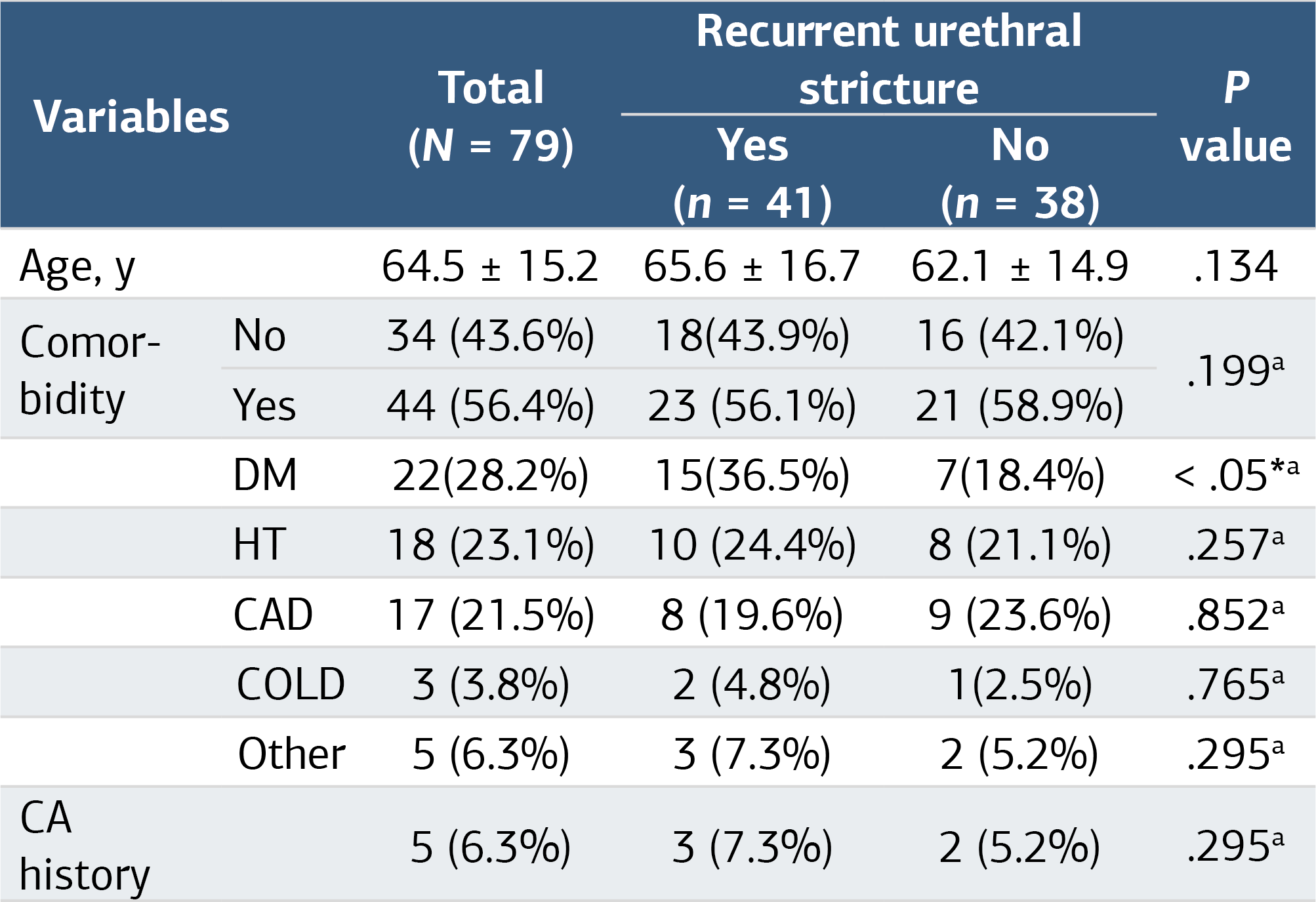
DM: diabetes mellitus, HT: hypertension, CAD: coronary artery disease, COLD: chronic obstructive lung disease, CPR: cardiopulmonary resuscitation, WBC: white blood count, BUN: blood urea nitrogen, NLR: neutrophil lymphocyte ratio, PLR: platelet lymphocyte ratio, GLR: glucose potassium ratio.*P value < 0.05, a: chi-square test (n / %).
Table 2. Comparison of laboratory parameters between patient groups
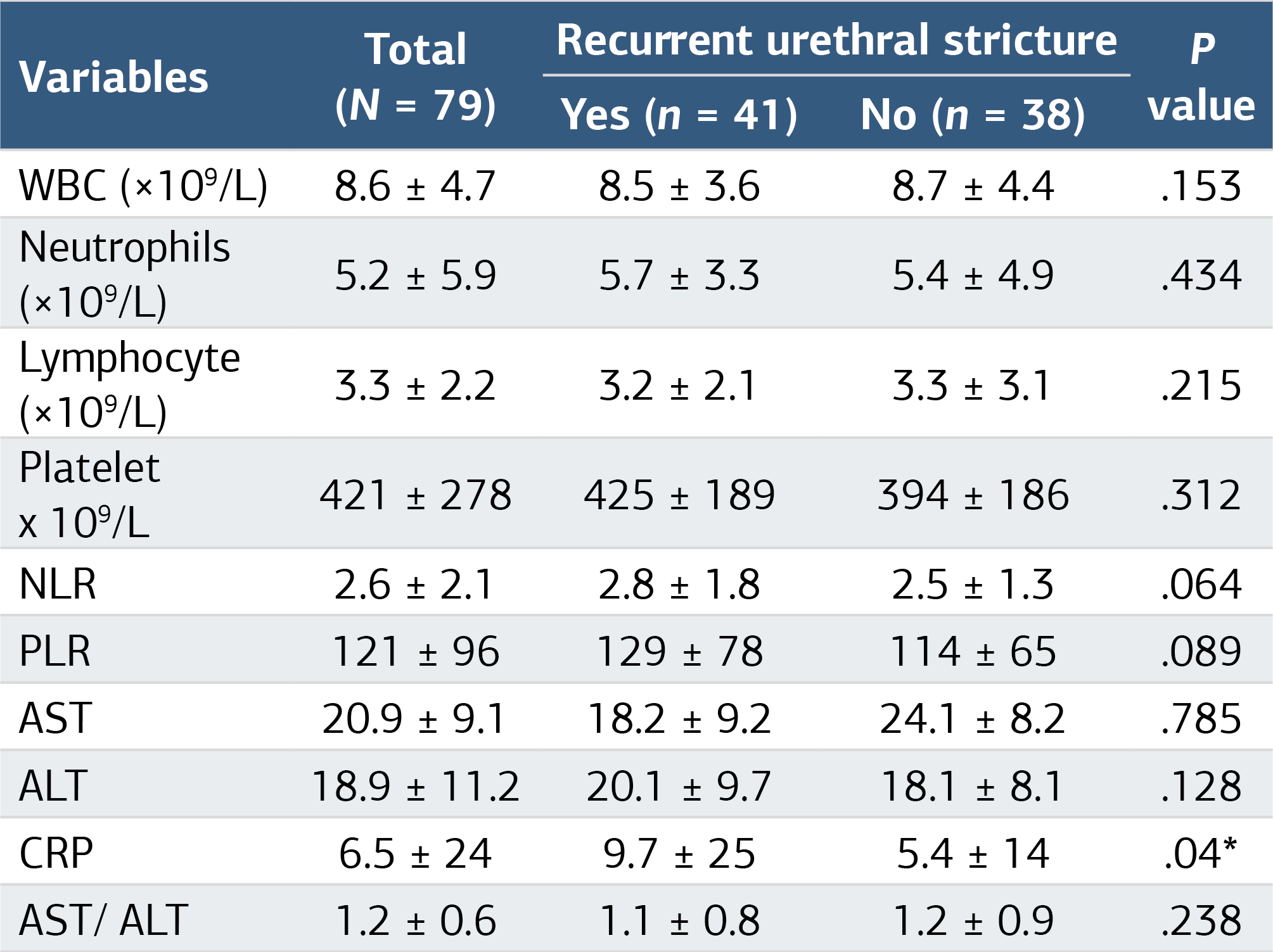
WBC: white blood cell, NLR: neutrophil to lymphocyte ratio; PLR: platelet to lymphocyte ratio; AST: ALT: AST/ ALT: CRP: C-reactive Protein. as a statistical analysis, the kruskalWallis test was used. * =P < .05 was considered significant. SD: standard deviation
Figures
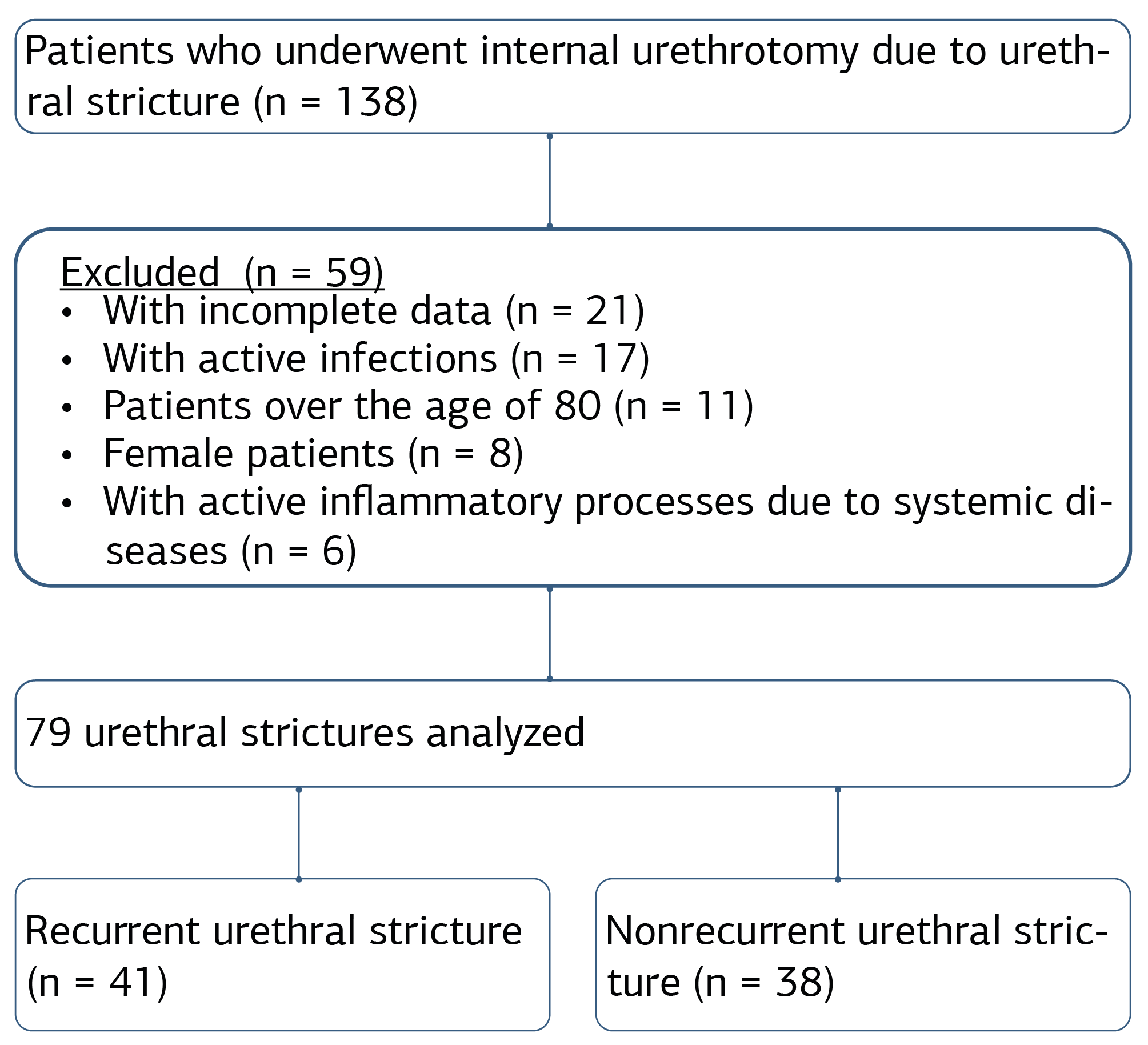
Figure 1. Flowchart for patients undergoing internal urethrotomy due to urethral stricture
Additional Information
Publisher’s Note
Bayrakol MP remains neutral with regard to jurisdictional and institutional claims.
Rights and Permissions

This work is licensed under a Creative Commons Attribution-NonCommercial 4.0 International License (CC BY-NC 4.0). To view a copy of the license, visit https://creativecommons.org/licenses/by-nc/4.0/
About This Article
How to Cite This Article
Nazım Abdulkadir Kankılıç. The impact of the inflammatory process and biomarkers in recurrent urethral stricture. Ann Clin Anal Med 2025;16(Suppl 3):192-195. doi:10.4328/ACAM.22914
Publication History
- Received:
- 25.09.2025
- Accepted:
- 23.10.2025
- Published Online:
- 23.10.2025
- Printed:
- 25.10.2025