
Abstract
AimThe use of the reverse Trendelenburg position and controlled hypotension during septorhinoplasty may affect regional cerebral oxygen saturation (rScO₂). Cerebral oximetry, using near-infrared spectroscopy (NIRS), enables monitoring of these changes and detection of low rScO₂ and tissue hypoxia. This present investigation was designed to determine the combined influences of reverse Trendelenburg positioning and controlled hypotension on rScO₂ in patients undergoing septorhinoplasty.MethodsFifty patients who underwent septorhinoplasty were enrolled in this prospective study. Regional cerebral oxygen saturation was continuously monitored using cerebral oximetry (NIRS). Participants were allocated to one of two groups based on the operating table’s position: horizontal (0° RTP) or 15° reverse Trendelenburg (15° RTP).ResultsDuring the surgical procedures, rScO₂ values from both the right and left cerebral hemispheres were recorded at ten distinct time points and compared between the two groups. The analysis of the collected data revealed no statistically significant differences in intergroup rScO₂ values.ConclusionThe use of the 15-degree reverse Trendelenburg position, in conjunction with controlled hypotension, did not impair regional cerebral oxygen saturation during septorhinoplasty surgery.
Keywords
Introduction
Achieving a bloodless, clear surgical field is a primary goal in septorhinoplasty, with various anesthetic and surgical techniques employed to facilitate it. These methods include controlled hypotension, intranasal or oral corticosteroid administration, and local injections or topical sinonasal vasoconstrictors.1 Controlled hypotension is a frequently utilized technique to minimize perioperative bleeding, enhance surgical field visualization, reduce operative time, and decrease the incidence of surgical complications. It is typically defined by a reduction in systolic arterial pressure (SAP) to 70-80 mmHg, maintaining mean arterial pressure (MAP) between 50-65 mmHg, or a decrease in the initial MAP by 30%.2,3 In addition to controlled hypotension, adopting a reverse Trendelenburg position (RTP) can also be an effective strategy.4 RTP can decrease venous return and raise systemic vascular resistance, thereby reducing the perfusion index. Furthermore, at a 15-degree RTP, the hydrostatic pressure difference between the brain and the arm is approximately 10 mmHg, meaning a MAP of 65 mmHg measured at the arm level would equate to roughly 55 mmHg at the circle of Willis, a pressure near the lower limit of cerebral vascular autoregulation. Previous research has indicated that moderate intentional hypotension (60-70 mmHg) can increase S-100β levels, an early marker of brain ischemia-related changes.5 Consequently, this study aimed to investigate the impact of perioperative controlled hypotension and RTP on cerebral oxygenation using cerebral near-infrared spectroscopy (NIRS) monitoring. NIRS offers a continuous, non-invasive method for assessing oxygen saturation in the frontal region of the brain.6 NIRS monitoring can be performed at various anatomical sites, including the brain, kidneys, lower extremities, brachioradialis muscle, and thenar region.7,8 Cerebral oximetry, first described over three decades ago, has seen increased application in specialized clinical settings over the past twenty years.9 NIRS technology operates on the Beer-Lambert law, measuring light absorption by biological tissue to determine substance concentration, with modifications to account for light scattering. In the 700-900 nm optical window, light can penetrate skin and bone, with hemoglobin as the primary absorber. By analyzing the differential absorption of oxygenated and deoxygenated hemoglobin at two wavelengths, NIRS devices estimate tissue oxygen saturation under the probe. Unlike pulse oximeters that use subtraction algorithms for arterial saturation, NIRS devices employ similar algorithms to filter superficial signals and derive an average hemoglobin saturation in the underlying tissue. Most NIRS devices provide continuous real-time regional cerebral oxygen saturation (rScO₂) readings.10 NIRS can facilitate the early detection of tissue hypoxia before significant negative impacts on rScO₂.11 The patient's surgical position is a critical factor in interpreting rScO₂ values, regardless of the surgical procedure. Particular attention is warranted during arterial hypotension, especially in semi-Fowler’s or Fowler’s positions. In certain conditions that elevate intracranial pressure, cerebral perfusion may be reduced even with normal arterial blood pressure. Therefore, the patient’s intraoperative positioning is recognized as a factor necessitating cerebral oximetry.12 In this study, cerebral NIRS monitoring was employed in patients undergoing septorhinoplasty. Controlled hypotension was maintained by a remifentanil infusion to achieve a mean arterial pressure of 60- 70 mmHg, aiming to minimize surgical bleeding. The study also sought to compare NIRS values between patients positioned at 0° and 15° RTP.
Materials and Methods
Following approval from the Malatya Tutgut Özal University Clinical Research Ethics Committee, fifty patients scheduled for septorhinoplasty were included. Exclusion criteria comprised individuals under 18 or over 50 years of age, those with an American Society of Anesthesiologists (ASA) physical status classification more than 2, a history of cerebrovascular disease, chronic obstructive pulmonary disease, asthma, peripheral artery disease, central nervous system disease, congestive heart failure, liver disease, kidney disease, diabetes mellitus, alcohol or drug dependence, and a history of allergy to anesthetic drugs. No premedication was administered. Upon arrival in the operating room, patients were subjected to standard monitoring, including a 3-lead electrocardiogram, non-invasive blood pressure, peripheral oxygen saturation, and rScO₂ using an INVOS 5100C oximeter (Somanetics, Covidien, Minneapolis, USA), with baseline values recorded. Anesthesia induction involved intravenous administration of 1.5 mg kg-1 lidocaine, 2 mg kg-1 propofol, and 2 µg kg-1 fentanyl, followed by 0.6 mg kg-1 rocuronium for muscle relaxation. After intubation, a goniometer was placed near the patient’s head, and the operating table was adjusted to the assigned angle for each group: either the horizontal 0-degree position or the 15-degree RTP. Controlled hypotension was maintained throughout the procedure with an intravenous remifentanil infusion at a dose of 0.25-0.5 µg kg-1 min-1, targeting a mean arterial pressure of 60-70 mmHg. The remifentanil infusion was to be discontinued if the mean arterial pressure decreased by more than 30% from baseline. Throughout the intubation period, peripheral oxygen saturation, mean arterial pressure, heart rate, left and rScO₂ values, and end-tidal carbon dioxide were continuously recorded. Postoperatively, patients were extubated and transferred to the recovery unit.Ethical ApprovalThis study was approved by the Ethics Committee of Malatya Tutgut Özal University (Date: 22.10.2022, Decision No:2022/52).Statistical AnalysisData were presented as mean ± standard deviation, median (min-max), and count (percent). The Shapiro-Wilk test was used to assess conformity to normal distribution. Statistical analyses were performed using appropriate tests, including the Pearson chi-square test, independent-samples t-test, and Mann-Whitney U test. A p-value less than 0.05 was considered statistically significant. Data analysis was performed using IBM SPSS Statistics version 26.0.Reporting GuidelinesThe study was reported in accordance with STROBE guideline.
Results
The present investigation comprised 50 patients. Demographic data are presented in Table 1. No significant differences were observed between the 15° RTP group (17 female, 7 male) and the 0° RTP group (21 female, 5 male) in terms of age, height, weight, or body mass index (BMI). Hemodynamic data are detailed in Supplementary Table 1. Comparisons of peripheral oxygen saturation, mean arterial pressure, heart rate, left and right cerebral rScO₂ values, and end-tidal carbon dioxide values between the groups revealed significant differences during specific phases of surgery: Heart Rate (p=0.006*), Pulse Saturation (p=0.013*), and End-Tidal CO₂ (p=0.010**) at the “Start of Surgery” phase; Pulse Saturation (p=0.003) and End-Tidal CO₂ (p=0.0049) during “Surgery 1”; End-Tidal CO₂ (p=0.001) during “Surgery 2”; and Mean Arterial Pressure (p=0.0027) and End-Tidal CO₂ (p=0.001) during “Surgery 3”. When examining rScO₂ values, no significant differences were observed between the groups at any stage (Supplementary Table 2). Cerebral oximetry values of the groups are shown in Figure 1. Specifically, rScO₂ monitoring of both the right and left hemispheres across ten different time points showed no statistically significant intergroup differences.
Discussion
A primary concern regarding the use of controlled hypotension in septorhinoplasty is its potential adverse effect on cerebral oxygenation. The addition of RTP has also raised concerns about further compromising cerebral oxygen delivery. This study investigated the combined influence of controlled hypotension and RTP on brain oxygenation and found no deterioration in cerebral oxygenation as indicated by NIRS monitoring in either group. Bleeding in septorhinoplasty typically originates from the nasal mucosa’s capillary network, and nasal blood flow is influenced by arterial blood flow, vascularization, and venous pressure.13,14 Persistent, albeit minor, bleeding from the nasal mucosa can significantly impair visualization within the confined nasal cavity. Our study aimed to assess the impact of interventions aimed at reducing such bleeding on cerebral oxygenation during RTP. Previous studies by Gan et al. and Hathorn et al. demonstrated that 15° or 20° RTP can substantially facilitate surgical visualization.3,15 Our findings align with this, as we observed no significant difference in rScO₂ values between the 0° and 15° RTP groups under controlled hypotension. In a study involving patients undergoing controlled hypotension in the beach chair position, a 25% rate of cerebral desaturation events (CDEs) was reported, with CDEs associated with negative postoperative neurocognitive test outcomes. This highlights the potential utility of brain oximetry in preventing adverse neuropsychiatric outcomes during functional endoscopic sinus surgery.16 NIRS has also proven beneficial in assessing cerebral tissue oxygen levels in patients undergoing cardiac surgery, hypotensive anesthesia, and prolonged RTP positioning. Beyond surgical contexts, NIRS is increasingly used to evaluate brain oxygenation during critical events such as cardiac arrest.17 Cerebral oximetry assesses average regional tissue oxygenation in the frontal cortex, functioning similarly to pulse oximetry by analyzing the ratio of oxygenated to deoxygenated hemoglobin using light transmission.18 NIRS provides quantitative and qualitative data on total tissue oxygen and deoxyhemoglobin, reflecting oxygen supply and demand, whereas pulse oximetry focuses solely on arterial hemoglobin.19 Near-infrared (NIR) light, typically between 700 and 850 nm, is used in clinical NIRS applications. This spectral range maximizes the distinction between oxygenated and deoxygenated hemoglobin and minimizes interference from other chromophores. The influence of myoglobin on NIRS measurements of tissue oxygenation is generally considered minimal.20,21 Yang et al. in their study on endoscopic sinus surgery, utilized remifentanil infusion for controlled hypotension (MAP 65-75 mmHg) and found that while 15° RTP improved surgical clarity, rScO₂ remained unaffected by varying RTP degrees.22 Our study corroborates these findings, showing no significant difference in rScO₂ between horizontal and 15° RTP. Zhang et al. reported a minimal decrease (around 5%) in rScO₂ compared to baseline when MAP was reduced by 30% during endoscopic sinus surgery, with decreases in rScO₂ correlating with reduced MAP.23 Shear et al. found that controlled hypotension within the 55-65 mmHg range did not affect rScO₂ in pediatric patients, and Salman et al. noted that esmolol-induced controlled hypotension did not impact rScO₂ during myomectomy.24,25
Limitations
Limitations of this investigation include its single-center design, relatively small sample size, and the absence of postoperative mental state assessments.
Conclusion
The use of RTP in septorhinoplasty patients undergoing controlled hypotension did not yield a significant difference in rScO₂ among the groups. However, given the uncertainty surrounding postoperative cognitive function, it is advisable to closely monitor blood pressure and avoid profound hypotension while considering the circulatory effects of advanced RTP on the circle of Willis.
Declarations
Animal and Human Rights Statement
All procedures performed in this study were in accordance with the ethical standards of the institutional and/or national research committee and with the 1964 Declaration of Helsinki and its later amendments, or comparable ethical standards.
Informed Consent
Written informed consent was obtained from all participants.
Data Availability
The datasets used and/or analyzed during the current study are not publicly available due to patient privacy reasons but are available from the corresponding author on reasonable request.
Conflict of Interest
The authors declare that there is no conflict of interest.
Funding
None.
Author Contributions (CRediT Taxonomy)
Conceptualization: E.K., Ç.F.K.
Methodology: E.K., Ç.F.K., S.K., Ş.Y.
Investigation: E.K., Ç.F.K., S.K.
Data Curation: E.K., Ş.Y.
Formal Analysis: Ş.Y. Writing–Original Draft: E.K. Writing–Review & Editing: Ç.F.K., S.K., Ş.Y.
Supervision: Ç.F.K.
AI Usage Disclosure
No artificial intelligence tools were used in the preparation of this manuscript.
Abbreviations
ASA: American society of anesthesiologists
BMI: Body mass index
MAP: Mean arterial pressure
NIRS: Near-infrared spectroscopy
RTP: Reverse Trendelenburg position
References
- Alsaleh S, Manji J, Javer A. Optimization of the surgical field in endoscopic sinus surgery: an evidence-based approach. Curr Allergy Asthma Rep. 2019;19(1):8. doi:10.1007/s11882-019-0847-5
- Barak M, Yoav L, Abu el-Naaj I. Hypotensive anesthesia versus normotensive anesthesia during major maxillofacial surgery: a review of the literature. ScientificWorldJournal. 2015;2015:480728. doi:10.1155/2015/480728
- Moreno DH, Cacione DG, Baptista-Silva JC. Controlled hypotension versus normotensive resuscitation strategy for people with ruptured abdominal aortic aneurysm. Cochrane Database Syst Rev. 2018;6(6). doi:10.1002/14651858.cd011664.pub3
- Gan EC, Habib AR, Rajwani A, Javer AR. Five-degree, 10-degree, and 20-degree reverse Trendelenburg position during functional endoscopic sinus surgery: a double-blind randomized controlled trial. Int Forum Allergy Rhinol. 2014;4(1):61-68. doi:10.1002/alr.21249
- Mortuaire G, Bahij J, Maetz B, Chevalier D. Lund-Mackay score is predictive of bleeding in ethmoidectomy for nasal polyposis. Rhinology. 2008;46(4):285-288.
- Ferradal SL, Yuki K, Vyas R, et al. Noninvasive assessment of cerebral blood flow and oxygen metabolism in neonates during hypothermic cardiopulmonary bypass: feasibility and clinical implications. Sci Rep. 2017;7:44117. doi:10.1038/srep44117
- Wolf M, Ferrari M, Quaresima V. Progress of near-infrared spectroscopy and topography for brain and muscle clinical applications. J Biomed Opt. 2007;12(6):062104. doi:10.1117/1.2804899
- Owens GE, King K, Gurney JG, Charpie JR. Low renal oximetry correlates with acute kidney injury after infant cardiac surgery. Pediatr Cardiol. 2011;32(2):183-188. doi:10.1007/s00246-010-9839-x
- Végh T. Cerebral oximetry in general anaesthesia. Turk J Anaesthesiol Reanim. 2016;44(5):247-249. doi:10.5152/tjar.2016.26092016
- Terborg C, Birkner T, Schack B, et al. Noninvasive monitoring of cerebral oxygenation during vasomotor reactivity tests by a new near-infrared spectroscopy device. Cerebrovasc Dis. 2003;16(1):36-41. doi:10.1159/000070113
- Carron E. Positive end-expiratory pressure in obese patients during general anaesthesia: the role of intraabdominal pressure. Br J Anaesth. 2018;120(2):409-410. doi:10.1016/j.bja.2017.12.013
- Koh JL, Levin SD, Chehab EL, Murphy GS. Neer Award 2012: cerebral oxygenation in the beach chair position: a prospective study on the effect of general anesthesia compared with regional anesthesia and sedation. J Shoulder Elbow Surg. 2013;22(10):1325-1331. doi:10.1016/j.jse.2013.01.035
- Nekhendzy V, Lemmens HJ, Vaughan WC, et al. The effect of deliberate hypercapnia and hypocapnia on intraoperative blood loss and quality of surgical field during functional endoscopic sinus surgery. Anesth Analg. 2007;105(5):1404-1409. doi:10.1213/01.ane.0000282781.56025.52
- Lung MA, Wang JC. Effects of hypercapnia and hypoxia on nasal vasculature and airflow resistance in the anaesthetized dog. J Physiol. 1986;373:261-275. doi:10.1113/jphysiol.1986.sp016046
- Hathorn IF, Habib AR, Manji J, Javer AR. Comparing the reverse Trendelenburg and horizontal position for endoscopic sinus surgery: a randomized controlled trial. Otolaryngol Head Neck Surg. 2013;148(2):308-313. doi:10.1177/0194599812466529
- Heller JA, DeMaria S Jr, Govindaraj S, et al. Cerebral oximetry monitoring during sinus endoscopy. Laryngoscope. 2015;125(4). doi:10.1002/lary.25027
- Parnia S. Cerebral oximetry leading up to cardiac arrest: a marker of the impact of mean arterial pressure on the brain, but not time of death. Resuscitation. 2017;121.
- Asim K, Ozlem B, Gokhan E, et al. The use of cerebral oximetry in acute carbon monoxide intoxication: a preliminary study. Keio J Med. 2015;64(4):57-61. doi:10.2302/kjm.2014-0010-oa
- Sinex JE. Pulse oximetry: principles and limitations. Am J Emerg Med. 1999;17(1):59-67. doi:10.1016/s0735-6757(99)90019-0
- Seiyama A, Hazeki O, Tamura M. Noninvasive quantitative analysis of blood oxygenation in rat skeletal muscle. J Biochem. 1988;103(3):419-424. doi:10.1093/oxfordjournals.jbchem.a122285
- Mancini DM, Bolinger L, Li H, Kendrick K, Chance B, Wilson JR. Validation of near-infrared spectroscopy in humans. J Appl Physiol (1985). 1994;77(6):2740-2747. doi:10.1152/jappl.1994.77.6.2740
- Yang W, Wang G, Li H, et al. The 15° reverse Trendelenburg position can improve visualization without impacting cerebral oxygenation in endoscopic sinus surgery: a prospective, randomized study. Int Forum Allergy Rhinol. 2021;11(6):993-1000. doi:10.1002/alr.22734
- Zhang L, Yu Y, Xue J, et al. Effect of deliberate hypotension on regional cerebral oxygen saturation during functional endoscopic sinus surgery: a randomized controlled trial. Front Surg. 2021;8:681471. doi:10.3389/fsurg.2021.681471
- Shear T, Tobias JD. Cerebral oxygenation monitoring using near infrared spectroscopy during controlled hypotension. Paediatr Anaesth. 2005;15(6):504-508. doi:10.1111/j.1460-9592.2005.01495.x
- Salman SA, Shebab HA. Esmolol hypotension maintains tissue perfusion during myomectomy judged by Masimo monitoring of regional cerebral oxygen saturation and pleth variability index. Egypt J Anaesth. 2019;34(2):49-53.
Tables
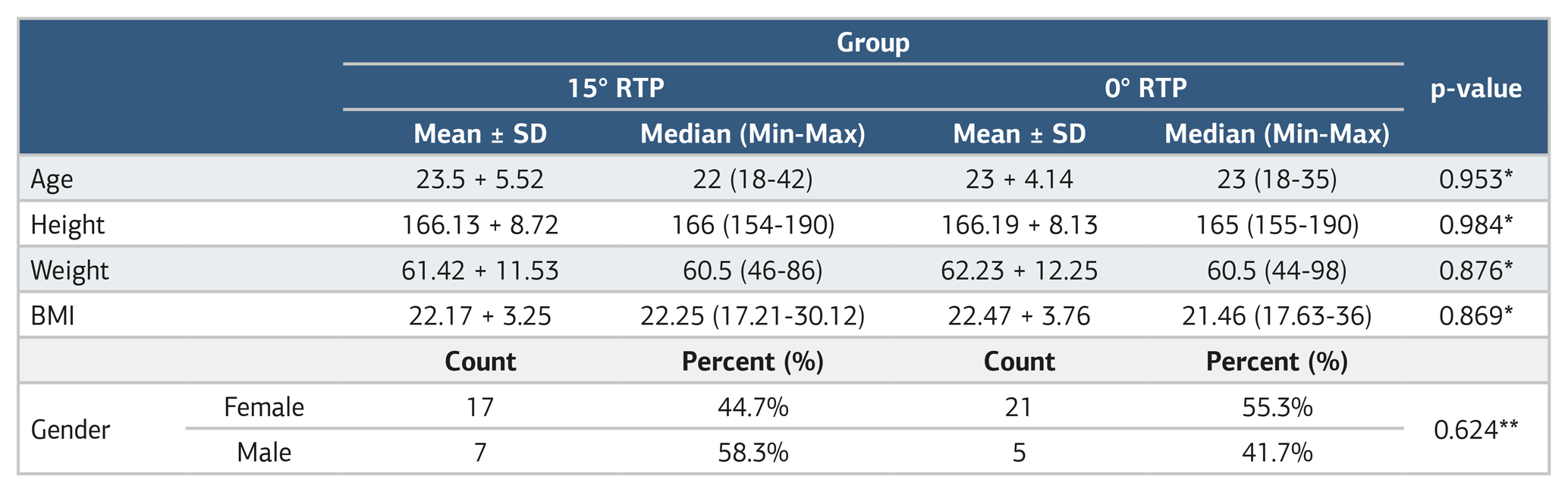
Table 2. Hemodynamic Changes
*: Independent sample t-test, **: Mann-Whitney U test
Table 3. Mean cerebral oximetry values of the groups
*: Indpendent Sample t-test, **: Mann-Whitney U test
Figures
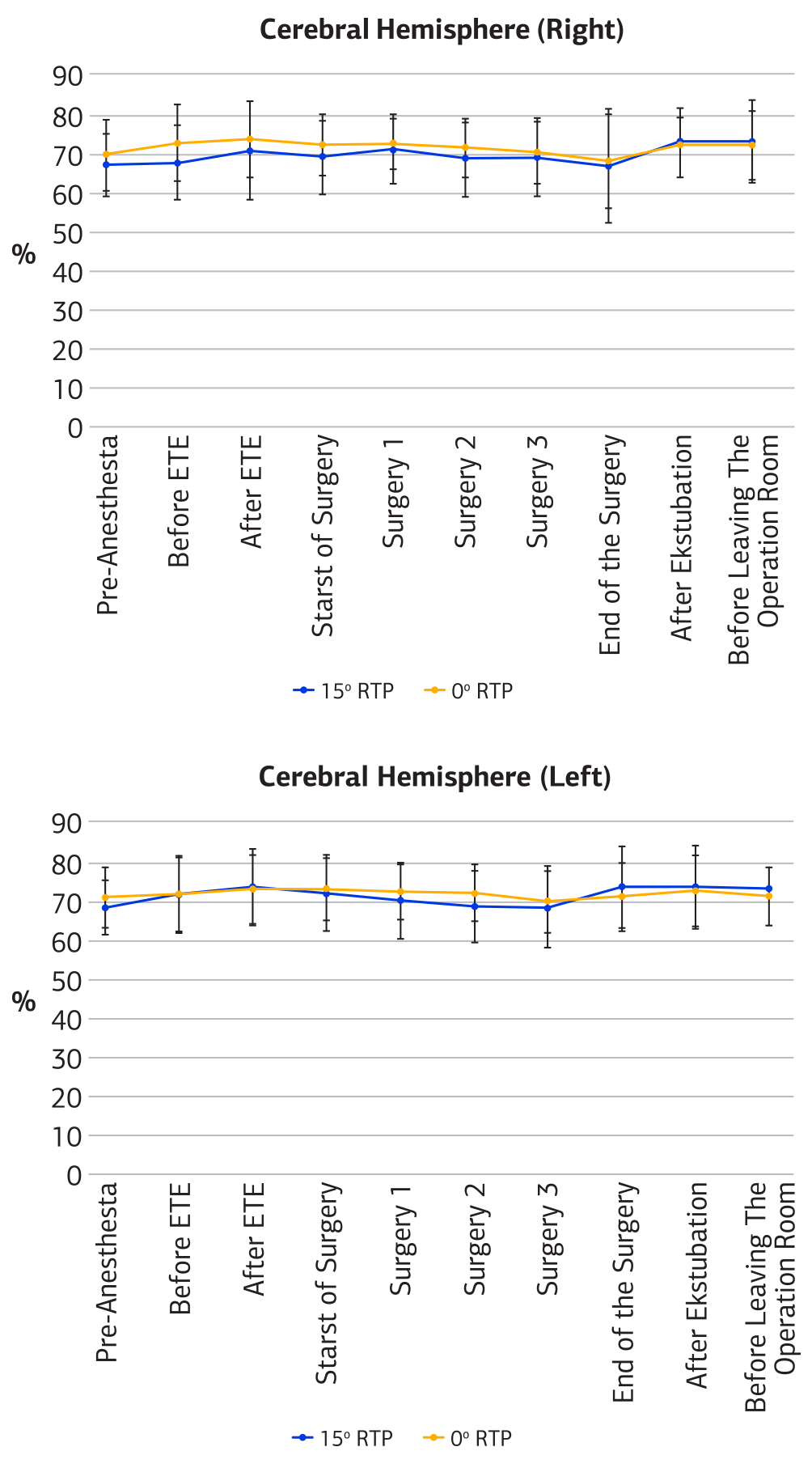
Figure 1. rScO2 monitoring of both right and left hemispheres across ten different time points
Additional Information
Publisher’s Note
Bayrakol MP remains neutral with regard to jurisdictional and institutional claims.
Rights and Permissions

This work is licensed under a Creative Commons Attribution-NonCommercial 4.0 International License (CC BY-NC 4.0). To view a copy of the license, visit https://creativecommons.org/licenses/by-nc/4.0/
About This Article
How to Cite This Article
Erdinç Koca, Çiğdem Fırat Koca, Sevgi Kutlusoy, Şeyma Yaşar. The effect of reverse Trendelenburg position on cerebral oxygenation in septorhinoplasty. Ann Clin Anal Med 2026;17(7):747-750. doi:10.4328/ACAM.22961
Publication History
- Received:
- 27.10.2025
- Accepted:
- 09.12.2025
- Published Online:
- 19.12.2025
- Printed:
- 01.07.2026