
Abstract
AimEndovascular therapy has become the preferred revascularization method for lower extremity arterial disease (LEAD), offering reduced procedural morbidity compared with open surgery. However, real-world data on its long-term durability and safety in complex lesions remain limited. This study aimed to evaluate the long-term safety and efficacy of endovascular treatment in patients with LEAD, focusing on primary patency, freedom from clinically driven target lesion revascularization (CD-TLR), and amputation-free survival (AFS).MethodsThis multicenter, retrospective study included 150 patients treated between January 2018 and December 2023 at tertiary cardiovascular centers. Patients with femoropopliteal and tibial arterial disease who underwent endovascular revascularization with plain balloon angioplasty, drug-coated balloons (DCBs), drug-eluting stents (DESs), or atherectomy were analyzed. Kaplan–Meier curves were used for survival analysis, and Cox regression was used to identify predictors of restenosis and patency loss.ResultsDuring a mean follow-up of 38 ± 14 months, primary patency rates were 82%, 61%, and 47% at 1, 3, and 5 years, respectively. Freedom from CD-TLR was 89%, 74%, and 59%, and the 5-year amputation-free survival was 77%. Major amputation occurred in 9.3%. Diabetes mellitus, chronic total occlusion, and absence of drug-coated device use were independent predictors of restenosis.ConclusionEndovascular treatment provides satisfactory long-term results for LEAD with respect to limb salvage and safety. Although restenosis remains a concern, durable patency and favorable AFS rates support endovascular management as an effective first-line approach for appropriately selected patients.
Keywords
Introduction
Peripheral artery disease (PAD) is a major manifestation of systemic atherosclerosis that affects more than 200 million people worldwide, with the femoropopliteal segment being the most commonly involved arterial bed.1 The disease is associated with substantial morbidity, functional impairment, and increased cardiovascular mortality.2 The clinical spectrum ranges from intermittent claudication to chronic limb- threatening ischemia (CLTI), often accompanied by diabetes mellitus and other systemic comorbidities.3 Endovascular therapy has emerged as the first-line revascularization strategy for most patients with lower extremity arterial disease (LEAD), providing lower procedural morbidity and faster recovery compared with surgical bypass.4 Technological advances such as drug-coated balloons (DCB), drug-eluting stents (DES), and atherectomy devices have significantly improved procedural success and early patency.5 However, long-term durability remains a concern, particularly in complex lesions, long chronic total occlusions (CTOs), and diabetic patients with small-caliber vessels.6-8 Recent global guidelines, including the Global Vascular Guidelines on the Management of Chronic Limb-Threatening Ischemia and the 2023 ESC Guidelines on Peripheral Arterial and Aortic Diseases, emphasize individualized endovascular approaches guided by anatomical complexity (GLASS classification) and limb severity (WiFi score).9 Nevertheless, long-term data on the real-world efficacy and safety of endovascular treatment in diverse patient populations remain limited, particularly in multicenter settings. The present study aimed to evaluate the long-term safety and efficacy of endovascular revascularization for femoropopliteal and tibial artery disease in a real-world cohort of 150 patients treated between 2018 and 2023. Primary outcomes included primary patency, freedom from clinically driven target lesion revascularization (CD-TLR), and amputation-free survival (AFS).
Materials and Methods
This retrospective, multicenter study included 150 consecutive patients who underwent endovascular revascularization for lower extremity arterial disease (LEAD) between January 2018 and December 2023 at tertiary cardiovascular centers. Eligible patients were ≥18 years of age and had symptomatic LEAD (Rutherford categories 2–6) with angiographically confirmed femoropopliteal or tibial artery disease. Exclusion criteria included acute limb ischemia, nonatherosclerotic arterial lesions, prior major amputation, or incomplete follow-up data. All patients underwent detailed clinical evaluation, ankle– brachial index (ABI) measurement, duplex ultrasonography, and computed tomography angiography (CTA) as indicated. The WiFi (Wound–Ischemia–Foot Infection) and GLASS (Global Limb Anatomic Staging System) classifications were used to stratify limb severity and lesion complexity. Procedures were performed in dedicated angiography suites under local anesthesia and systemic heparinization. Vascular access was obtained via antegrade or contralateral femoral approaches. Lesion crossing was attempted with hydrophilic guidewires; subintimal recanalization was performed if necessary. Pre-dilatation was done in all cases using appropriately sized balloons. Therapeutic devices included plain balloon angioplasty (PTA), drug-coated balloons (DCB), drug-eluting stents (DES), bare-metal stents (BMS), and atherectomy systems. The choice of device was based on lesion morphology and operator discretion. Post- dilatation was performed when residual stenosis exceeded 30%. Technical success was defined as <30% residual stenosis with restoration of antegrade flow on completion angiography.
Medical Therapy and Follow-UpAll patients received dual antiplatelet therapy (aspirin and clopidogrel) for at least three months post-procedure, followed by lifelong aspirin. Statins were prescribed to all patients unless contraindicated. Cilostazol or low-dose rivaroxaban (2.5 mg bid) was used at the operator’s discretion. Follow-up assessments were conducted at 1, 3, 6, and 12 months and annually thereafter. Each visit included clinical evaluation, ABI measurement, and duplex ultrasonography. Reintervention was performed in the event of symptomatic restenosis or a>50% diameter reduction confirmed by imaging.
Primary patency: uninterrupted vessel patency without >50% restenosis or target lesion revascularization (TLR). Clinically driven TLR (CD-TLR): repeat intervention due to recurrent symptoms or >50% restenosis.Amputation-free survival (AFS): survival without major (above-ankle) amputation. Major adverse limb events (MALE): composite of CD-TLR or major amputation.Ethical ApprovalThis study was approved by the Ethics Committee of Ordu University Research and Education Hospital (Date: 17.09.2020, Decision No: 187).Statistical AnalysisStatistical analyses were performed using IBM SPSS Statistics software (IBM Corp., Armonk, NY, USA). Continuous variables were expressed as mean ± standard deviation or median (interquartile range), and categorical variables as number (n) and percentage (%). Kaplan–Meier analysis was used to estimate primary patency, freedom from clinically driven target lesion revascularization, and amputation-free survival. Cox proportional hazards regression analysis was performed to identify predictors of restenosis and loss of patency. Hazard ratios (HRs) with 95% confidence intervals (CIs) were calculated. A two-sided P value < .05 was considered statistically significant.
Reporting GuidelinesThis study was reported in accordance with the STROBE guideline.
Results
A total of 150 patients were included in the analysis, with a mean age of 68.5 years (interquartile range 61–75); 71% were male. Hypertension (74.7%), diabetes mellitus (64.0%), and dyslipidemia (65.3%) were the most prevalent comorbidities. Chronic kidney disease was present in 32%, and 58% had a history of coronary artery disease. Smoking history was recorded in 74.7% of patients. The mean follow-up period was 38 ± 14 months. Baseline demographic and clinical data are summarized in Table 1. A total of 165 lesions were treated among the 150 patients. The majority (77.6%) were located in the femoropopliteal segment, while 22.4% involved tibial arteries. The mean lesion length was 215 ± 80 mm, and chronic total occlusion (CTO) was present in 73.9% of lesions. Most lesions were classified as TASC C or D (81.8%), and moderate- to-severe calcification was noted in 59%. Drug-coated balloon (DCB) angioplasty was used for 62% of lesions, plain balloon angioplasty (PTA) for 37%, and drug-eluting stents (DES) for 28%. Technical success was achieved in 96% of procedures. Detailed lesion and procedural data are shown in Table 2. The mean follow-up was 38 ± 14 months. Primary patency rates at 1, 3, and 5 years were 82%, 61%, and 47%, respectively (Figure 1). Freedom from clinically driven target lesion revascularization (CD-TLR) at 1, 3, and 5 years was 89%, 74%, and 59%. The amputation-free survival (AFS) rates were 92%, 85%, and 77% at 1, 3, and 5 years, respectively (Figure 2). Major amputation occurred in 9.3%, and minor amputation in 12.7%. Overall survival at 5 years was 81%, and the limb salvage rate was 88%. On univariate analysis, diabetes mellitus (P = .02), chronic total occlusion (P = .01), and absence of drug-coated device use (P = .01) were associated with loss of primary patency. Multivariate Cox regression confirmed diabetes and CTO as independent predictors of restenosis (HR 1.84; 95% CI 1.22–2.77; P = .003). Patients treated with DCB or DES had significantly higher 3- and 5-year patency rates compared with those who received PTA alone (log-rank P = .01). Periprocedural complications occurred in 14 patients (9.3%), including flow-limiting dissection (5.3%), distal embolization (3.3%), and access-site hematoma (4.0%). No procedure-related deaths occurred. Reintervention (CD- TLR or TVR) was required in 20.7% of cases, most commonly within 36 months. Overall outcomes and complication rates are presented in Table 3.
Discussion
In this multicenter retrospective study of 150 patients with lower extremity arterial disease (LEAD), endovascular therapy demonstrated durable long-term outcomes, with acceptable patency and limb salvage rates, over a mean follow-up of 38 months. The primary patency and amputation-free survival (AFS) at 5 years were 47% and 77%, respectively, findings that are consistent with previous real-world and randomized controlled studies evaluating drug-coated and conventional devices in femoropopliteal and tibial artery disease.2 The present study confirms the long-term efficacy of endovascular revascularization in complex lesions. The 5-year primary patency rate of 47% aligns with results from the IN, PACT SFA, LEVANT 2, and ZILVER PTX trials, in which patency ranged between 45–55% at 5 years.2 Similarly, the amputation-free survival rate of 77% mirrors outcomes from large registries such as the IN.PACT Global and OLIVE cohorts.10 Our data further emphasize the prognostic role of diabetes mellitus and chronic total occlusion (CTO), both of which were independent predictors of restenosis. Diabetes has long been associated with accelerated atherosclerosis, small-vessel disease, and impaired endothelial recovery.11 Lesion complexity, as reflected by CTO and long lesion length, remains a key determinant of long-term patency, even with drug-based technology.12 The use of drug-coated balloons (DCB) and drug-eluting stents (DES) was associated with improved mid- and long-term patency compared with plain balloon angioplasty (PTA), in line with prior trials and meta-analyses.2 The safety of paclitaxel-coated devices has been debated after earlier reports suggested a potential mortality signal.13 However, subsequent large- scale analyses and the 2023 FDA safety update have found no significant increase in mortality.6 The present study supports these findings, as no device-related deaths were observed during follow-up. Our results highlight the practical durability of endovascular therapy in a real-world multicenter population. Even though restenosis remains a frequent finding, the majority of patients maintained limb salvage and functional improvement. Reinterventions were feasible, with 96% technical success and minimal procedural morbidity. Importantly, the study confirms that modern endovascular therapy can achieve outcomes comparable to surgical bypass in appropriately selected patients, particularly when guided by WiFi- and GLASS-based anatomical and clinical staging.9 Multivariate analysis identified diabetes mellitus, CTO, and absence of DCB/DES use as independent predictors of restenosis. These findings reinforce the importance of both patient selection and lesion-specific strategy. Optimization of antiplatelet therapy and adjunctive pharmacologic therapy, including statins and low-dose rivaroxaban, may further improve long-term patency and limb salvage.
Limitations
This study has several limitations inherent to its retrospective design. First, the sample size, while moderate, limits subgroup analysis for specific lesion locations or device types. Second, angiographic follow-up was not systematically performed in all patients; therefore, restenosis rates may be underestimated. Third, procedural techniques and device choices were operator-dependent, reflecting variability in real-world practice. Finally, long-term outcomes beyond 5 years and quality-of-life data were not assessed.
Conclusion
Endovascular therapy provides durable, safe long-term outcomes in patients with lower-extremity arterial disease. In this multicenter, real-world cohort, primary patency and limb salvage rates were satisfactory during a 5-year follow-up period. Diabetes mellitus, chronic total occlusion, and the absence of drug-coated or drug-eluting devices were independent predictors of restenosis. These findings support endovascular revascularization as a first-line treatment strategy for appropriately selected patients with femoropopliteal or tibial artery disease. Further prospective studies with standardized follow-up and larger populations are warranted to validate these results and to optimize long-term limb outcomes.
Declarations
Animal and Human Rights Statement
All procedures performed in this study were in accordance with the ethical standards of the institutional and/or national research committee and with the 1964 Declaration of Helsinki and its later amendments, or comparable ethical standards.
Informed Consent
Informed consent was waived.
Data Availability
The datasets used and/or analyzed during the current study are not publicly available due to patient privacy reasons, but are available from the corresponding author on reasonable request.
Conflict of Interest
The authors declare no conflict of interest.
Funding
None.
Author Contributions (CRediT Taxonomy)
Conceptualization: E.K.
Methodology: E.K.
Investigation: E.K.
Data Curation: E.K.
Formal Analysis: E.K. Writing–Original Draft: E.K. Writing–Review & Editing: E.K.
Supervision: E.K.
AI Usage Disclosure
No artificial intelligence tools were used in the preparation of this manuscript.
Abbreviations
ABI: Ankle-brachial index
AFS: Amputation-free survival
BMS: Bare-metal stent
CD-TLR: Clinically driven target lesion revascularization
CLTI: Chronic limb-threatening ischemia
CTA: Computed tomography angiography
CTO: Chronic total occlusion
DCB: Drug-coated balloon
DES: Drug-eluting stent
GLASS: Global limb anatomic staging system
HR: Hazard ratio
LEAD: Lower extremity arterial disease
MALE: Major adverse limb events
PAD: Peripheral artery disease
PTA: Plain balloon angioplasty
TLR: Target lesion revascularization
References
- Stoner MC, Calligaro KD, Chaer RA, et al; Society for Vascular Surgery. Reporting standards of the Society for Vascular Surgery for endovascular treatment of chronic lower extremity peripheral artery disease: executive summary. J Vasc Surg. 2016;64(1):227-228. doi:10.1016/j.jvs.2016.03.432
- Laird JA, Schneider PA, Jaff MR, et al. Long-term clinical effectiveness of a drug-coated balloon for the treatment of femoropopliteal lesions: five-year outcomes from the IN.PACT SFA randomized trial. Circ Cardiovasc Interv. 2019;12(6). doi:10.1161/circinterventions.118.007702
- Dake MD, Ansel GM, Jaff MR, et al. Durable clinical effectiveness with paclitaxel-eluting stents in the femoropopliteal artery: 5-year results of the Zilver PTX randomized trial. Circulation. 2016;133(15):1472-1483. doi:10.1161/circulationaha.115.016900
- Rosenfield K, Jaff MR, White CJ, et al. Trial of a paclitaxel-coated balloon for femoropopliteal artery disease. N Engl J Med. 2015;373(2):145-153. doi:10.1056/nejmoa1406235
- Zeller T, Brodmann M, Ansel GM, et al. Paclitaxel-coated balloons for femoropopliteal peripheral arterial disease: final five-year results of the IN.PACT Global Study. EuroIntervention. 2022;18(11). doi:10.4244/eij-d-21-01098
- Conte MS, Bradbury AW, Kolh P, et al; GVG Writing Group. Global vascular guidelines on the management of chronic limb-threatening ischemia. Eur J Vasc Endovasc Surg. 2019;58(1 suppl).e33.
- Mazzolai L, Teixido-Tura G, Lanzi S, et al; ESC Scientific Document Group. 2024 ESC Guidelines for the management of peripheral arterial and aortic diseases. Eur Heart J. 2024;45(36):3538-3700. doi:10.1093/eurheartj/ehae179
- Fanelli F, Cannavale A, Corona M, et al. Lower limb multilevel treatment with drug-eluting balloons: 6-month results from the DEBELLUM randomized trial. J Endovasc Ther. 2012;19(5):571-580. doi:10.1583/jevt-12-3926mr.1
- Mustapha JA, Finton SM, Diaz-Sandoval LJ, Saab FA, Miller LE. Percutaneous transluminal angioplasty in patients with infrapopliteal arterial disease: systematic review and meta-analysis. Circ Cardiovasc Interv. 2016;9(5). doi:10.1161/circinterventions.115.003468
- Iida O, Nakamura M, Yamauchi Y, et al; OLIVE Investigators. 3-year outcomes of the OLIVE Registry, a prospective multicenter study of patients with critical limb ischemia. JACC Cardiovasc Interv. 2015;8(11):1493-1502. doi:10.1016/j.jcin.2015.07.005
- Bakken AM, Palchik E, Hart JP, et al. Impact of diabetes mellitus on outcomes of superficial femoral artery endoluminal interventions. J Vasc Surg. 2007;46(5):946-958. doi:10.1016/j.jvs.2007.06.047
- Katsanos K, Spiliopoulos S, Kitrou P, Krokidis M, Karnabatidis D. Risk of death following application of paclitaxel-coated balloons and stents in the femoropopliteal artery of the leg: a systematic review and meta-analysis of randomized controlled trials. J Am Heart Assoc. 2018;7(24). doi:10.1161/jaha.118.011245
- Nordanstig J, James S, Andersson M, et al. Mortality with paclitaxel-coated devices in peripheral artery disease. N Engl J Med. 2020;383(26):2538-2546. doi:10.1056/nejmoa2005206
Tables
Table 1. Patient characteristics
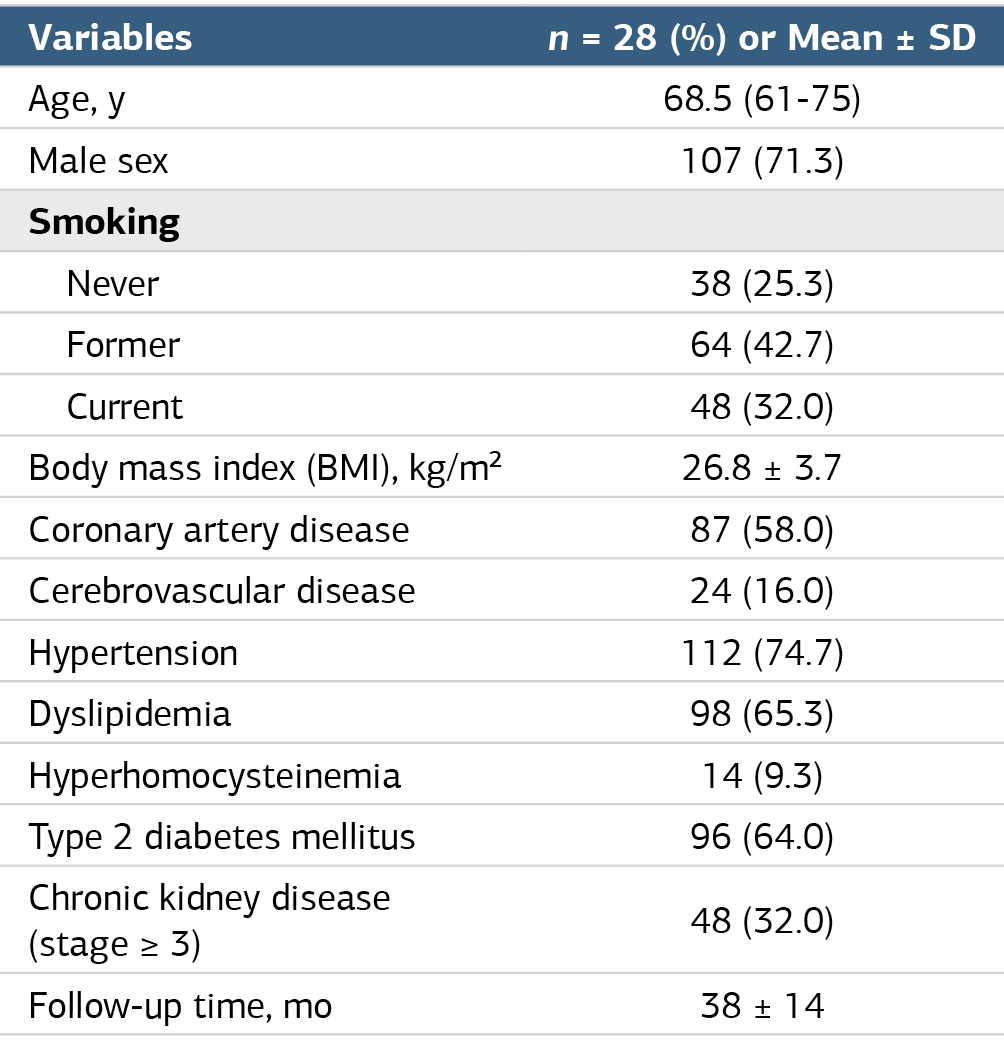
a Continuous variables are presented as mean ± SD or median (IQR), b categorical variables as number (percentage)
Table 2. Lesion and procedural characteristics
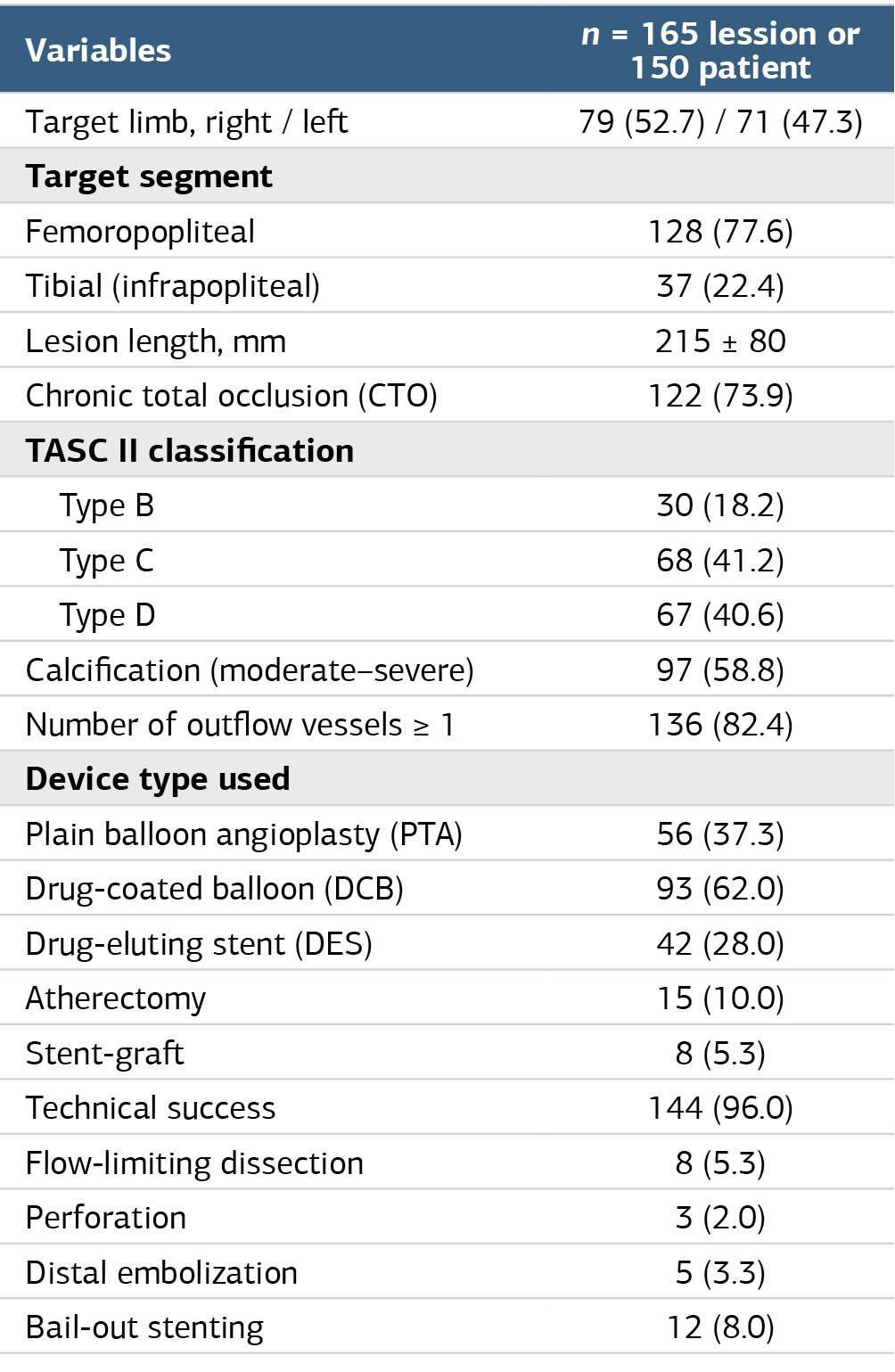
a Continuous variables are presented as mean ± SD, b categorical variables as number (percentage)
Table 3. Clinical outcomes and complications
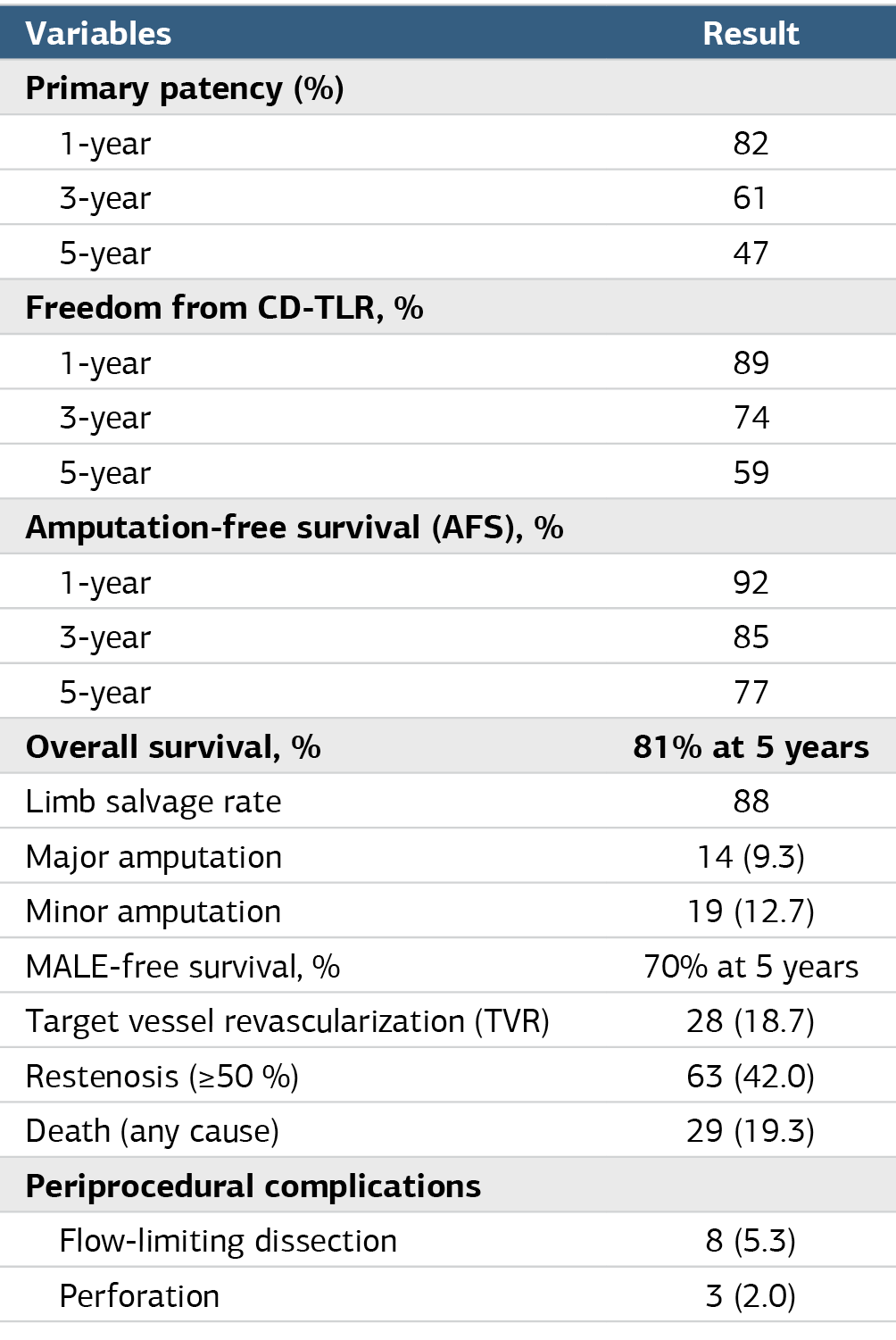
a Data are presented as percentage or number (percentage). b Outcomes were calculated using Kaplan–Meier analysis.
Figures
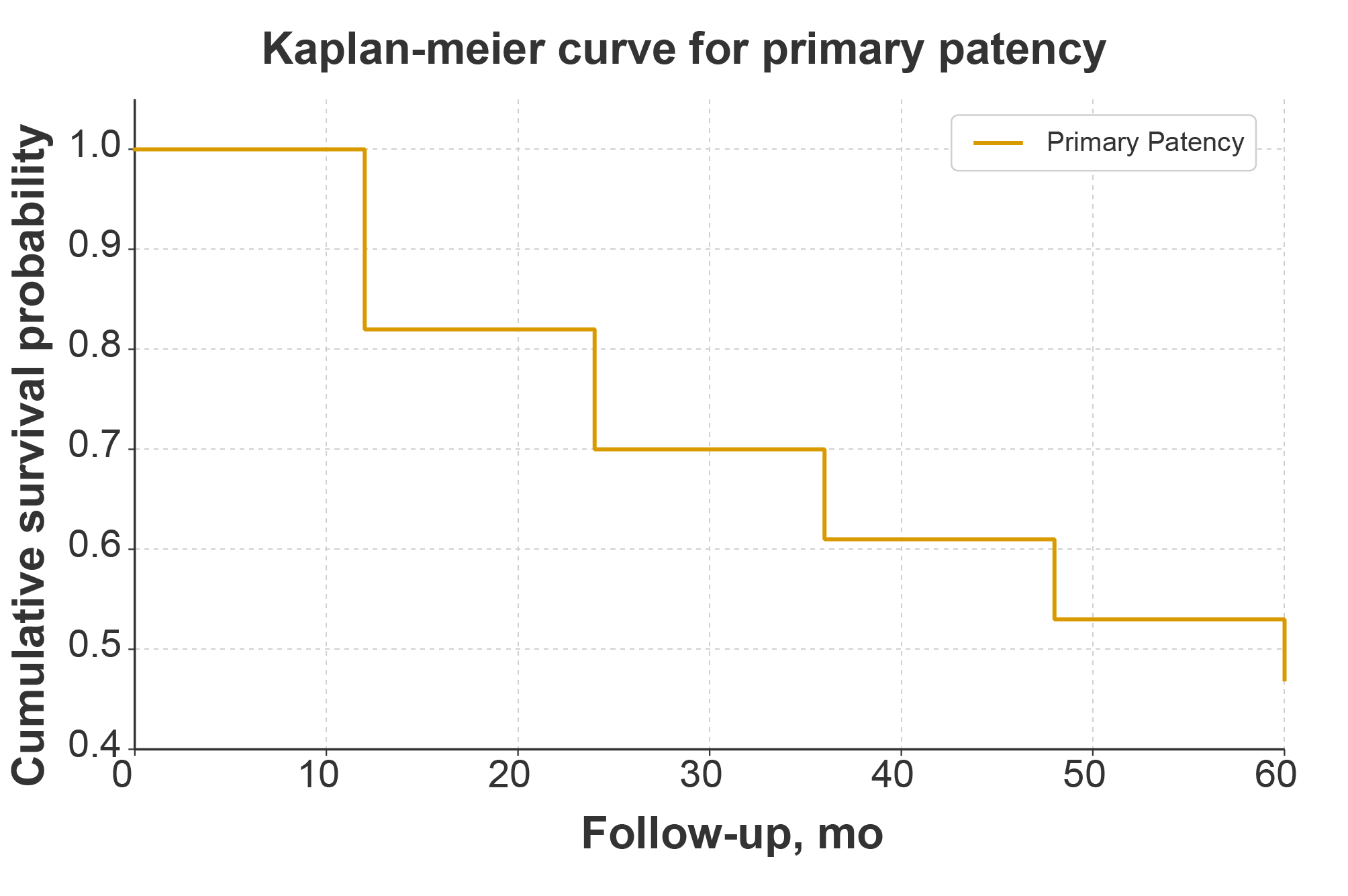
Figure 1. Kaplan–Meier curve for primary patency. Kaplan– Meier survival analysis demonstrating cumulative primary patency rates at 1, 3, and 5 years (82%, 61%, and 47%, respectively) among 150 patients treated with endovascular therapy for lower extremity arterial disease. A gradual decline in patency was observed, with most events occurring within the first 36 months
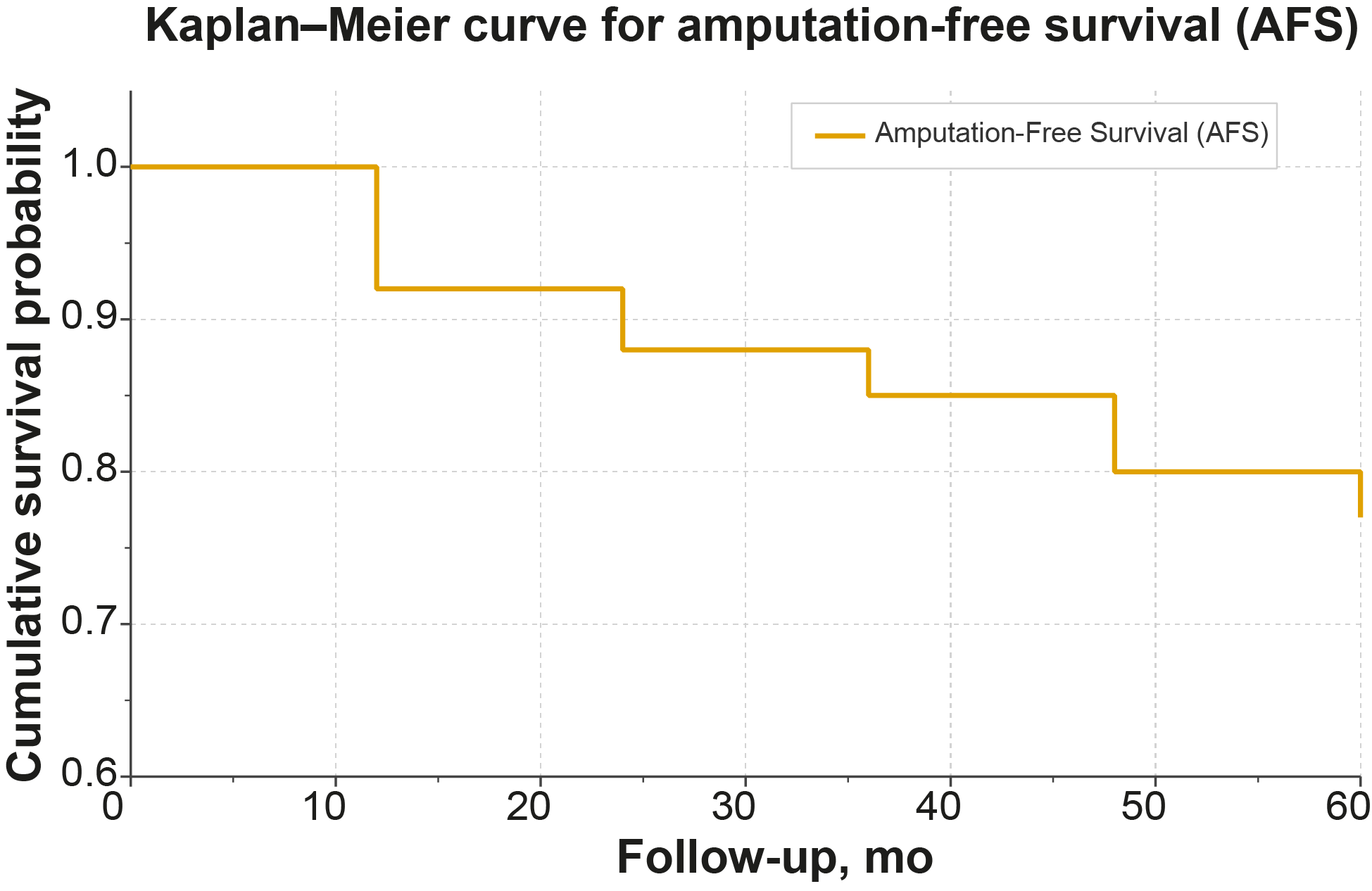
Figure 2. Kaplan–Meier Curve for amputation-free survival (AFS). Kaplan–Meier survival curve illustrating 1-, 3-, and 5-year AFS rates of 92%, 85%, and 77%, respectively. Despite progressive disease and reinterventions, limb salvage remained satisfactory throughout long-term follow-up
Additional Information
Publisher’s Note
Bayrakol MP remains neutral with regard to jurisdictional and institutional claims.
Rights and Permissions

This work is licensed under a Creative Commons Attribution-NonCommercial 4.0 International License (CC BY-NC 4.0). To view a copy of the license, visit https://creativecommons.org/licenses/by-nc/4.0/
About This Article
How to Cite This Article
Emced Khalil. Long-term safety and efficacy of endovascular therapy in the lower extremity. Ann Clin Anal Med 2026;17(9):939-943. doi:10.4328/ACAM.22965
Publication History
- Received:
- 27.10.2025
- Accepted:
- 02.12.2025
- Published Online:
- 08.01.2026
- Printed:
- 01.09.2026