
Abstract
AimTo evaluate how postoperative frontal and sagittal plane changes affect radiological and clinical outcomes following monoplanar medial open-wedge high tibial osteotomy (MOWHTO).MethodsFifty-two patients (mean age 53.2 ± 5.7 years) who underwent monoplanar MOWHTO with a spacer plate were retrospectively analyzed. Radiological parameters included hip–knee–ankle (HKA) angle, posterior tibial slope (TS), Caton–Deschamps Index (CDI), and Insall–Salvati Index (ISI). Clinical evaluation comprised Oxford Knee Score (OKS), Knee Society Score (KSS), and visual analog scale (VAS), assessed preoperatively and at 2-year follow-up.ResultsPostoperatively, HKA improved from 169.2° ± 3.3° to 179.8° ± 3.7° (p<0.001). TS increased from 10.6° ± 3.5° to 12.9° ± 4.8° (p=0.002), while CDI and ISI decreased significantly (p<0.001), indicating mild patella baja. All clinical scores improved significantly (p<0.001). No significant correlation was found between sagittal plane changes and clinical outcomes. Similarly, the degree of frontal correction was not associated with functional results.ConclusionMonoplanar MOWHTO provides significant functional improvement when appropriate frontal correction is achieved. Although sagittal changes occur postoperatively, these alterations do not adversely affect short- to mid-term clinical outcomes when maintained within physiological limits.
Keywords
Introduction
High tibial osteotomy (HTO) is a well-established joint-preserving procedure for medial compartment osteoarthritis associated with varus malalignment, aimed at shifting the mechanical axis laterally and reducing excessive medial loading.1 With advances in surgical techniques and implant design, medial open-wedge HTO has become the preferred approach due to its predictable bone healing, ability to achieve precise correction, and the avoidance of fibular osteotomy required in closing-wedge techniques.2
Monoplanar medial open-wedge HTO is widely used; however, despite its biomechanical advantages, concerns persist about unintended sagittal-plane changes, particularly alterations in posterior tibial slope and patellar height.3 Such changes may influence knee biomechanics, ligament tension, and patellofemoral joint loading, yet the clinical significance of these effects remains controversial.4 While some studies suggest that increased tibial slope or reduced patellar height may negatively affect postoperative outcomes, others report no meaningful influence when these parameters remain within physiological limits.5,6
Given these uncertainties, a comprehensive evaluation of both frontal- and sagittal-plane parameters is essential. Therefore, this study aims to investigate the radiological changes in alignment and sagittal morphology following monoplanar medial open-wedge HTO and to analyze their relationship with postoperative clinical outcomes.
Materials and Methods
A retrospective analysis was conducted on 52 patients (38 females, 14 males; mean age 53.2 ± 5.7 years; range 38–64 years) who underwent monoplanar medial open-wedge high tibial osteotomy (MOWHTO) for isolated medial varus gonarthrosis at the Orthopedics and Traumatology Clinic of Adana Training and Research Hospital between January 1, 2017, and October 15, 2020. All patients were treated with non-locking spacer plates (Puddu I, Arthrex Inc., Naples, FL, USA). Postoperative radiological and clinical evaluations were performed at 1, 3, 6, 12, and 24 months. The radiological and clinical assessments at the preoperative stage and at the 2-year postoperative follow-up were documented. Patients who did not attend follow-up visits, had additional ligament pathologies, had undergone surgery with a different implant, or had undergone a different HTO technique were excluded. Patient height, weight, and body mass index (BMI) were recorded. The knee range of motion was recorded. Preoperative and postoperative assessments included the Oxford Knee Score (OKS), Knee Society Score (KSS), and functional Knee Society Score (f-KSS). Visual analog scale (VAS) scores were recorded at preoperative and final postoperative evaluations.
Preoperative and postoperative mechanical axis evaluations were performed as part of the radiological examination, including measurements of the hip–knee–ankle angle (HKA), Caton–Deschamps Index (CDI), Insall–Salvati Index (ISI), and posterior tibial slope (TS) (Figures 1 and 2). The mechanical axis and HKA of the affected lower extremity were measured using standing full-leg orthoradiograms taken during single-leg weight-bearing. Correction angles were determined based on the Fujisawa point.7 Patellar height, CDI, ISI, and TS angles were measured on lateral radiographs. Radiological measurements were independently performed by two orthopedic surgeons. All measurements were performed digitally using the institutional PACS system. To assess measurement reliability, displacement measurements were independently performed by two orthopedic surgeons on a randomly selected subset of 15 cases. Measurements were repeated by the same observers after a two-week interval. Interobserver and intraobserver reliability were evaluated using intraclass correlation coefficients (ICC) based on a two-way random-effects model for absolute agreement. Interobserver and intraobserver reliability for displacement measurements were excellent (ICC = 0.90 and 0.86, respectively).Surgical Procedure and AssessmentAll procedures were performed by the same experienced orthopedic surgeon using a standardized monoplanar medial open-wedge high tibial osteotomy technique. After administration of spinal anesthesia, patients were positioned supine, and a tourniquet was applied. A longitudinal incision was made medial to the tibial tubercle, and the pes anserinus was retracted. Under fluoroscopic guidance, a monoplanar osteotomy line was created toward the proximal lateral cortex, which was preserved to maintain stability. The medial wedge was gradually opened to achieve the planned correction based on preoperative alignment analysis. A non-locking spacer plate was placed to maintain the correction, and bone grafting was performed when required. The osteotomy site and fixation were confirmed fluoroscopically. Standard wound closure was performed, and a hinged knee brace was applied.
Postoperative management included immediate quadriceps activation and early range-of-motion exercises. Partial weight-bearing was permitted from the second postoperative week and progressed to full weight-bearing as tolerated, based on radiographic evidence of healing.Radiological EvaluationStandardized full-length standing anteroposterior radiographs and lateral knee radiographs were obtained using routine clinical imaging protocols. Standing long-leg radiographs were acquired in the weight-bearing position, and images were automatically digitally stitched to include the hip, knee, and ankle. Lateral knee radiographs were obtained with the patient positioned laterally to ensure proper alignment of the femoral condyles. All imaging was performed by two trained radiology technicians using consistent exposure parameters and positioning techniques.Ethical ApprovalThe study was approved by the Ethics Committee of Adana City Training and Research Hospital (Date: 18.11.2020, Decision No: 70/1128).Statistical AnalysisA power analysis was conducted for the primary comparison between correction angle and postoperative Caton–Deschamps Index. Parameters included α = 0.05, r = 0.4, and power = 0.8. Based on the analysis using G*Power (version 3.1.9.4), the minimum sample size required for the MOWHTO cohort was 38 knees.
Statistical analyses were performed using IBM SPSS Statistics version 25.0. Categorical variables were summarized as counts and percentages, whereas continuous variables were expressed as means and standard deviations or as medians with minimum–maximum values when appropriate. Normality of continuous variables was assessed using the Shapiro–Wilk test. For non-normally distributed parameters, the Mann–Whitney U test was used for two-group comparisons. The Wilcoxon signed-rank test was applied to evaluate preoperative and postoperative differences in clinical scores, radiological measurements, and joint range of motion. A p-value <0.05 was considered statistically significant.Reporting GuidelinesThe study was reported in accordance with STROBE guideline.
Results
A total of 52 patients were included in the study, of whom 38 (73.1%) were female and 14 (26.9%) were male. The mean age was 53.2 ± 5.7 years, the mean weight was 83.0 ± 7.6 kg, the mean height was 1.66 ± 0.08 m, and the mean BMI was 29.9 ± 3.2 kg/m². Complete bone union was achieved in all patients by the 6-month follow-up. The operated side was the right knee in 30 patients (57.7%) and the left knee in 22 (42.3%). The mean time to weight-bearing was 10.7 ± 2.1 weeks. The detailed demographic and clinical characteristics are provided in Supplementary Table 1.
The mean preoperative HKA angle was 169.2° ± 3.3, which improved to 179.8° ± 3.7 postoperatively (p<0.001). Patellar height decreased significantly, with CDI values changing from 0.99 ± 0.12 to 0.81 ± 0.12 and ISI values from 1.06 ± 0.12 to 0.95 ± 0.10 (both p<0.001). Posterior tibial slope increased from 10.6° ± 3.5 to 12.9° ± 4.8 (p=0.002). These radiological findings are presented in Table 1 and Figures 1 and 2.
Significant postoperative improvements were observed in all clinical scores, including OKS, VAS, KSS, and functional KSS (p<0.001) (Table 2).
Correlation analysis demonstrated that postoperative clinical scores (OKS, KSS, f-KSS) were not significantly associated with radiological parameters, including HKA correction, tibial slope, CDI, and ISI (p>0.05). Detailed data are provided in Supplementary Table 2, Supplementary Figure 1, and Supplementary Figure 2.
Discussion
This study demonstrated that in patients undergoing monoplanar MOWHTO, postoperative changes within the normal reference ranges in both the frontal and sagittal planes did not significantly influence clinical outcomes or patient satisfaction at the 2-year follow-up. MOWHTO remains an effective treatment option for medial compartment osteoarthritis associated with varus malalignment, as it redistributes load from the medial to the lateral compartment and promotes improved knee function and survival.1,5
The HKA angle is the most commonly used parameter for evaluating frontal-plane deformities, with a normal reference range of 178°–182° on weight-bearing radiographs.8 Although the optimal correction target is still debated, most authors recommend achieving 3°–8° of valgus alignment.9,10 Insufficient correction has been associated with poor outcomes, whereas excessive valgus may also be undesirable.11-13 In our study, the mean postoperative correction was approximately 10°, which is within the recommended range. Despite this significant radiographic improvement, no correlation was found between HKA correction and clinical scores, indicating that as long as postoperative alignment is within acceptable limits, additional valgus does not confer superior functional results. This finding is consistent with Kerimoğlu et al., who reported no clinical differences between patients corrected to normal alignment and those overcorrected.14
Sagittal plane changes, particularly posterior tibial slope alterations, are a known concern in MOWHTO. Slope increases may occur due to posterior soft-tissue tension and hinge mechanics during wedge opening.15-17 Excessive posterior slope may theoretically increase ACL tension and affect long-term knee kinematics.12,18 In our series, although the mean tibial slope increased significantly postoperatively, all values remained within the accepted physiological range, and no adverse impact on clinical scores was detected. The absence of a negative effect supports previous reports indicating that moderate increases in slope do not compromise functional outcomes when the correction remains within anatomical boundaries.5,6
Patellar height changes also warrant consideration, as several studies have shown a reduction in CDI and ISI after MOWHTO and a higher risk of patella baja compared with closing-wedge techniques. Our results similarly demonstrated significant decreases in patellar height indices; however, these changes did not affect postoperative functional scores. This finding aligns with previous studies reporting that although patellar height decreases following MOWHTO, this does not consistently translate into impaired clinical outcomes.16-18
Overall, our results indicate that both frontal- and sagittal-plane parameters improved after MOWHTO, yet these radiological changes were not directly associated with clinical outcomes, likely because postoperative alignment and sagittal values remained within physiological reference ranges. We believe that appropriate correction planning, hinge preservation, and attention to sagittal alignment are essential for optimizing functional outcomes.
Limitations
This study has several limitations. First, its retrospective design may introduce selection bias. Second, the sample size was relatively small, and the follow-up period was limited to 2 years, which may not fully capture long-term outcomes. Finally, radiological measurements were based on standard radiographs rather than advanced imaging techniques.
Conclusion
Monoplanar medial open-wedge high tibial osteotomy provided significant improvements in frontal alignment and clinical outcomes. Although postoperative tibial slope and patellar height changed radiographically, these alterations remained within physiological limits and did not affect functional results. The degree of frontal correction also showed no association with clinical scores, provided that postoperative alignment stayed within the accepted range. Careful preoperative planning that considers both frontal and sagittal parameters remains essential for achieving optimal outcomes.
Declarations
Animal and Human Rights Statement
All procedures performed in this study were in accordance with the ethical standards of the institutional and/or national research committee and with the 1964 Declaration of Helsinki and its later amendments, or comparable ethical standards.
Informed Consent
Written informed consent was obtained from all participants prior to enrollment in the study.
Data Availability
The datasets used and/or analyzed during the current study are not publicly available due to patient privacy reasons but are available from the corresponding author on reasonable request.
Conflict of Interest
The authors declare no conflict of interest.
Funding
None.
Author Contributions (CRediT Taxonomy)
Conceptualization: M.B.
Methodology: M.B.
Software: M.B.
Validation: F.S.
Formal analysis: H.Ç.
Investigation: H.U.Ö.
Resources: H.Ç.
Data curation: İ.O.K.
Writing – original draft: M.B.
Writing – review & editing: M.B.
Visualization: H.U.
Supervision: F.S.
Project administration: M.B.
AI Usage Disclosure
The authors declare that no artificial intelligence tools were used in the preparation of this manuscript.
Abbreviations
BMI: Body mass index
CDI: Caton–Deschamps index
F-KSS: Functional Knee Society Score
HKA: Hip–knee–ankle angle
HTO: High tibial osteotomy
ISI: Insall–Salvati index
KSS: Knee Society Score
MOWHTO: Monoplanar medial open-wedge high tibial osteotomy
OKS: Oxford knee score
STROBE: Strengthening the reporting of observational studies in epidemiology
VAS: Visual analog scale
References
- Liu X, Chen Z, Gao Y, et al. High tibial osteotomy: review of techniques and biomechanics. J Healthc Eng. 2019;2019:8363128. doi:10.1155/2019/8363128
- Elmalı N, Esenkaya I, Can M, et al. Monoplanar versus biplanar medial open-wedge proximal tibial osteotomy for varus gonarthrosis: a comparison of clinical and radiological outcomes. Knee Surg Sports Traumatol Arthrosc. 2013;21(12):2689-2695. doi:10.1007/s00167-012-2040-4
- Pragadeeshwaran J, Paul S, Moge NM, et al. Changes in sagittal and axial plane alignment in medial opening wedge high tibial osteotomy: a prospective observational study. Musculoskelet Surg. 2023;107(1):115-121. doi:10.1007/s12306-022-00736-z
- Kesmezacar H, Erginer R, Ogut T, et al. Evaluation of patellar height and measurement methods after valgus high tibial osteotomy. Knee Surg Sports Traumatol Arthrosc. 2005;13(7):539-544. doi:10.1007/s00167-004-0572-y
- Goshima K, Sawaguchi T, Sakagoshi D, et al. Age does not affect the clinical and radiological outcomes after open-wedge high tibial osteotomy. Knee Surg Sports Traumatol Arthrosc. 2017;25(3):918-923. doi:10.1007/s00167-015-3847-6
- Mabrouk A, An JS, Fernandes LR, et al. Maintaining posterior tibial slope and patellar height during medial opening wedge high tibial osteotomy. Orthop J Sports Med. 2023;11(12):23259671231213595. doi:10.1177/23259671231213595
- Fujisawa Y, Masuhara K, Shiomi S. The effect of high tibial osteotomy on osteoarthritis of the knee: an arthroscopic study of 54 knee joints. Orthop Clin North Am. 1979;10(3):585-608. doi:10.1016/s0030-5898(20)30753-7
- Jiang X, Xie K, Han X, et al. HKA angle—a reliable planning parameter for high tibial osteotomy: a theoretical analysis using standing whole-leg radiographs. J Knee Surg. 2022;35(1):54-60. doi:10.1055/s-0040-1712945
- Rossi R, Bonasia DE, Amendola A. The role of high tibial osteotomy in the varus knee. J Am Acad Orthop Surg. 2011;19(10):590-599. doi:10.5435/00124635-201110000-00003
- Osti M, Gohm A, Schlick B, et al. Complication rate following high tibial open-wedge osteotomy with spacer plates for incipient osteoarthritis of the knee with varus malalignment. Knee Surg Sports Traumatol Arthrosc. 2015;23(7):1943-1948. doi:10.1007/s00167-013-2757-8
- Guarino A, Farinelli L, Iacono V, et al. Long-term survival and predictors of failure of opening wedge high tibial osteotomy. Orthop Surg. 2023;15(4):1002-1007. doi:10.1111/os.13674
- Lee SY, Lim HC, Bae JH, et al. Sagittal osteotomy inclination in medial open-wedge high tibial osteotomy. Knee Surg Sports Traumatol Arthrosc. 2017;25(3):823-831. doi:10.1007/s00167-016-4115-0
- Staubli AE, De Simoni C, Babst R, et al. TomoFix: a new LCP concept for open wedge osteotomy of the medial proximal tibia—early results in 92 cases. Injury. 2003;34(suppl 2). doi:10.1016/j.injury.2003.09.025
- Kerimoglu S, Çavuşoğlu S, Turhan AU. The effect of tibiofemoral angle changes on the results of dome osteotomy. Acta Orthop Traumatol Turc. 2008;42:75-79. doi:10.3944/aott.2008.42.2.075
- Marti CB, Gautier E, Wachtl SW, et al. Accuracy of frontal and sagittal plane correction in open-wedge high tibial osteotomy. Arthroscopy. 2004;20(4):366-372. doi:10.1016/j.arthro.2004.01.024
- Gooi SG, Chan CXY, Tan MKL, et al. Patella height changes post high tibial osteotomy. Indian J Orthop. 2017;51(5):545-551. doi:10.4103/ortho.ijortho_214_17
- Wu K, Zeng J, Han L, et al. Effect of the amount of correction on posterior tibial slope and patellar height in open-wedge high tibial osteotomy. J Orthop Surg (Hong Kong). 2021;29(3):23094990211049571. doi:10.1177/23094990211049571
- Wu L, Lin J, Jin Z, et al. Comparison of clinical and radiological outcomes between opening-wedge and closing-wedge high tibial osteotomy: a comprehensive meta-analysis. PLoS One. 2017;12(2). doi:10.1371/journal.pone.0171700
Tables
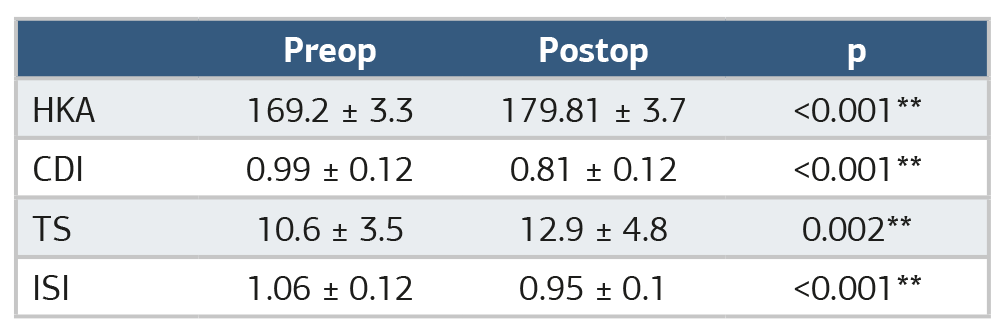
Table 2. Comparison of preoperative and postoperative clinical outcome scores
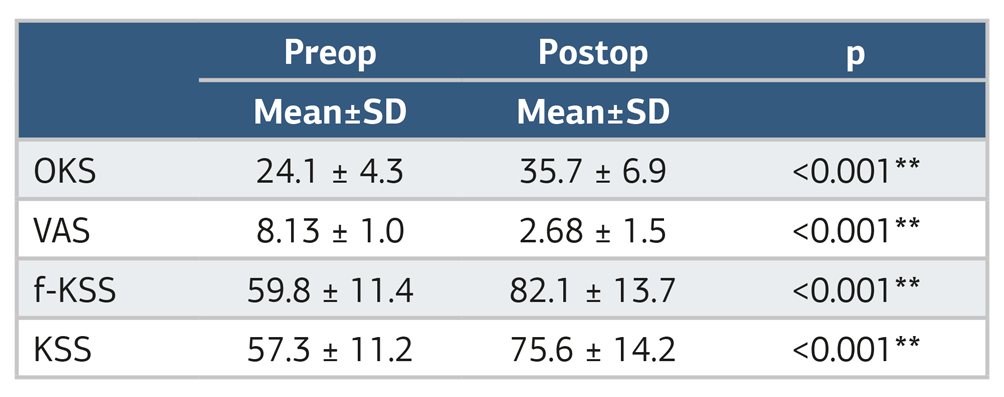
Mean: mean, SD: standard deviation, Med: median, Min: minimum, Max: maximum
Figures
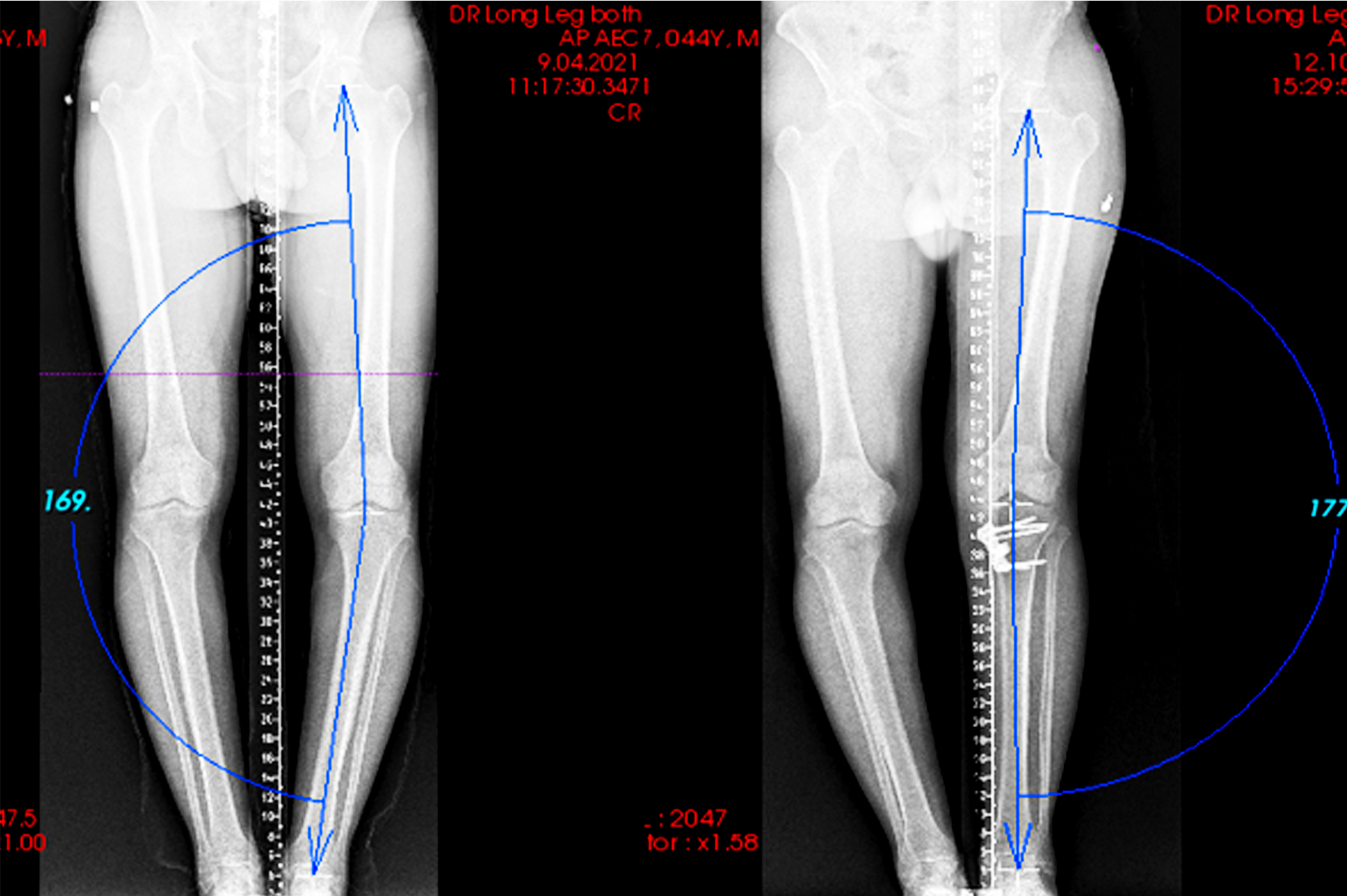
Figure 1. Preoperative and postoperative hip–knee–ankle (HKA) angle measurements

Figure 2. Preoperative and postoperative patellar height measurements
(A) Preoperative Caton–Deschamps Index (CDI) (B) Postoperative CDI (C) Preoperative Insall–Salvati Index (ISI) (D) Postoperative ISI
Additional Information
Publisher’s Note
Bayrakol MP remains neutral with regard to jurisdictional and institutional claims.
Rights and Permissions

This work is licensed under a Creative Commons Attribution-NonCommercial 4.0 International License (CC BY-NC 4.0). To view a copy of the license, visit https://creativecommons.org/licenses/by-nc/4.0/
About This Article
How to Cite This Article
Mustafa Bulut, Fırat Seyfettinoğlu, Hakan Çiçek, Hasan Ulaş Oğur, İbrahim Onur Kurt, Hakan Uslu. Effect of frontal and sagittal plane changes on clinical outcomes after monoplanar medial open wedge high tibial osteotomy. Ann Clin Anal Med 2026;17(7):681-685. doi:10.4328/ACAM.23025
Publication History
- Received:
- 12.12.2025
- Accepted:
- 30.04.2026
- Published Online:
- 02.05.2026
- Printed:
- 01.07.2026