
Abstract
AimThis study aimed to assess the knowledge and attitude of mothers of preterm infants about baby care and nutrition before the neonatal intensive care unit (NICU) discharge.MethodsA quasi-experimental before-and-after design was used, involving 78 mothers whose preterm infants were treated in our NICU between November 2019 and June 2020. Mothers were randomly assigned to the study group (n = 39) or control group (n = 39) using the closed envelope technique. The study group received enhanced education, including practical demonstrations and visual presentations on the care of preterm infants. In contrast, the control group received standard education on basic baby care, infection control, and nutrition. A 20-question questionnaire assessed knowledge about preterm baby care. The Mann-Whitney U test compared independent groups, and the Wilcoxon test compared dependent groups.ResultsPre-education maternal knowledge–attitude (MKA) scores between the two groups did not differ statistically. However, mothers who received enhanced education had significantly higher post-education MKA scores (15.5 ± 2.6) compared to those receiving standard education (12.5 ± 2.9) (P < .001). Intra-group analysis showed that enhanced education improved MKA scores across various subheadings, indicating its effectiveness. ConclusionEnhanced education for mothers of preterm infants before NICU discharge was more effective than standard education. It significantly improved mothers' knowledge, suggesting that ongoing enhanced education could better prepare mothers for post-discharge care, contributing to improved infant well-being.
Keywords
Introduction
Babies delivered before the 37th week of gestation are considered preterm, requiring specialized care and maternal support due to their developmental immaturity.1 Preterm infants are at increased risk for respiratory problems, feeding difficulties, thermoregulation disorders, infections, and neurodevelopmental complications. Therefore, decisions regarding hospital discharge depend not only on medical stability but also on parental preparedness and the ability to recognize potential health risks after discharge.2,3
The transition from hospital to home represents a critical period for families of preterm infants, during which parents assume primary responsibility for daily care.4 Discharge education plays a central role in supporting this transition by providing parents with essential information regarding infant care, feeding, infection prevention, and follow-up requirements.5 Previous studies have shown that structured discharge education may improve parental readiness and support a safer early post-discharge period.2
Despite routine discharge education, many mothers report insufficient knowledge and uncertainty regarding preterm infant care after discharge, particularly in areas that differ from term infant care.3 Limited opportunities for hands-on learning during hospitalization and restricted maternal–infant interaction may further contribute to inadequate preparedness.4
Clear differentiation between measurable educational outcomes is essential to avoid overinterpretation of intervention effects. Maternal knowledge reflects understanding of preterm infant care and follow-up, while maternal attitudes relate to awareness and perceptions regarding caregiving responsibilities. Evaluating these domains using clearly defined tools allows for accurate interpretation of educational outcomes without implying unmeasured caregiving practices or clinical results.6
Therefore, the present study aimed to evaluate the effect of enhanced pre-discharge education on maternal knowledge and attitudes regarding the care and nutrition of preterm infants at the time of hospital discharge. We hypothesized that mothers who received enhanced education would demonstrate higher maternal knowledge–attitude (MKA) scores compared with mothers who received standard education alone.
Materials and Methods
We designed a pretest–posttest quasi-experimental study to examine the effects of two distinct educational programs on knowledge and attitudes regarding the care and nutrition of preterm infants. From November 2019 to June 2020, interventions were administered either during the neonatal intensive care unit (NICU) stay or before discharge in a 20-bed, Level III NICU located in the northwestern part of Turkey, with a nurse-to-patient ratio of 1:3.
The inclusion criteria encompassed mothers of infants born prematurely before 37 completed weeks, without congenital anomalies or serious illnesses. This selection aimed to maintain homogeneity in the study group, ensuring that observed effects were attributable to the educational programs rather than external factors. Exclusion criteria involved mothers of infants with a gestational age exceeding 38 weeks, infants with anomalies, infants with serious illnesses, and mothers with psychiatric disorders. These exclusions were implemented to establish a well-defined study cohort, minimizing confounding variables and enhancing internal validity.
The G-power analysis indicated that a total sample size of 52 participants (26 per group) would be required to detect a large effect size (Cohen’s d = 0.8) with 80% power and a significance level of 0.05. To account for potential dropouts and ensure statistical robustness, we increased the recruitment target to 78 participants (39 per group). Randomization was achieved using the closed-envelope method, ensuring an unbiased allocation of participants to the intervention and control groups. While this method maintains practical feasibility, a more advanced computer-generated randomization process may provide additional rigor in future studies.Data CollectionData were collected using the “Parent and Newborn Characteristics Evaluation Form” and the “Preterm Baby Care and Nutrition Questionnaire for NICU Mothers.” The latter consisted of 20 items (13 multiple-choice and 7 true/false questions) assessing maternal knowledge and attitudes related to preterm infant care.
Each correct response was assigned one point, yielding a total score ranging from 0 to 20. Higher scores indicated higher levels of maternal knowledge and more appropriate caregiving-related attitudes. The total score was defined as the MKA score. The researcher administered questionnaires face-to-face before education and immediately before discharge to minimize bias.Ethical ApprovalThis study was approved by the Scientific Research Ethics Committee of Trakya University Faculty of Medicine (Date: 25.11.2019, Decision No: TÜTF-BAEK 2019/426).Statistical AnalysisStatistical analyses were performed using SPSS software (version 19.0). Descriptive statistics were expressed as frequencies and percentages for categorical variables and as medians with interquartile ranges for continuous variables. The Mann–Whitney U test was used for between-group comparisons, and the Wilcoxon signed-rank test was used for within-group comparisons. A P value <0.05 was considered statistically significant.
After explaining the research purpose and methodology, mothers who signed the "Parent and Newborn Characteristics Evaluation Form" were included in the study.
All mothers in both groups received pre-discharge education based on our unit's "Home Care Guidelines for Newborns". This education covered hygiene, feeding, and medication administration. Additionally, information on post-discharge follow-up, vaccination schedules, and awareness of conditions requiring medical attention was provided. In addition to routine nursing education during care, the intervention group mothers received enhanced education before discharge. To ensure the effectiveness of this training, it was conducted practically at the baby's bedside within the NICU, outside of visiting hours, without disrupting the unit's workflow. Utilizing data collection instruments, a visual presentation was prepared.6 The 30-45-minute presentation included verbal explanations of various aspects of premature baby care, Q&A sessions, and demonstrations, and addressed specific concerns through personalized discussions.
For the control group, in addition to routine nursing training, a designated breastfeeding nurse provided standard education during discharge. The content of this education was based on our Faculty of Medicine's brochure, covering baby care, infection control, and infant feeding.
After both types of education, mothers were required to complete the "Premature Baby Care and Nutrition Questionnaire for NICU Mothers," and face-to-face administration ensured unbiased responses.
Reporting GuidelinesThis study is reported in accordance with the STROBE guidelines.
Results
A total of 78 mothers of preterm infants were included in the study. The mean maternal age was 29.8 ± 6.2 years (range: 17–42). The mean birth weight of the infants was 1896 ± 523 g (range: 700–2480 g), and the mean birth length was 42.5 ± 3.4 cm (range: 33–49 cm). There were no statistically significant differences between the intervention and control groups in terms of maternal demographic characteristics or infant birth characteristics. Detailed demographic and clinical characteristics of parents and infants are provided in Supplementary Table 1.
Eight twin pregnancies were included in the study, resulting in a total of 86 infants. Of these, 41 (47.7%) were female, and 45 (52.3%) were male. Twin pregnancies were equally distributed between the intervention and control groups.
Before the educational intervention, median baseline MKA scores were similar between the intervention and control groups (median: 11 vs. 11, respectively; P > .05). Following education, mothers in the intervention group demonstrated significantly higher MKA scores compared with those in the control group (median: 16 vs. 12; P < .001). Changes in MKA scores before and after education in both groups are illustrated in Figure 1.
Post-intervention comparisons demonstrated significantly higher MKA scores in the intervention group for several domains, including post-discharge follow-up, definition of prematurity, growth monitoring, sleep health and safety, skin care and bathing, and infant safety. No significant between-group differences were observed in domains related to feeding practices, infant room and clothing, common problems during the first year of life, or breast milk storage conditions. Detailed domain-specific comparisons are presented in Supplementary Table 2.
Within-group analyses revealed statistically significant increases in total MKA scores after education in both groups (P < .001 for both). In the intervention group, significant improvements were observed across all domains except growth monitoring. In the control group, significant improvements were observed in domains related to feeding, post-discharge follow-up, infant room and clothing, common problems during the first year, and breast milk storage conditions. Intra-group comparisons of domain-specific MKA scores are shown in Supplementary Table 3.
Discussion
This study evaluated the effect of enhanced pre-discharge education on maternal knowledge and attitudes regarding the care and nutrition of preterm infants hospitalized in the NICU. The findings demonstrated that mothers who received enhanced, structured education achieved significantly higher MKA scores compared with those who received standard education alone. These results indicate that interactive and practice-oriented educational approaches may be more effective in improving maternal preparedness at the time of discharge.
Enhanced education was particularly associated with improvements in domains related to post-discharge follow-up, definition of prematurity, growth monitoring, sleep health and safety, skin care and bathing, and infant safety. These areas represent aspects of preterm infant care that are often less emphasized in routine education and may be more difficult for parents to comprehend without visual or hands-on support. Similar findings have been reported in previous studies demonstrating that structured discharge education improves parental readiness and knowledge in NICU settings.7
Sleep health and safety was one of the domains showing the most pronounced improvement following enhanced education. Pre-education responses revealed important knowledge gaps regarding safe sleep positioning and sudden infant death syndrome (SIDS) risk reduction. Consistent with the literature, misconceptions about infant sleep practices remain common among parents of preterm infants.8,9 After enhanced education, mothers demonstrated significantly higher knowledge scores related to safe sleep, aligning with studies emphasizing the importance of targeted education in reducing unsafe sleep practices.10 Nevertheless, some incorrect beliefs persisted, suggesting that deeply rooted cultural practices may require repeated reinforcement beyond a single educational session.
Growth monitoring also showed greater improvement in the enhanced education group; however, overall knowledge gains in this domain were modest. Understanding corrected age, growth expectations, and long-term monitoring may require longitudinal educational support. Previous studies have similarly suggested that single-session discharge education may be insufficient for sustained comprehension of growth-related concepts in preterm infants.11
In contrast, domains related to feeding practices, infant room and clothing, common problems during the first year of life, and breast milk storage conditions did not differ significantly between groups after education. This finding may reflect the strong emphasis placed on nutrition and breastfeeding during routine NICU care and discharge counseling. Both standard and enhanced education appeared effective in conveying essential information related to infant nutrition, as supported by previous studies reporting adequate maternal knowledge in this area following routine education.11,12
Vaccination-related knowledge did not show a significant improvement following enhanced education. Similar findings have been reported in the literature, indicating that vaccination schedules and immunization details may be difficult to retain without repeated reinforcement.12 Increased awareness may occur through ongoing interactions with healthcare providers rather than through a single structured education session. Incorporating visual reminders, written materials, or post-discharge follow-up interventions may improve retention of vaccination-related information.
The strengths of this study include face-to-face delivery of education, comparison of enhanced and standard educational approaches, and detailed analysis of specific caregiving domains related to preterm infant care. These methodological features allowed for a focused evaluation of maternal knowledge and attitudes at discharge. However, the findings should be interpreted within the scope of the study design. Outcomes were assessed immediately before discharge, and no post-discharge follow-up was performed. Therefore, conclusions regarding long-term knowledge retention, caregiving behaviors, or infant clinical outcomes cannot be drawn.
Overall, the results support the role of enhanced pre-discharge education in improving maternal knowledge and attitudes at the time of NICU discharge. While routine education may be sufficient for core topics such as feeding and nutrition, enhanced educational strategies appear particularly beneficial for complex or safety-critical aspects of preterm infant care. Future studies incorporating longitudinal follow-up and standardized educational protocols are warranted to determine whether these short-term gains translate into sustained knowledge and improved caregiving practices after discharge.
Limitations
This study has several limitations that should be considered when interpreting the findings. First, although participants were allocated using the closed-envelope method, the study design was quasi-experimental and conducted at a single center, which may limit the generalizability of the results to other settings or populations. Second, the sample size was relatively small, and while a priori power analysis supported the adequacy of the sample, larger multicenter studies would strengthen external validity.
Third, outcomes were assessed immediately before discharge, and no post-discharge follow-up was performed. Therefore, the persistence of maternal knowledge and attitudes over time and their potential influence on caregiving practices after discharge could not be evaluated. In addition, the MKA questionnaire assessed maternal knowledge and attitudes but did not directly measure caregiving behaviors, parental confidence, or infant clinical outcomes.
Finally, although enhanced education included interactive and practical components, the intensity and duration of educational exposure may vary in routine clinical practice. Future studies incorporating standardized educational protocols, longitudinal follow-up, and assessment of post-discharge caregiving behaviors and infant outcomes are warranted.
Conclusion
Our study demonstrated that enhanced discharge education significantly improved maternal knowledge and caregiving-related attitudes at the time of NICU discharge. However, certain knowledge gaps persisted, particularly in vaccination schedules and growth monitoring, highlighting the need for reinforced educational strategies. These findings emphasize the importance of structured, interactive, and culturally tailored educational programs to empower mothers, improve caregiving confidence, and support maternal preparedness for post-discharge care. Future NICU discharge education should incorporate follow-up interventions, interactive learning tools, and multi-modal teaching strategies to ensure sustained improvements in maternal caregiving skills.
Declarations
Animal and Human Rights Statement
All procedures performed in this study were in accordance with the ethical standards of the institutional and/or national research committee and with the 1964 Helsinki Declaration and its later amendments or comparable ethical standards.
Informed Consent
Written informed consent was obtained from all participants.
Data Availability
The datasets used and/or analyzed during the current study are not publicly available due to patient privacy reasons, but are available from the corresponding author on reasonable request.
Conflict of Interest
The authors declare no conflict of interest.
Funding
None.
Author Contributions (CRediT Taxonomy)
Conceptualization: G.C.Ç.
Methodology: R.D.
Formal Analysis: G.C.Ç., R.D.
Investigation: R.D., G.C.Ç
Data Curation: G.C.Ç., N.A.Ç
Writing – Original Draft Preparation: G.C.Ç., B.A
Writing – Review & Editing: B.A, N.A.Ç.
Supervision: B.A.
AI Usage Disclosure
No artificial intelligence (AI) tools or AI-assisted technologies were used in the writing, editing, analysis, or preparation of this manuscript. All content was developed, written, revised, and approved solely by the authors.
Abbreviations
MKA: Maternal knowledge–attitude
NICU: Neonatal intensive care unit
SIDS: Sudden infant death syndrome
SPSS: Statistical package for the social sciences
STROBE: Strengthening the reporting of observational studies in epidemiology
References
- World Health Organization. Recommended definitions, terminology and format for statistical tables related to the perinatal period and use of a new certificate for cause of perinatal deaths. Acta Obstet Gynecol Scand. 1977;56(3):247-253. doi:10.3109/00016347709162009
- Smith VC, Hwang SS, Dukhovny D, Young S, Pursley DM. Neonatal intensive care unit discharge preparation, family readiness and infant outcomes: connecting the dots. J Perinatol. 2013;33(6):415-421. doi:10.1038/jp.2013.23
- Goldstein RF, Malcolm WF. Care of the neonatal intensive care unit graduate after discharge. Pediatr Clin North Am. 2019;66(2):489-508. doi:10.1016/j.pcl.2018.12.014
- Lian YC, Ying SH, Peng CC, Yann TY. Early discharge study for premature infants: Singapore General Hospital. Perm J. 2008;12(4):15-18. doi:10.7812/tpp/08-040
- Weiss M, Johnson NL, Malin S, et al. Readiness for discharge in parents of hospitalized children. J Pediatr Nurs. 2008;23(4):282-295. doi:10.1016/j.pedn.2007.10.005
- Acunaş B, Uslu S, Baş AY. Turkish neonatal society guideline for the follow-up of high-risk newborn infants. Turk Pediatri Ars. 2018;53(suppl 1):S180-S195.
- Zhang X, Kurtz M, Lee SY, Liu H. Early intervention for preterm infants and their mothers: a systematic review. J Perinat Neonatal Nurs. 2021;35(4):E69-E82. doi:10.1097/jpn.0000000000000065
- Rohana J, Ishak S, Wan Nurulhuda WMZ. Sudden infant death syndrome: knowledge and practice in parents of preterm infants. Pediatr Int. 2018;60(8):710-713. doi:10.1111/ped.13605
- Blair PS, Platt MW, Smith IJ, Fleming PJ. Sudden infant death syndrome and sleeping position in preterm and low birth weight infants. Arch Dis Child. 2006;91(2):101-106.
- Carpenter RG, Irgens LM, Blair PS, et al. Sudden unexplained infant death in 20 regions in Europe: case control study. Lancet. 2004;363(9404):185-191. doi:10.1016/s0140-6736(03)15323-8
- Peyrovi H, Mosayebi Z, Mohammad-Doost F, et al. The effect of empowerment program on perceived readiness for discharge of mothers of premature infants. J Matern Fetal Neonatal Med. 2016;29(5):752-757. doi:10.3109/14767058.2015.1017461
- Akimana MT. Mothers’ awareness and attitudes on the care of their preterm infant at discharge from a neonatal intensive care unit in a selected referral hospital in the north province of Rwanda. University of Rwanda; 2017.
Figures
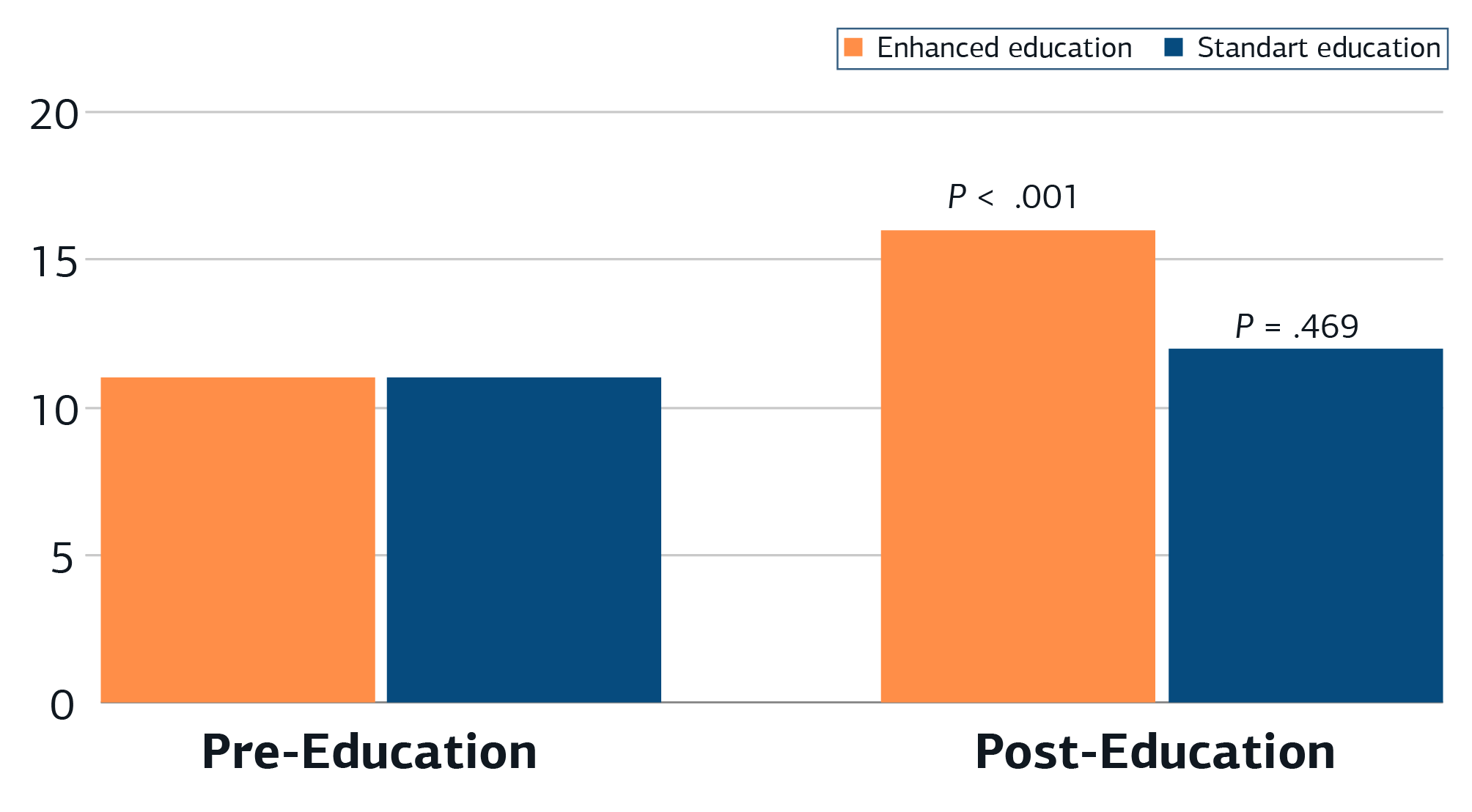
Figure 1. Maternal knowledge–attitude scores before and after enhanced or standard pre-discharge education
Additional Information
Publisher’s Note
Bayrakol MP remains neutral with regard to jurisdictional and institutional claims.
Rights and Permissions

This work is licensed under a Creative Commons Attribution-NonCommercial 4.0 International License (CC BY-NC 4.0). To view a copy of the license, visit https://creativecommons.org/licenses/by-nc/4.0/
About This Article
How to Cite This Article
Gülay Cesur Çınar, Rıdvan Duran, Betul Acunas, Nukhet Aladag Çiftdemir. Empowering mothers of preterm infants: the impact of enhanced pre-discharge education. Ann Clin Anal Med. Articles in Press. doi:10.4328/ACAM.50029
Publication History
- Received:
- 15.01.2026
- Accepted:
- 08.04.2026
- Published Online:
- 11.05.2026
- Printed:
- 01.11.2026