
Abstract
AimIgA nephropathy (IgAN) is the most common primary glomerulonephritis worldwide and shows highly heterogeneous clinical progression. Although preserved renal function at diagnosis is generally considered a favorable prognostic feature, a subset of patients still develops progressive kidney function decline. Determinants of early decline in patients with preserved renal function remain incompletely understood. This study aimed to evaluate clinical, laboratory, and histopathological predictors of rapid kidney function decline in adult patients with IgAN and preserved renal function at diagnosis.MethodsThis retrospective single-center cohort study included adult patients with biopsy-proven IgAN and baseline estimated glomerular filtration rate (eGFR) > 50 mL/min/1.73 m². Annual eGFR change was calculated from baseline and follow-up values, and rapid decline was defined as an annual loss exceeding 3 mL/min/1.73 m². Demographic characteristics, laboratory parameters, treatment data, and Oxford MEST-C histopathological features were analyzed. Multivariable logistic regression was performed to identify predictors of rapid kidney function decline.ResultsFifty-seven patients were included, with a median follow-up of 42 months. Sixteen patients (28.1%) experienced rapid kidney function decline. Diabetes mellitus (DM) was significantly more frequent in patients with rapid decline and remained an independent predictor in multivariable analysis. A higher percentage of global glomerulosclerosis was also independently associated with rapid decline. Baseline proteinuria and Oxford MEST-C features were not significantly associated with early eGFR loss.ConclusionDM and the degree of global glomerulosclerosis independently predicted early decline in kidney function in patients with IgAN and preserved renal function.
Keywords
Introduction
IgA nephropathy (IgAN) is the most common cause of primary glomerulonephritis worldwide.1 The clinical course of IgAN is highly heterogeneous, ranging from isolated microscopic hematuria to progressive loss of glomerular filtration rate (GFR) and end-stage kidney disease.2,3 Identifying patients at risk for disease progression at an early stage remains a major clinical challenge.
Preserved renal function at diagnosis is generally considered a favorable prognostic feature in IgAN. 4 However, accumulating evidence suggests that a substantial proportion of patients with relatively preserved estimated GFR (eGFR) may still experience progressive kidney function decline over time. Proteinuria, hypertension, and histopathologic findings defined by the Oxford MEST-C classification have been consistently associated with long-term renal outcomes.5 Nevertheless, the prognostic determinants of early kidney function decline in adult IgAN patients with moderately preserved eGFR remain poorly characterized.
Previous studies have focused on stringent renal endpoints such as a 50% decline in eGFR or progression to end-stage kidney disease, which require long-term follow-up.6,7 In contrast, the annual rate of eGFR decline has emerged as a clinically meaningful and sensitive marker of disease progression, particularly in early-stage chronic kidney disease. An annual eGFR loss exceeding 3 mL/min/1.73 m² has been associated with unfavorable renal prognosis and is increasingly used to identify patients with accelerated disease progression.8
In this study, we aimed to evaluate the clinical, laboratory, and histopathological factors associated with rapid decline in kidney function in adult patients with biopsy-proven IgAN and preserved renal function at diagnosis (eGFR > 50 mL/min/1.73 m²). Patients were stratified by annual eGFR loss, and predictors of rapid decline were systematically analyzed.
Materials and Methods
Study Design and PopulationThis was a single-center retrospective cohort study conducted at a tertiary care nephrology center. Adult patients (≥18 years) with biopsy-proven primary IgAN who were diagnosed between 2018 and 2023 were screened for eligibility.
Patients were included if they met the following criteria:
1. Histologically confirmed primary IgAN based on renal biopsy
2. eGFR > 50 mL/min/1.73 m² at the time of diagnosis
3. Availability of follow-up data for at least 12 months
Patients were excluded if they had secondary IgAN (including IgA vasculitis/Henoch–Schönlein purpura, systemic lupus erythematosus, chronic liver disease, or infection-related IgA deposition), prior kidney transplantation, end-stage kidney disease at presentation, or insufficient clinical follow-up data.Clinical and Laboratory Data CollectionBaseline demographic and clinical data at the time of renal biopsy were obtained from medical records, including age, sex, and presence of hypertension and diabetes mellitus (DM). Laboratory parameters collected at baseline included serum creatinine, serum albumin, and proteinuria. Proteinuria was assessed using either 24-hour urine protein excretion (mg/day) or spot urine protein-to-creatinine ratio.
eGFR was calculated using a single standardized Chronic Kidney Disease Epidemiology Collaboration 2021 equation, applied consistently at baseline and follow-up. Patients were followed at approximately three-month intervals, enabling longitudinal monitoring of kidney function. Although annual eGFR decline was calculated using baseline and last follow-up values for standardization, serial measurements supported the overall trajectory of kidney function over time.Histopathological EvaluationAll renal biopsy specimens were reviewed by the same experienced renal pathologists at the study center. Histopathological findings were classified according to the Oxford MEST-C classification, including mesangial hypercellularity (M), endocapillary hypercellularity (E), segmental glomerulosclerosis (S), tubular atrophy/interstitial fibrosis (T), and presence of crescents (C).Outcome DefinitionThe primary outcome was the annual rate of eGFR decline, calculated using the following formula:
“Annual eGFR change”=(〖“eGFR” 〗“follow-up” -〖“eGFR” 〗“baseline” )/“follow-up duration (years)”
Patients were stratified into two groups based on their annual eGFR change:
Rapid kidney function decline: eGFR loss > 3 mL/min/1.73 m²/year
Non-rapid kidney function decline: eGFR loss ≤ 3 mL/min/1.73 m²/year
Remission was defined according to the following criteria:
1. Complete remission was defined as stable eGFR with proteinuria < 300 mg/day;
2. Partial remission was defined as a reduction in proteinuria of more than 50% within one year, with stable eGFR, and
3. No remission was defined as persistent proteinuria > 1000 mg/day, eGFR decline, or a reduction in proteinuria of less than 50% within one year.Treatment DataUse of renin–angiotensin system blockers (angiotensin-converting enzyme inhibitors or angiotensin receptor blockers), sodium–glucose cotransporter-2 inhibitors, glucocorticoids, and other immunosuppressive agents during follow-up was recorded. Treatment decisions were determined by the treating physicians in accordance with the Kidney Disease: Improving Global Outcomes 2021 Clinical Practice Guideline for the Management of Glomerular Diseases, including recommendations for IgA nephropathy.9Ethical ApprovalThis study was approved by the Ethics Committee of the University of Health Sciences, Umraniye Education and Research Hospital, Istanbul, Türkiye (Date: 12.02.2026, Decision No: 77).Statistical AnalysisContinuous variables were expressed as median (interquartile range [IQR]), and categorical variables as number and percentage. As the data were not normally distributed, comparisons between groups were performed using the Mann–Whitney U test for continuous variables and the chi-square or Fisher's exact test for categorical variables. Logistic regression analysis was used to identify factors associated with rapid kidney function decline. Results were reported as odds ratios (ORs) with 95% confidence intervals (CIs). Variables with P < .20 in univariable analyses and clinically relevant variables were included in the multivariable model. A two-sided P < .05 was considered statistically significant. Statistical analyses were performed using SPSS version 23 (IBM Corp., Armonk, NY, USA).
Reporting GuidelinesThis study is reported in accordance with the STROBE guidelines.
Results
Baseline Characteristics of the Study PopulationA total of 57 adult patients were included in the study, of whom 26 (45.6%) were female, with a median age at diagnosis of 40 years (IQR: 35–51). Hypertension was present in 29 patients (50.9%), and DM in 7 (12.3%).
At baseline, the median serum creatinine level was 1 mg/dL (IQR: 0.75–1.41), and the median eGFR was 77 mL/min/1.73 m² (IQR: 61–108). Median proteinuria at diagnosis was 1091 mg/day (IQR: 566.5–2021). Detailed baseline demographic, clinical, laboratory, and histopathological characteristics are summarized in Supplementary Table 1.
The indications for renal biopsy included non-nephrotic proteinuria in 29 patients (50.9%), nephritic presentation in 18 patients (31.6%), acute kidney injury in 4 patients (7%), microscopic hematuria in 4 patients (7%), and nephrotic-range proteinuria in 2 patients (3.5%).
Patients were followed for a median of 42 months (IQR: 35–50). Sixteen patients (28.1%) experienced a rapid decline in kidney function, while 41 patients (71.9%) had a non-rapid decline.
There were no significant differences between patients with rapid and non-rapid eGFR decline with respect to age at diagnosis, sex distribution, or prevalence of hypertension (all P > .05). In contrast, DM was significantly more frequent in patients with rapid eGFR decline than in those with non-rapid decline (31.3% vs. 4.9%, P = .015).
Patients with rapid eGFR decline had higher median lymphocyte counts than those in the non-rapid decline group (P = .032), whereas median serum creatinine levels were higher in the non-rapid decline group (P = .025) (The detailed data are provided in Supplementary Table 1). Although baseline eGFR, proteinuria, and albuminuria levels were higher in the rapid decline group, these differences did not reach statistical significance (all P > .05).
There were no significant differences between the two groups regarding the presence of crescents, global glomerulosclerosis, and segmental sclerosis or the distribution of Oxford MEST-C components.Treatment and Renal Replacement TherapyRenin-angiotensin system blockers were used in all patients. Immunosuppressive therapy was administered to 24 patients (42.1%) and was significantly more frequent in the non-rapid eGFR decline group than in the rapid decline group (51.2% vs. 18.8%, P = .037).
During follow-up, only one patient (1.8%) required renal replacement therapy. This patient belonged to the rapid eGFR decline group, while no patients in the non-rapid decline group progressed to renal replacement therapy.Multivariate Analysis of Predictors of Rapid eGFR DeclineIn multivariate logistic regression analysis evaluating predictors of rapid kidney function decline (The detailed data are provided in Supplementary Table 2), DM and a higher percentage of global glomerulosclerosis were independently associated with rapid eGFR decline. DM was associated with a markedly increased risk of rapid decline (OR 21.50, 95% CI 1.53–302.14, P = .023). Similarly, a higher percentage of global glomerulosclerosis was independently associated with rapid eGFR loss (OR 1.11, 95% CI 1.03–1.20, P = .007). Other variables, including sex, serum creatinine, lymphocyte count, neutrophil count, and immunosuppressive therapy, were not significantly associated with rapid eGFR decline.Remission StatusOverall, complete remission was achieved in 15 patients (26.3%), partial remission in 18 patients (31.6%), and no remission in 24 patients (42.1%). In the non-rapid eGFR decline group, complete remission was observed in 15 patients (36.6%), partial remission in 18 (43.9%), and no remission in 8 (19.5%).
No significant difference was observed in remission rates between patients who received immunosuppressive therapy and those who did not (P = .626).
However, Oxford MEST-C scores were significantly associated with remission status at 1 year (P = .022 for the “S” score). In the complete remission group, 33.3% of patients were S0 (n = 5) and 66.7% were S1 (n = 10). All patients in the partial remission group were S1
(n = 18, 100%). In the no remission group, 12.5% were S0 (n = 3) and 87.5% were S1 (n = 21).
Discussion
In this single-center retrospective cohort study, we evaluated factors associated with early kidney function decline in adult patients with IgAN who had preserved renal function at diagnosis. Using annual eGFR loss as the primary outcome, we found that DM and the degree of glomerulosclerosis were independent predictors of rapid kidney function decline, whereas traditional clinicopathological parameters, including baseline proteinuria and Oxford MEST-C scores, were not significantly associated with early eGFR loss.
The most notable finding of our study is the strong association between DM and rapid eGFR decline in patients with IgA nephropathy. Although IgAN is classically regarded as an immune-mediated glomerular disease, accumulating evidence indicates that metabolic comorbidities, particularly DM, may modify disease progression. Diabetes is known to accelerate renal function loss through mechanisms such as glomerular hyperfiltration, endothelial dysfunction, and tubulointerstitial injury, which may act synergistically with IgA-mediated glomerular damage. Importantly, our findings demonstrate that even among patients with relatively preserved renal function at diagnosis, DM confers a markedly increased risk of early kidney function decline, underscoring the need to incorporate metabolic comorbidities into risk stratification strategies for adult IgAN patients. These observations are consistent with recent cohort studies, including those by Sági et al.10 and Zhang et al.,11 which showed that diabetes and an increasing metabolic burden are independently associated with accelerated eGFR loss and worse renal outcomes in biopsy-proven IgA nephropathy.
In contrast to previous large-scale studies, we did not observe a significant association between baseline proteinuria and early eGFR decline. Proteinuria is widely accepted as the strongest prognostic marker in IgAN and has been consistently linked to long-term renal outcomes.12,13 However, most prior studies have focused on hard renal endpoints or long-term follow-up. In our cohort, proteinuria levels at diagnosis were relatively moderate, and all patients had preserved renal function, which may have limited the discriminatory power of baseline proteinuria for predicting short-term eGFR slope.
Similarly, Oxford MEST-C histopathological features were not associated with rapid eGFR loss in our study. While MEST-C scores have demonstrated robust prognostic value in predicting long-term renal outcomes, their ability to predict short-term kidney function decline appears to be more limited.5 Previous studies have suggested that MEST-C scores alone may not be sufficient to accurately predict eGFR decline and that prognostic performance improves when histopathological findings are interpreted in conjunction with clinical parameters.14,15 In our cohort, the relatively preserved renal function, limited extent of chronic histologic injury, and the fact that 21% of biopsied patients had baseline proteinuria below 500 mg/day may have reduced the discriminatory capacity of histopathological features for early eGFR slope. Notably, cohorts used to develop and validate the Oxford classification have applied heterogeneous baseline proteinuria thresholds, with variable inclusion of patients with proteinuria < 500 mg/day, which may partly contribute to differences in the observed prognostic performance of MEST-C features across studies. Consistent with this notion, studies focusing on patients with minimal or no proteinuria have reported limited prognostic value of Oxford histopathological features; for example, in the study by Gutiérrez et al., only the S (segmental glomerulosclerosis) component was independently associated with long-term renal outcomes, whereas other MEST-C features were not predictive.16 Importantly, our findings do not negate the established prognostic value of the MEST-C classification; rather, they suggest that its predictive utility may be more relevant to long-term outcomes than to early eGFR decline in patients with preserved baseline renal function.
An additional finding of our study was the association between Oxford MEST-C scores and remission status at one year. Patients with lower histopathological scores were more likely to achieve complete remission, whereas partial remission predominated among those with higher MEST-C scores. This observation is consistent with previous studies demonstrating that histopathological severity influences treatment response in IgA nephropathy. In the APPROACH cohort reported by Bagchi et al.,17 patients with less severe histologic lesions showed more favorable clinical responses under supportive therapy with renin–angiotensin system blockade, underscoring the relevance of baseline pathology in determining remission patterns. Similarly, a systematic review and meta-analysis by Yang et al.18 demonstrated that the response to steroid therapy varied according to Oxford classification components, with greater histologic severity associated with reduced treatment responsiveness. Collectively, these findings suggest that histopathological burden may shape remission patterns and therapeutic response, even when it does not translate into early measurable differences in eGFR decline.
Limitations
Our study has several limitations. First, the retrospective, single-center design may limit the generalizability of our findings. Second, although patients were followed at regular 3-month intervals, the annual eGFR slope was calculated using baseline and end-of-follow-up values for standardization purposes, which may not fully capture short-term fluctuations in kidney function. Third, the modest sample size may have reduced statistical power and resulted in wide confidence intervals in multivariable analyses. Finally, a longer follow-up is warranted to determine whether early eGFR decline translates into hard renal endpoints, such as end-stage kidney disease.
Despite these limitations, our study has important strengths. We focused on a clinically relevant population of adult IgAN patients with preserved renal function at diagnosis, a group often perceived as low risk but still susceptible to progression. By using annual eGFR decline as the primary outcome, we captured early changes in kidney function that may precede irreversible damage. Our findings highlight the critical role of DM as a modifier of disease course and emphasize the need for meticulous metabolic risk management in IgAN patients.
Conclusion
In adult patients with IgA nephropathy and preserved renal function at diagnosis, DM emerged as the strongest predictor of early decline in kidney function, as assessed by annual eGFR loss. Traditional prognostic markers, including baseline proteinuria and Oxford MEST-C histopathological features, were not associated with short-term eGFR decline in this population. These findings highlight the critical role of metabolic comorbidities in modifying early disease progression and underscore the importance of comprehensive risk stratification beyond disease-specific factors in IgA nephropathy.
Declarations
Animal and Human Rights Statement
All procedures performed in this study were in accordance with the ethical standards of the institutional and national research committee and with the Declaration of Helsinki and its later amendments.
Informed Consent
Informed consent was waived.
Data Availability
The data supporting the findings of this study are available from the corresponding author upon reasonable request.
Conflict of Interest
The authors declare that there is no conflict of interest.
Funding
None.
Author Contributions (CRediT Taxonomy)
Conceptualization: Z.T.
Methodology: Z.T.
Data Curation: Z.T.
Investigation: Z.T.
Formal Analysis: Z.T. Pathological Evaluation: F.Z.G.
Writing – Original Draft Preparation: Z.T.
Writing – Review & Editing: Z.T., F.Z.G.
Supervision: Z.T.
AI Usage Disclosure
The authors declare that no AI-assisted technologies were used.
Abbreviations
CI: Confidence interval
DM: Diabetes mellitus
GFR: Glomerular filtration rate
IQR: Interquartile range
MEST-C: Mesangial hypercellularity, endocapillary hypercellularity, segmental sclerosis, tubular atrophy/interstitial fibrosis, crescents
OR: Odds ratio
SPSS: Statistical package for the social sciences
STROBE: Strengthening the reporting of observational studies in epidemiology
References
- Wyatt RJ, Julian BA. IgA nephropathy. N Engl J Med. 2013;368(25):2402-2414. doi:10.1056/nejmra1206793
- O'Shaughnessy MM, Hogan SL, Thompson BD, et al. Glomerular disease frequencies by race, sex and region: results from the International Kidney Biopsy Survey. Nephrol Dial Transplant. 2018;33(4):661-669. doi:10.1093/ndt/gfx189
- Donadio JV, Grande JP. IgA nephropathy. N Engl J Med. 2002;347(10):738-748. doi:10.1056/nejmra020109
- Imai N, Shirai S, Yasuda T, et al. Long-term prognosis of IgA nephropathy presenting with minimal or no proteinuria: a single center experience. Indian J Nephrol. 2016;26(2):107-112. doi:10.4103/0971-4065.157010
- Trimarchi H, Barratt J, Cattran DC, et al. Oxford classification of IgA nephropathy 2016: an update from the IgA Nephropathy Classification Working Group. Kidney Int. 2017;91(5):1014-1021. doi:10.1016/j.kint.2017.02.003
- Barbour SJ, Coppo R, Zhang H, et al. Evaluating a new international risk-prediction tool in IgA nephropathy. JAMA Intern Med. 2019;179(7):942-952. doi:10.1001/jamainternmed.2019.0600
- Tuttle KR, Kornowske LM, Jones CR, et al. Population-level risk factors for kidney outcomes in IgA nephropathy: the CURE-CKD Registry. Kidney Med. 2025;7(4):100981. doi:10.1016/j.xkme.2025.100981
- Pitcher D, Braddon F, Hendry B, et al. Long-term outcomes in IgA nephropathy. Clin J Am Soc Nephrol. 2023;18(6):727-738. doi:10.2215/cjn.0000000000000135
- Kidney Disease: Improving Global Outcomes (KDIGO) Glomerular Diseases Work Group. KDIGO 2021 clinical practice guideline for the management of glomerular diseases. Kidney Int Suppl. 2021;100(4S):S1-S276. doi:10.1016/j.kisu.2017.10.001
- Ma H, Lei C, Zhao B, et al. The impact of metabolic component count on IgA nephropathy prognosis. Sci Rep. 2024;14(1):30996. doi:10.1038/s41598-024-81929-3
- Sági B, Vas T, Csiky B, et al. Does metabolic syndrome and its components have prognostic significance for renal and cardiovascular outcomes in IgA nephropathy? Biomedicines. 2024;12(6):1250. doi:10.3390/biomedicines12061250
- Shen X, Chen P, Liu M, et al. Long-term outcomes of IgA nephropathy in China. Nephrol Dial Transplant. 2025;40(6):1137-1146. doi:10.1093/ndt/gfae252
- Li X, Liu Y, Lv J, et al. Progression of IgA nephropathy under current therapy regimen in a Chinese population. Clin J Am Soc Nephrol. 2014;9(3):484-489. doi:10.2215/cjn.01990213
- Yeter HH, Gonul I, Guz G, et al. Combining clinical features and MEST-C score in IgA nephropathy may be a better determinant of kidney survival. Rom J Intern Med. 2020;58(4):209-218. doi:10.2478/rjim-2020-0025
- Thapa S, Sigdel MR. MEST-C score and treatment response in IgA nephropathy in a tertiary care hospital: a descriptive cross-sectional study. JNMA J Nepal Med Assoc. 2024;62(276):536-541. doi:10.31729/jnma.8707
- Gutiérrez E, Zamora I, Ballarín JA, et al. Long-term outcomes of IgA nephropathy presenting with minimal or no proteinuria. J Am Soc Nephrol. 2012;23(10):1753-1760. doi:10.1681/asn.2012010063
- Bagchi S, Mani K, Swamy A, et al. Supportive management of IgA nephropathy with renin-angiotensin blockade, the AIIMS Primary IgA Nephropathy Cohort (APPROACH) Study. Kidney Int Rep. 2021;6(6):1661-1668. doi:10.1016/j.ekir.2021.02.018
- Yang P, Chen X, Zeng L, et al. The response of the Oxford classification to steroid in IgA nephropathy: a systematic review and meta-analysis. Oncotarget. 2017;8(35):59748-59756. doi:10.18632/oncotarget.19574
Tables
Table 1. Multivariate Logistic Regression Analysis of Factors Associated with Rapid eGFR Decline
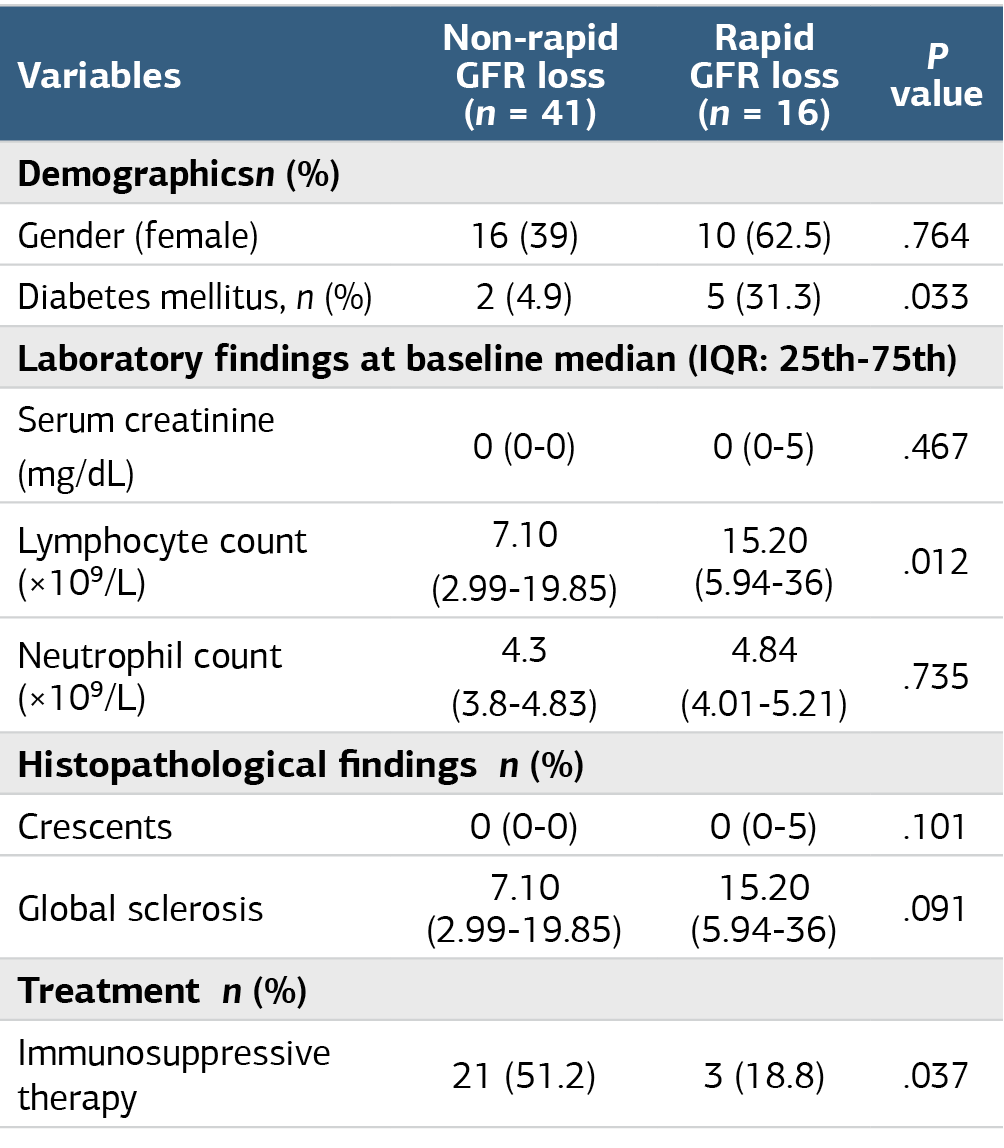
Abbreviations: eGFR, estimated glomerular filtration rate; GFR, glomerular filtration rate; IQR, interquartile range; mg/dL, milligrams per deciliter.
Additional Information
Publisher’s Note
Bayrakol MP remains neutral with regard to jurisdictional and institutional claims.
Rights and Permissions

This work is licensed under a Creative Commons Attribution-NonCommercial 4.0 International License (CC BY-NC 4.0). To view a copy of the license, visit https://creativecommons.org/licenses/by-nc/4.0/
About This Article
How to Cite This Article
Zeki Toprak, Fatima Zerenler Gursoy. Predictors of early kidney function decline in IgA nephropathy with preserved renal function: a single-center experience. Ann Clin Anal Med 2026;17(9):921-925. doi:10.4328/ACAM.50112
Publication History
- Received:
- 04.03.2026
- Accepted:
- 16.04.2026
- Published Online:
- 11.05.2026
- Printed:
- 01.09.2026