
Abstract
AimThis study compared isokinetic strengthening and home-based exercise combined with intra-articular hyaluronic acid (IAHA) and evaluated the additional benefits of exercise over IAHA alone in knee osteoarthritis (OA).MethodsIn this randomized controlled trial, 54 patients with knee OA were assessed; five were excluded before randomization because of knee joint infection (n = 1), major trauma or surgery (n = 1), or voluntary withdrawal (n = 3). The remaining 49 patients were randomized to IAHA plus isokinetic strengthening, IAHA plus home-based exercise, or IAHA alone, and all completed follow-up. IAHA was administered weekly for 3 weeks. The isokinetic group completed 12 supervised sessions over 4 weeks, whereas the home-based group exercised twice daily, 5 days/week, for 4 weeks. Outcomes were assessed at baseline, week 4, and 6 months using the visual analog scale, Western Ontario and McMaster Universities Osteoarthritis Index, Lequesne knee index, Health Assessment Questionnaire, mean absolute angular error, and knee extensor and flexor peak torque at 60°/s and 180°/s.ResultsBaseline characteristics were comparable among groups. All groups showed significant improvements in pain, function, and proprioception over time. Between-group analyses favored isokinetic strengthening for pain, disability, and proprioception after treatment and/or at 6 months. Knee extensor strength improved in both exercise groups, with more consistent gains in the isokinetic group (P < .05). ConclusionIAHA improved symptoms in knee OA, while exercise provided additional neuromuscular benefits. Isokinetic strengthening produced greater improvements in selected outcomes, whereas home-based exercise remained a practical option.
Keywords
Introduction
Knee osteoarthritis (OA) is a chronic degenerative joint disease characterized by articular cartilage degeneration, subchondral bone changes, and low-grade synovial inflammation. Pain, stiffness, quadriceps weakness, impaired proprioception, and functional limitation reduce independence and quality of life, particularly in older adults.1-3 Because no definitive disease-modifying treatment is available for most patients, conservative management aims to reduce symptoms, preserve function, and delay disability.2-5
Intra-articular hyaluronic acid (IAHA) injections are used as a symptomatic treatment option in selected patients with knee OA.5,6 The rationale for IAHA is based on restoration of the viscoelastic properties of synovial fluid, improvement of lubrication, and modulation of nociceptive and inflammatory pathways.6,7 Although clinical responses vary across trials and formulations, IAHA remains widely used in routine practice, especially when pharmacological options are limited or poorly tolerated.5-8
Exercise therapy is a core intervention in knee OA and is consistently recommended to improve pain, function, and muscle performance.2,5,9 However, the optimal exercise modality remains uncertain, particularly when exercise is combined with intra-articular treatments. Isokinetic strengthening provides supervised, standardized, velocity-specific resistance and objective control of training intensity.10-12 In contrast, home-based exercise is less costly, more accessible, and easier to sustain over time, but adherence and exercise execution may vary.11,13
Neuromuscular outcomes are especially relevant in knee OA. Quadriceps weakness contributes to pain, instability, and functional decline, whereas impaired proprioception may affect joint protection and motor control.12,14,15 Previous studies have evaluated IAHA or exercise separately, and some have examined combined IAHA-exercise approaches.4,16-19 Nevertheless, direct comparisons between isokinetic exercise and home-based exercise as adjuncts to IAHA remain limited. Therefore, this study aimed to determine whether adding exercise to IAHA provides superior clinical, proprioceptive, and muscle strength outcomes compared with IAHA alone, and whether isokinetic strengthening offers additional benefits over a home-based exercise program.
Materials and Methods
Study Design and ParticipantsThis study was designed as a prospective, randomized, controlled trial. All study procedures were conducted in accordance with the principles of the Declaration of Helsinki. The trial was retrospectively registered at ClinicalTrials.gov on 12 August 2023 (registration number: NCT06196021). Written informed consent was obtained from all participants.
Fifty-four patients with primary knee OA who were being followed at the Locomotor System Disorders Outpatient Clinic of the Department of Physical Medicine and Rehabilitation, Istanbul University Istanbul Faculty of Medicine, were assessed for eligibility. Eligibility was determined according to the American College of Rheumatology clinical and radiographic criteria, and patients with Kellgren-Lawrence grade II-III knee OA were included.20 Patients were excluded if they had secondary knee OA, clinically relevant lumbar, hip, ankle, neurological, vestibular, inflammatory, malignant, or systemic diseases that could affect assessments or exercise participation; knee trauma or surgery within 6 months; an intra-articular injection within 6 months; anticoagulant use or bleeding diathesis; pregnancy; or inability to complete questionnaires.Randomization and BlindingParticipants who met the inclusion criteria were randomly allocated to one of three intervention groups using a sealed-envelope randomization method. Envelopes containing letters A, B, or C were prepared and sequentially drawn by the participants. Group assignments were as follows: Group A (Group 1), Group B (Group 2), and Group C (Group 3). Owing to the nature of the interventions, participants and treating clinicians were not blinded. Outcome assessments were performed by a specialist in physical medicine and rehabilitation who remained blinded to group allocation. Statistical analyses were performed by an independent biostatistician who was also blinded to the treatment assignments.InterventionsAll groups received standardized education about knee OA and activity modification. Just before the start of treatment, an education program consisting of general information about their disease, daily activity modifications, and knee joint protection principles was applied by the physician to the patients within a period of approximately 10-15 minutes. IAHA injections were administered once weekly for 3 consecutive weeks by the same physician under sterile conditions. Patients were positioned supine with the knee in full extension, and injections were performed using a lateral approach. After each injection, patients were warned to apply cold to avoid possible local reactions and to avoid overloading the knee for 24 hours. The preparation was a medium-molecular-weight sodium hyaluronate solution (0.9 million Daltons), 2.5 mL at 10 mg/mL.
Group 1 received IAHA combined with isokinetic strengthening exercises using a Biodex System 3 Pro Multijoint System (Biodex Medical Inc., Shirley, NY, USA). The program targeted knee extensor and flexor muscle groups and consisted of 12 sessions over 4 weeks, 3 sessions per week. Exercises were performed bilaterally at 60°/s, 180°/s, and 240°/s, with 10 repetitions at each velocity and 10-second rest intervals.
Group 2 received IAHA combined with a 4-week home-based exercise program including knee range of motion, quadriceps setting, and hip abductor/adductor strengthening exercises. Patients received individual instruction and written materials and were asked to perform 10 repetitions of each exercise twice daily, 5 days per week. Telephone follow-up every 15 days was used to support adherence.
Group 3 received IAHA and education only.Outcome MeasuresAssessments were performed at baseline, post-treatment (week 4), and 6-month follow-up.
Primary outcomes were Visual Analogue Scale (VAS) pain, Mean Absolute Angular Error (MAAE), and knee extensor peak torque. Secondary outcomes were Western Ontario and McMaster Universities Osteoarthritis Index (WOMAC), Lequesne knee index, and Health Assessment Questionnaire (HAQ). Validated Turkish versions of WOMAC, Lequesne knee index, and HAQ were used.21-23
Pain was assessed with a 100-mm VAS, with higher scores indicating greater pain.24 WOMAC and Lequesne knee index were used to assess disease-specific pain and function, and HAQ was used to evaluate disability.21-23 Proprioception was assessed using a passive-active joint position reproduction protocol with the Biodex dynamometer. Participants reproduced target knee flexion angles between 20° and 60° with eyes closed, and lower MAAE values indicated better proprioceptive accuracy.25 Isokinetic strength testing was performed using the same dynamometer at 60°/s and 180°/s. Extensor and flexor peak torque and H/Q ratios were recorded.Sample Size and Power AnalysisA post hoc power analysis was performed using G*Power software (version 3.1.9.4) to assess the adequacy of the sample size. Based on the study design, a two-factor mixed-design ANOVA was applied to compare the time-dependent changes across the treatment groups. Assuming a medium effect size (F = 0.25), with a significance level of α = 0.05, three measurement time points, three groups, and a total sample size of 49 participants, the calculated statistical power (1−β) was 93.5%, indicating sufficient power to detect between-group differences over time.Ethical ApprovalThe study was approved by the Istanbul University Istanbul Faculty of Medicine Local Ethics Committee (Date: 15.12.2005, Decision No: 2005/1806).Statistical AnalysisStatistical analyses were performed using IBM SPSS Statistics version 31.0 and IBM SPSS AMOS version 31.0 (IBM Corp., Armonk, NY, USA). The distributional characteristics of continuous variables were assessed through visual inspection of histograms and evaluation of skewness and kurtosis values. Continuous variables were summarized as mean ± standard deviation or median (minimum-maximum), as appropriate. In the tables, normally distributed variables were denoted by “F,” whereas non-normally distributed variables were denoted by “H.” Between-group comparisons at each assessment time point were performed using one-way analysis of variance (ANOVA) for normally distributed variables and the Kruskal-Wallis test for non-normally distributed variables. When an overall statistically significant difference was identified, pairwise comparisons were conducted using the Bonferroni adjustment to control the family-wise error rate. Changes over time within each treatment group were assessed using repeated-measures ANOVA for normally distributed variables and the Friedman test for non-normally distributed variables. Pairwise comparisons between assessment time points were also performed with the Bonferroni adjustment. For each outcome variable, change scores (Δ) were calculated to quantify the difference between the pre-treatment and post-treatment assessments. The relationships between treatment group and changes in clinical, proprioceptive, and biomechanical outcomes were evaluated using Spearman’s rank correlation analysis. Variables demonstrating statistically significant correlations were subsequently included in univariable path analysis–based regression models to examine the direct association between treatment group and the respective outcome variables. In the regression analyses, the control group receiving IAHA alone was coded as 0 and used as the reference category, whereas the IAHA plus isokinetic strengthening exercise group and the IAHA plus home-based exercise group were coded as 1 and 2, respectively. Unstandardized regression coefficients (estimates), standard errors (SEs), and standardized regression coefficients (β) were reported for each model. All statistical tests were two-sided, and a P value <0.05 was considered statistically significant.
Reporting GuidelinesThe study was reported in accordance with the CONSORT 2025 statement.
Results
Before randomization, five patients were excluded: one developed a knee joint infection, one experienced major trauma or underwent surgery, and three withdrew voluntarily. The remaining 49 patients were randomly allocated to three treatment groups. All 49 participants completed the post-treatment and 6-month follow-up assessments and were included in the final analyses. The flow of participants through the study is shown in Figure 1.
There were no statistically significant differences between the three groups in terms of baseline sociodemographic and clinical characteristics, including age, sex, body weight, height, body mass index, affected side, and Kellgren-Lawrence score; the groups were comparable (all P > .05; Table 1).
Pain, physical function, proprioception, and isokinetic muscle strength outcomes are summarized in Table 2. At baseline, VAS pain, WOMAC pain, WOMAC total, Lequesne knee index, HAQ, and MAAE did not differ significantly among groups. All groups showed significant within-group improvements over time in VAS pain, WOMAC pain, WOMAC total, Lequesne knee index, HAQ, and MAAE (all P < .05). Between-group comparisons favored Group 1 for several clinically relevant outcomes. Post-treatment VAS pain was lowest in Group 1 (P = .008), and this difference persisted at 6 months (P < .001). WOMAC pain differed significantly among groups after treatment, favoring Group 1 (P = .006), although this difference was no longer significant at 6 months. WOMAC total improved within all groups, without statistically significant between-group differences at follow-up. Lequesne knee index differed significantly at 6 months, with lower scores in Group 1 than in the other groups (P = .003). HAQ scores also differed after treatment and at 6 months (P = .015 and P = .003, respectively). MAAE improved in all groups, indicating better proprioceptive accuracy; however, improvement was most pronounced in Group 1. Between-group differences in MAAE were significant after treatment and at 6 months (both P < .001), with lower MAAE values in Group 1 than in Groups 2 and 3. Knee extensor peak torque at 60°/s increased significantly over time in both exercise groups (Group 1, P = .015; Group 2, P < .001), whereas no significant change was observed in the IAHA-only group. Between-group comparisons for 60°/s extensor peak torque were not significant. Knee extensor peak torque at 180°/s showed a baseline between-group difference (P = .046), so this parameter should be interpreted cautiously. Significant within-group increases over time were observed in all groups, with a stepwise improvement pattern in Group 1.
Exploratory correlation analyses in the exercise groups are shown in Figure 2. In Group 1, it was significantly correlated with changes in VAS pain, Lequesne knee index, MAAE, knee flexor peak torque at 180°/s, and knee extensor peak torque at 60°/s and 180°/s. In Group 2, it was significantly correlated with changes in HAQ, MAAE, knee extensor peak torque at 60°/s and 180°/s, and H/Q ratios at 60°/s and 180°/s. Exploratory univariate regression models showed that Group 1 allocation was more strongly associated with reductions in VAS pain, Lequesne knee index, and MAAE, as well as with increases in knee extensor peak torque and 180°/s knee flexor peak torque. Group 2 allocation was associated with improvements in MAAE and knee extensor peak torque, but also with lower H/Q ratios. The regression coefficients, standardized β values, and significance levels are presented in Supplementary Table 1, and the corresponding path diagrams are shown in Figure 3. These exploratory models should be interpreted as hypothesis-generating and should not be considered evidence of causality. Three patients reported transient pain and redness at the injection site after IAHA. No serious adverse events were observed.
Discussion
This randomized controlled study found that IAHA was associated with symptomatic improvement in knee OA, while adding exercise was associated with additional neuromuscular benefits. The clearest pattern favored IAHA combined with isokinetic strengthening, particularly for pain reduction, proprioception, and quadriceps strength. Home-based exercise also produced meaningful improvements, especially in extensor strength, supporting its practical value as an accessible rehabilitation option.
The improvement observed in all groups supports the symptomatic role of IAHA in selected patients with knee OA. This finding is consistent with guideline statements and reviews that consider viscosupplementation a therapeutic option, although clinical response may depend on patient selection, formulation, and follow-up duration.5-8 Importantly, the present results suggest that IAHA alone may improve pain and function, but that combining IAHA with exercise can broaden the treatment effect toward neuromuscular domains.
Proprioception was a central outcome in this trial. MAAE improved in all groups, suggesting that reduced pain and improved intra-articular mechanics after IAHA may contribute to better joint position sense. However, the magnitude of improvement was greater in the exercise groups and was strongest after isokinetic strengthening. This is clinically plausible because proprioception depends on afferent feedback, periarticular muscle function, and motor control. Knee OA is associated with impaired proprioception, and exercise training has been shown to improve knee repositioning sense in OA populations.14,15 The supervised and velocity-specific nature of isokinetic training may have enhanced sensorimotor stimulation and improved accuracy of joint position reproduction.
Quadriceps weakness is another key therapeutic target in knee OA. Both exercise groups demonstrated increased extensor torque, whereas the IAHA-only group showed limited strength adaptation at 60°/s. These findings agree with evidence that strengthening programs improve muscle performance and functional outcomes in knee OA.9-13 Isokinetic exercise may provide advantages through standardized intensity, controlled movement velocity, and reproducible loading, whereas home programs are more dependent on adherence and technique. Nevertheless, home-based exercise remains important because it is inexpensive, scalable, and more feasible for long-term disease management.
The comparison between exercise modalities should be interpreted carefully. The results do not prove that isokinetic exercise should replace home-based exercise in routine care. Rather, they suggest that a supervised, standardized program may be preferable when the treatment goal is to maximize proprioceptive and strength gains, particularly in patients with marked quadriceps weakness or sensorimotor deficits. Conversely, home-based exercise may be more appropriate when access, cost, time, or sustainability are priority considerations. These findings support individualized rehabilitation planning rather than a one-size-fits-all approach.
Limitations
This study has limitations. First, participants and treating clinicians could not be blinded, which may have influenced patient-reported outcomes. Second, home-based exercise adherence was monitored indirectly by telephone rather than by objective logs or wearable monitoring. Third, a baseline between-group difference was present for 180°/s knee extension peak torque, requiring cautious interpretation of that variable.
Conclusion
IAHA injections were associated with symptomatic improvement in patients with knee OA, and adding exercise therapy provided additional benefits in proprioception and quadriceps strength. While isokinetic strengthening exercises provided the most consistent improvements, home-based exercises also remained a viable and sustainable long-term option in the treatment management of knee OA. These findings support combining IAHA with individualized exercise therapy and warrant confirmation in larger randomized trials with rigorous adherence monitoring and longer follow-up.
Declarations
Animal and Human Rights Statement
All procedures performed in this study were in accordance with the ethical standards of the institutional and/or national research committee and with the 1964 Helsinki Declaration and its later amendments or comparable ethical standards.
Informed Consent
Written informed consent was obtained from all participants.
Data Availability
The datasets generated and/or analyzed during the current study are available from the corresponding author on reasonable request.
Conflict of Interest
The authors declare that there is no conflict of interest regarding the publication of this article. All authors contributed equally to the manuscript and read and approved the final version.
Funding
None.
Author Contributions (CRediT Taxonomy)
Conceptualization: K.A.
Methodology: K.A., U.B.
Formal Analysis: K.A., U.B.
Investigation: K.A., U.B.
Data Curation: K.A., U.B.
Writing – Original Draft: K.A., U.B.
Writing – Review & Editing: K.A., U.B.
Supervision: K.A., U.B.
AI Usage Disclosure
No artificial intelligence tools were used in the conception, design, data collection, analysis, interpretation, writing, or revision of this manuscript.
Abbreviations
H/Q: Hamstring/quadriceps
HA: Hyaluronic acid
HAQ: Health assessment questionnaire
IAHA: Intra-articular hyaluronic acid
MAAE: Mean absolute angular error
OA: Osteoarthritis
VAS: Visual analogue scale
WOMAC: Western Ontario and McMaster Universities Osteoarthritis Index
References
- Hunter DJ, Bierma-Zeinstra S. Osteoarthritis. Lancet. 2019;393(10182):1745-1759. doi:10.1016/s0140-6736(19)30417-9
- Kolasinski SL, Neogi T, Hochberg MC, et al. 2019 American College of Rheumatology/Arthritis Foundation guideline for the management of osteoarthritis of the hand, hip, and knee. Arthritis Care Res (Hoboken). 2020;72(2):149-162. doi:10.1002/acr.24131
- Katz JN, Arant KR, Loeser RF. Diagnosis and treatment of hip and knee osteoarthritis: a review. JAMA. 2021;325(6):568-578. doi:10.1001/jama.2020.22171
- Liles SC, Bley B, White DK. The effects of exercise and intra-articular injections versus exercise alone for the treatment of knee osteoarthritis: a scoping review of the evidence. Osteoarthritis Cartilage Open. 2024;6(2):100456. doi:10.1016/j.ocarto.2024.100456
- Bannuru RR, Osani MC, Vaysbrot EE, et al. OARSI guidelines for the non-surgical management of knee, hip, and polyarticular osteoarthritis. Osteoarthritis Cartilage. 2019;27(11):1578-1589. doi:10.1016/j.joca.2019.06.011
- Conrozier T, Raman R, Chevalier X, et al. Viscosupplementation for the treatment of osteoarthritis: the contribution of EUROVISCO group. Ther Adv Musculoskelet Dis. 2021;13:1759720X211018605. doi:10.1177/1759720x211018605
- Altman RD, Manjoo A, Fierlinger A, Niazi F, Nicholls M. The mechanism of action for hyaluronic acid treatment in the osteoarthritic knee: a systematic review. BMC Musculoskelet Disord. 2015;16:321. doi:10.1186/s12891-015-0775-z
- Fransen M, McConnell S, Harmer AR, et al. Exercise for osteoarthritis of the knee: a Cochrane systematic review. Br J Sports Med. 2015;49(24):1554-1557. doi:10.1136/bjsports-2015-095424
- Goh SL, Persson MSM, Stocks J, et al. Relative efficacy of different exercises for pain, function, performance and quality of life in knee and hip osteoarthritis: systematic review and network meta-analysis. Sports Med. 2019;49(5):743-761. doi:10.1007/s40279-019-01082-0
- Bartholdy C, Juhl C, Christensen R, et al. The role of muscle strengthening in exercise therapy for knee osteoarthritis: a systematic review and meta-regression analysis of randomized trials. Semin Arthritis Rheum. 2017;47(1):9-21. doi:10.1016/j.semarthrit.2017.03.007
- Monticone M, Frizziero A, Rovere G, et al. Hyaluronic acid intra-articular injection and exercise therapy: effects on pain and disability in subjects affected by lower limb joints osteoarthritis. Eur J Phys Rehabil Med. 2016;52(3):389-399.
- Kus G, Yeldan I. Strengthening the quadriceps femoris muscle versus other knee training programs for the treatment of knee osteoarthritis. Rheumatol Int. 2019;39(2):203-218. doi:10.1007/s00296-018-4199-6
- Suzuki Y, Iijima H, Tashiro Y, et al. Home exercise therapy to improve muscle strength and joint flexibility effectively treats pre-radiographic knee OA in community-dwelling elderly: a randomized controlled trial. Clin Rheumatol. 2019;38(1):133-141. doi:10.1007/s10067-018-4263-3
- Koralewicz LM, Engh GA. Comparison of proprioception in arthritic and age-matched normal knees. J Bone Joint Surg Am. 2000;82(11):1582-1588. doi:10.2106/00004623-200011000-00011
- Sheikhhoseini R, Valizadeh M, Dadfar M, et al. The effects of exercise training on knee repositioning sense in people with knee osteoarthritis: a systematic review and meta-analysis of clinical trials. BMC Musculoskelet Disord. 2023;24(1):592. doi:10.1186/s12891-023-06712-3
- Huang MH, Lin YS, Yang RC, Lee CL. Preliminary results of integrated therapy for patients with knee osteoarthritis. Arthritis Rheum. 2005;53(6):812-820. doi:10.1002/art.21590
- Saccomanno MF, Donati F, Careri S, Bartoli M, Severini G, Milano G. Efficacy of intra-articular hyaluronic acid injections and exercise-based rehabilitation programme for knee osteoarthritis. Knee Surg Sports Traumatol Arthrosc. 2016;24(5):1686-1694. doi:10.1007/s00167-015-3917-9
- Stitik TP, Blacksin MF, Stiskal DM, et al. Efficacy and safety of hyaluronan treatment in combination therapy with home exercise for knee osteoarthritis pain. Arch Phys Med Rehabil. 2007;88(2):135-141. doi:10.1016/j.apmr.2006.11.006
- Cheng HY, Lee YH, Chen CY, et al. Effects of the combination of various pharmacological treatments and exercise on knee osteoarthritis: a systematic review and network meta-analysis. EFORT Open Rev. 2024;9(7):668-675. doi:10.1530/eor-23-0136
- Altman R, Asch E, Bloch D, et al. Development of criteria for the classification and reporting of osteoarthritis: classification of osteoarthritis of the knee. Arthritis Rheum. 1986;29(8):1039-1049. doi:10.1002/art.1780290816
- Tüzün EH, Eker L, Aytar A, Daşkapan A, Bayramoğlu M. Acceptability, reliability, validity and responsiveness of the Turkish version of WOMAC osteoarthritis index. Osteoarthritis Cartilage. 2005;13(1):28-33. doi:10.1016/j.joca.2004.10.010
- Basaran S, Guzel R, Seydaoglu G, Guler-Uysal F. Validity, reliability, and comparison of the WOMAC osteoarthritis index and Lequesne algofunctional index in Turkish patients with hip or knee osteoarthritis. Clin Rheumatol. 2010;29(7):749-756. doi:10.1007/s10067-010-1398-2
- Küçükdeveci AA, Sahin H, Ataman S, Griffiths B, Tennant A. Issues in cross-cultural validity: adaptation, reliability, and validity testing of a Turkish version of the Stanford Health Assessment Questionnaire. Arthritis Rheum. 2004;51(1):14-19. doi:10.1002/art.20091
- Boonstra AM, Schiphorst Preuper HR, Reneman MF, Posthumus JB, Stewart RE. Reliability and validity of the visual analogue scale for disability in patients with chronic musculoskeletal pain. Int J Rehabil Res. 2008;31(2):165-169. doi:10.1097/mrr.0b013e3282fc0f93
- Diracoglu D, Vural M, Baskent A, Dikici F, Aksoy C. The effect of viscosupplementation on neuromuscular control of the knee in patients with osteoarthritis. J Back Musculoskelet Rehabil. 2009;22(1):1-9. doi:10.3233/bmr-2009-0207
Tables
Table 1. Sociodemographic and Clinical Characteristics of the Study Groups
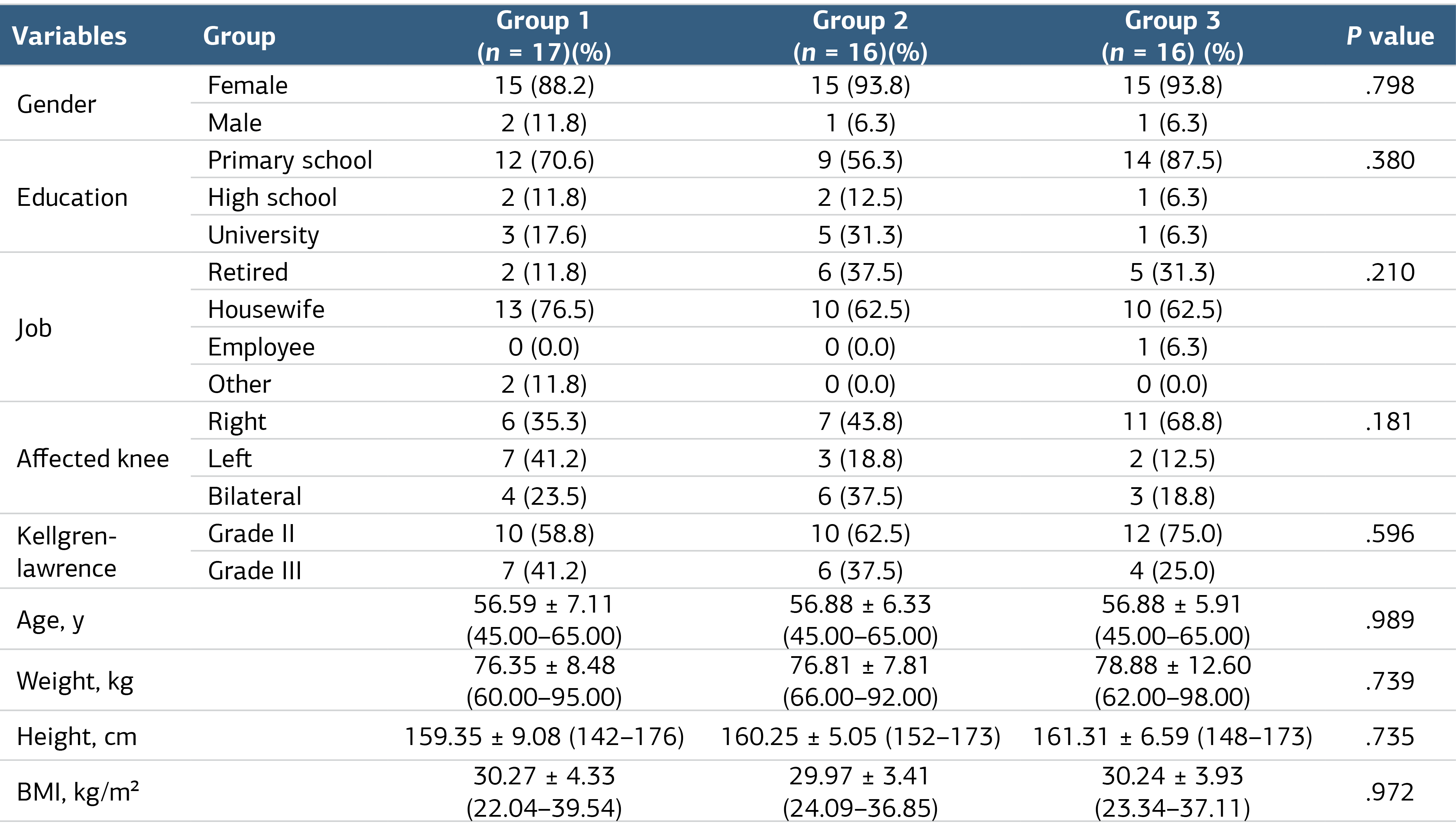
Group 1, IAHA + isokinetic strengthening exercise; Group 2, IAHA + home-based exercise; Group 3, IAHA alone; BMI, Body Mass Index; IAHA, Intra-articulare hyaluronic acid. Data are presented as n (%) for categorical variables and as mean ± SD (minimum–maximum) for continuous variables. The chi-square test was used for categorical variables, and one-way analysis of variance (ANOVA; F) was applied for continuous variables. Statistical significance was defined as p < 0.05.
Table 2. Univariate Regression Analysis of the Associations Between Treatment Group and Outcome Variables
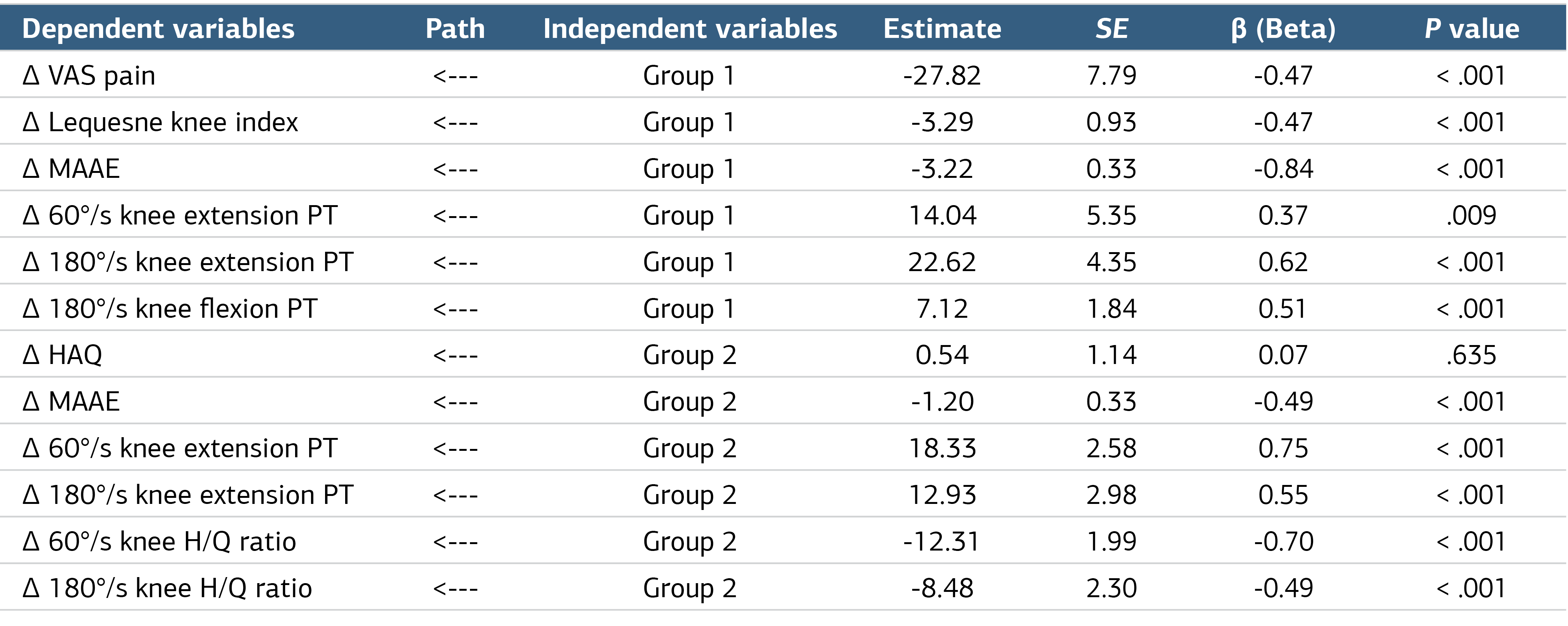
Note.Δ denotes the change from pre-treatment to post-treatment values. Correlations were assessed using Spearman’s rank correlation analysis. *P < .05; * *P < .,01; * * *P < .001. The groups were coded as follows: control group 0 received only IAHA, group 1 received IAHA plus isokinetic strengthening exercises, and group 2 received, IAHA plus home-based exercise. Estimate represents the regression coefficient, SE the standard error, and β the standardized regression coefficient. IAHA , Intra-articular Hyaluronic Acid; HAQ , Health Assessment Questionnaire; MAAE , Mean Absolute Angular Error; VAS , Visual Analogue Scale; PT , Peak Torque; H/Q , Hamstring/Quadriceps ratio. These univariate regression models were exploratory and should be interpreted as hypothesis-generating rather than causal.
Figures
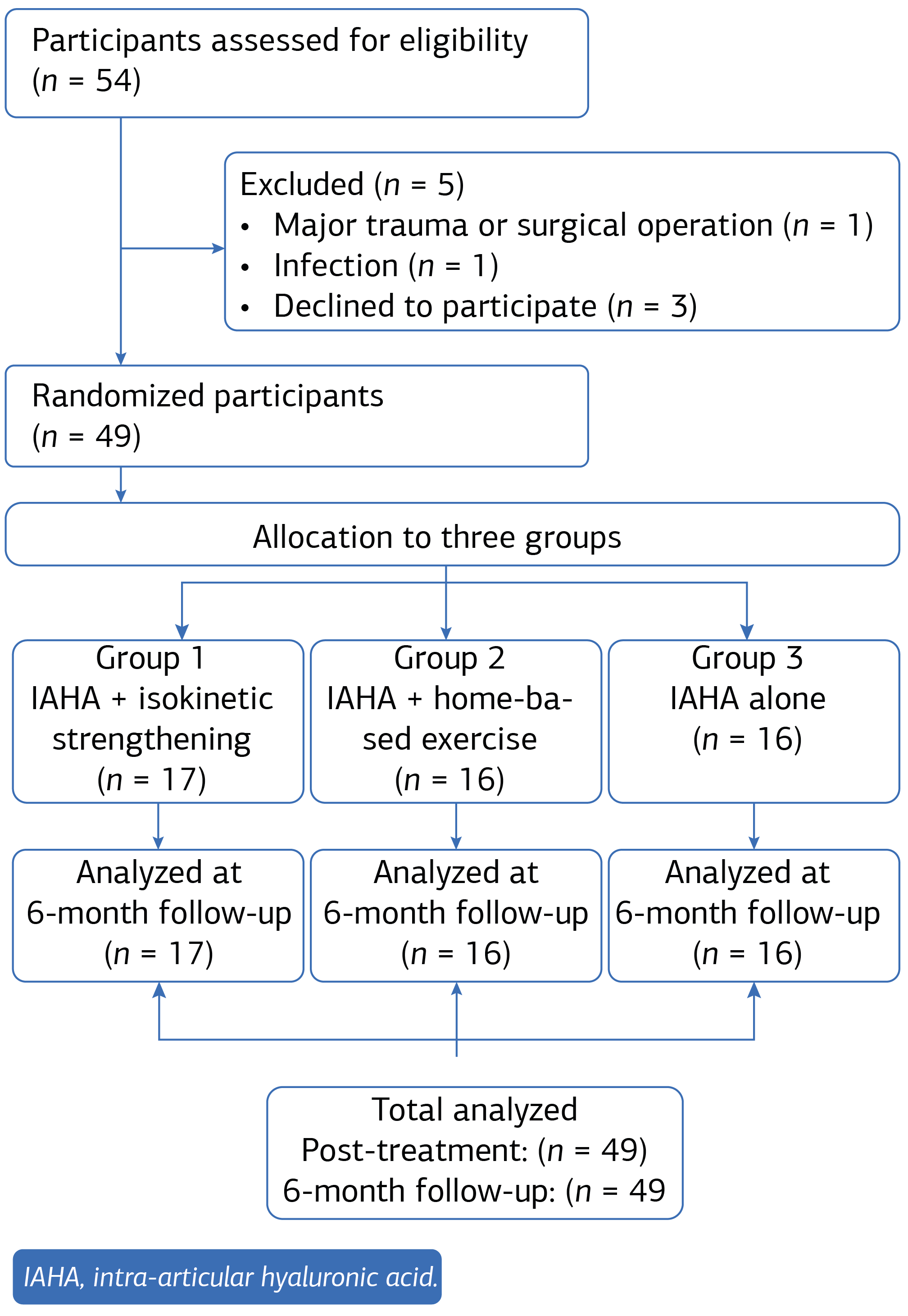
Figure 1. Participant flow diagram
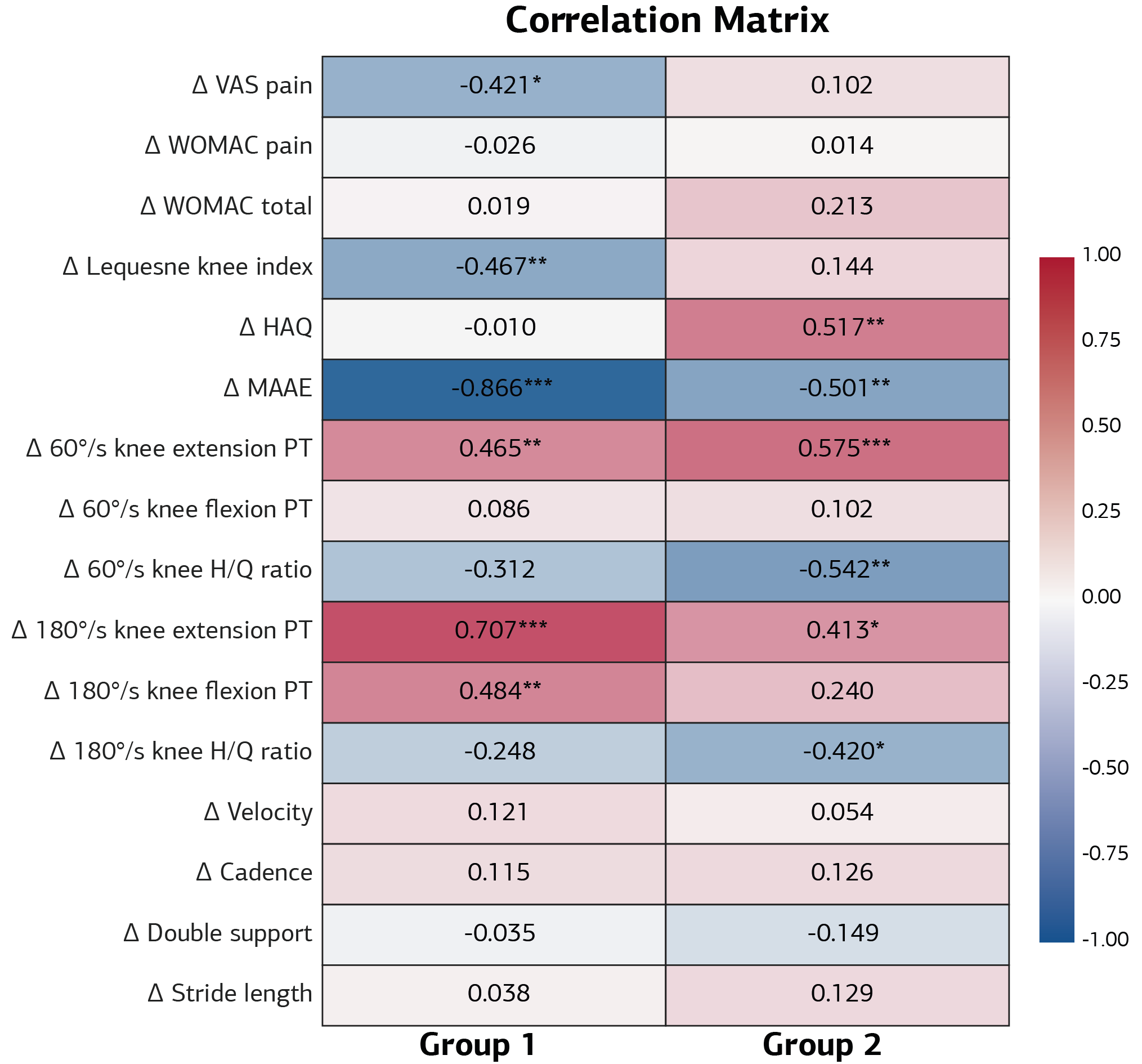
Figure 2. Heat map of the correlations between the change (Δ) values in clinical, functional, and biomechanical variables and the treatment groups in the IAHA plus strengthening exercise and IAHA plus home-based exercise groups
Note: Δ denotes the change from pre- to post-treatment. Associations were assessed using Spearman’s rank correlation analysis. The groups were coded as follows: control group 0 received only IAHA, group 1 received IAHA plus isokinetic strengthening exercises, and group 2 received, IAHA plus home-based exercise. IAHA, Intra-articular Hyaluronic Acid; VAS, Visual Analogue Scale; WOMAC, Western Ontario and McMaster Universities Osteoarthritis Index; HAQ, Health Assessment Questionnaire; MAAE, Mean Absolute Angular Error; PT, Peak Torque; H/Q, Hamstring/Quadriceps ratio. Red indicates a positive correlation, whereas blue indicates a negative correlation; color intensity reflects the magnitude of the correlation coefficient (r). The values within the cells represent the correlation coefficients, and asterisks indicate the level of statistical significance (*P < .05, * *P < .01, and * * *P < .001).
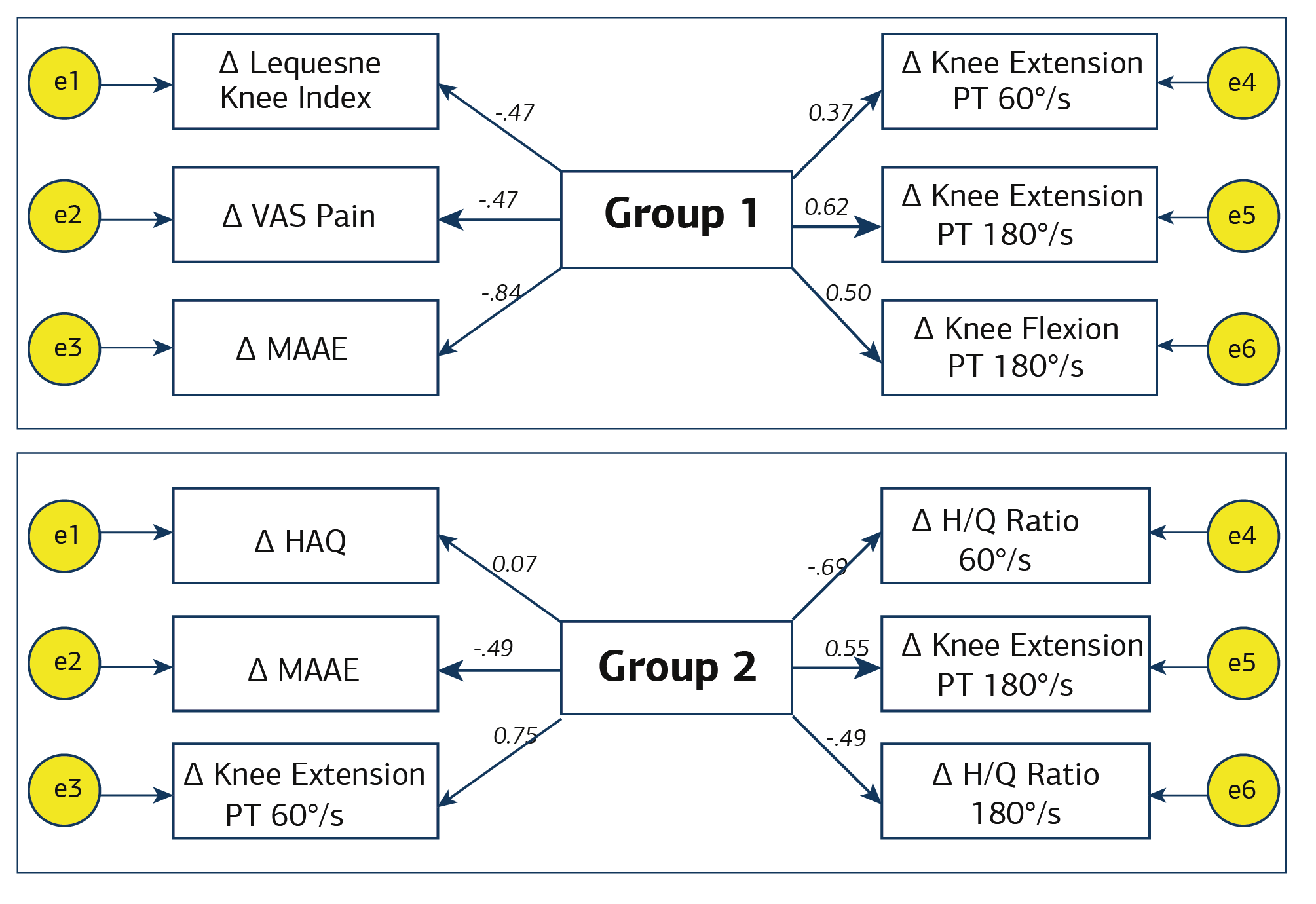
Figure 3. Univariate Pathway (Regression) Model Showing the Direct Effects of Treatment Group on Outcome Variables for Variables Found Significant in Correlation Analysis in IAHA Plus Isokinetic Strengthening Exercise and IAHA Plus Home-based Exercise Groups.
Note, Δ denotes the change from pre- to post-treatment. The groups were coded as follows, control group 0 received only IAHA, group 1 received IAHA plus isokinetic strengthening exercises, and group 2 received, IAHA plus home-based exercise. Estimate represents the regression coefficient, SE the standard error, and β the standardized regression coefficient. IAHA = Intra-articular Hyaluronic Acid; HAQ, Health Assessment Questionnaire; MAAE, Mean Absolute Angular Error; VAS, Visual Analogue Scale; PT, Peak Torque; H/Q, Hamstring/Quadriceps ratio. These univariate regression models were exploratory and should be interpreted as hypothesis-generating rather than causal. Values on the paths indicate standardized regression coefficients. These models are exploratory and should not be interpreted as causal. Statistical significance was defined as *P < .05, * *P < .01, and * * *P < .001.
Additional Information
Publisher’s Note
Bayrakol MP remains neutral with regard to jurisdictional and institutional claims.
Rights and Permissions

This work is licensed under a Creative Commons Attribution-NonCommercial 4.0 International License (CC BY-NC 4.0). To view a copy of the license, visit https://creativecommons.org/licenses/by-nc/4.0/
About This Article
How to Cite This Article
Bilal Uysal, Ayşegül Ketenci. Comparative effects of isokinetic and home exercises combined with intra-articular hyaluronic acid in knee osteoarthritis. Ann Clin Anal Med 2026;17(10):1011-1016. doi:10.4328/ACAM.50212
Publication History
- Received:
- 01.06.2026
- Accepted:
- 09.08.2026
- Published Online:
- 12.08.2026
- Printed:
- 01.10.2026