
Abstract
AimGlucose-6-phosphate dehydrogenase (G6PD) deficiency is an important cause of neonatal hyperbilirubinemia. However, the diagnostic value of routinely used laboratory parameters in predicting G6PD deficiency among infants with prolonged neonatal jaundice has not been adequately investigated. This study aimed to evaluate the prevalence of G6PD deficiency and assess the diagnostic performance of routine laboratory parameters in predicting it.MethodsThis retrospective, single-center study included 346 infants evaluated for prolonged neonatal jaundice between September 2021 and September 2025. Total and direct bilirubin, hemoglobin, free T4, TSH, and urinary tract infection (UTI) findings were compared between infants with and without G6PD deficiency. Receiver operating characteristic (ROC) analysis, Spearman correlation analysis, and logistic regression analysis were performed.ResultsG6PD deficiency was detected in 16 infants (4.6%). Hemoglobin levels were significantly higher in infants with G6PD deficiency (P = .022), whereas total bilirubin levels were higher but not statistically significant (P = .150). Free T4 levels were significantly higher in the G6PD-deficient group (P = .005), while TSH levels were comparable. ROC analysis showed that hemoglobin had better diagnostic performance than total bilirubin (AUC: 0.669 vs. 0.608). Logistic regression identified hemoglobin as the only independent predictor of G6PD deficiency (OR: 1.288, P = .0117). No significant association was found between G6PD deficiency and UTI.ConclusionHemoglobin demonstrated better diagnostic performance than total bilirubin for predicting G6PD deficiency in infants with prolonged neonatal jaundice. Routine laboratory parameters, particularly hemoglobin, may provide value during the evaluation of G6PD deficiency. Larger prospective studies are warranted to confirm these findings.
Keywords
Introduction
Glucose-6-phosphate dehydrogenase (G6PD) deficiency is one of the most common enzymatic disorders seen in the neonatal period. It is among the significant causes of neonatal hyperbilirubinemia. In particular, it is considered an important risk factor for the development of hemolytic jaundice, severe hyperbilirubinemia, and kernicterus.1-4
A significant portion of the studies in the literature has focused on determining the prevalence of G6PD deficiency in jaundiced newborns.1-3 In infants with G6PD deficiency, the severity of hyperbilirubinemia, serum bilirubin levels, need for phototherapy, requirement for exchange transfusion, and risk of bilirubin-induced neurological complications have also been evaluated in numerous studies.4-7 In studies based on regional prevalence differences, the necessity of newborn G6PD screening programs has been discussed, and the role of early diagnosis in preventing severe hyperbilirubinemia and kernicterus has been emphasized.8-10
However, the vast majority of published studies have addressed G6PD deficiency in isolation. Studies in which G6PD deficiency is evaluated in the same patient group together with other major etiological causes of prolonged jaundice, such as urinary tract infection and congenital hypothyroidism, are limited.11-13 Similarly, there are only a few studies evaluating the diagnostic performance of routine laboratory parameters in predicting G6PD deficiency.
In this study, the aim was to determine the prevalence of G6PD deficiency among infants who underwent G6PD testing for prolonged jaundice. In addition, infants with and without G6PD deficiency were compared in terms of bilirubin levels, hemoglobin values, thyroid function tests, and findings of urinary tract infection. Finally, the discriminatory performance of total bilirubin and hemoglobin levels in predicting G6PD deficiency was evaluated.
Materials and Methods
Study DesignThis retrospective, single-center observational study was conducted at the Karabük University Faculty of Medicine Karabük Training and Research Hospital. Using records from the hospital information management system (FONET), infants evaluated for prolonged neonatal jaundice between September 1, 2021, and September 1, 2025, were retrospectively reviewed.Data Collection and ValidationCases for whom a G6PD enzyme test was requested during clinical evaluation and whose test result was available in hospital records were included in the study.Identification of Patients and Data CollectionPatients were identified by screening records with G6PD enzyme test results in the hospital automation system. A total of 346 infants meeting the study criteria were included in the analysis.The Following Tests Were Obtained From Hospital RecordsG6PD enzyme result, Total bilirubin, Direct bilirubin, Hemoglobin, Free T4, TSH, Urine, Leukocytes, Urine nitrites, Urine culture result. No new laboratory tests were requested from any patient within the scope of the study. Analyses were conducted solely using data already available in hospital records.Inclusion CriteriaPatients who met the following criteria were included in the study:
• Patients without a G6PD test result.
• Patients with missing laboratory parameter data.
• Presence of G6PD test result in the hospital information management systemExclusion CriteriaThe following patients were excluded from the study:
• Patients without a G6PD test result, Patients missing any of the laboratory parameters evaluated in the study
• Repeated admissions for the same patient (only the first admission was included in the analysis)DefinitionsProlonged neonatal jaundice was defined as jaundice lasting more than 14 days in term infants and more than 21 days in preterm infants. Urinary tract infection assessment was performed in two stages. Cases with growth detected in the urine culture were considered “definite urinary tract infection.” Cases with no growth detected in the urine culture but with leukocyte and/or nitrite positivity in the urinalysis were classified as “possible urinary tract infection.” Furthermore, to evaluate whether the inclusion of possible urinary tract infection cases altered the results, definite and possible urinary tract infection cases were evaluated together in a second analysis. Thyroid function was evaluated according to the recommendations of the American Academy of Pediatrics (AAP) and the American Thyroid Association (ATA). Patients were classified as having normal thyroid function, subclinical hypothyroidism, or primary hypothyroidism.Ethical ApprovalThe study was approved by the Ethics Committee of Karabük University (Date: 03.11.2025; Decision No: 2025/2537).Statistical AnalysisIn this study, the diagnostic performance of total bilirubin and hemoglobin levels for predicting G6PD deficiency was evaluated using ROC (Receiver Operating Characteristic) curve analysis. For both parameters, area under the curve (AUC), optimal cutoff value (Youden index), sensitivity, specificity, positive predictive value (PPV), and negative predictive value (NPV) were calculated. In addition, the contribution of the combined use of hemoglobin and total bilirubin values to diagnostic performance was examined using the 5-fold cross-validation method.
Additionally, a logistic regression analysis was conducted to identify independent variables associated with G6PD deficiency. Results were presented as odds ratio (OR), 95% confidence interval (95% CI), and p values. The direction and strength of the association between G6PD deficiency and laboratory parameters were evaluated using Spearman correlation analysis.
The Mann-Whitney U test was used to compare continuous variables between cases with and without G6PD deficiency, while the Chi-squared test was used for the comparison of categorical variables. Data were analyzed using SPSS for Windows, Version 20.0 (IBM Corp., Armonk, NY, USA). The normality of data distribution was assessed with the Shapiro-Wilk test. Continuous variables were presented as mean±standard deviation, median, minimum, and maximum values; categorical variables were presented as number and percentage. A two-tailed P < .05 value was considered statistically significant in all analyses.Reporting GuidelinesThis study was reported in accordance with the STROBE guideline.
Results
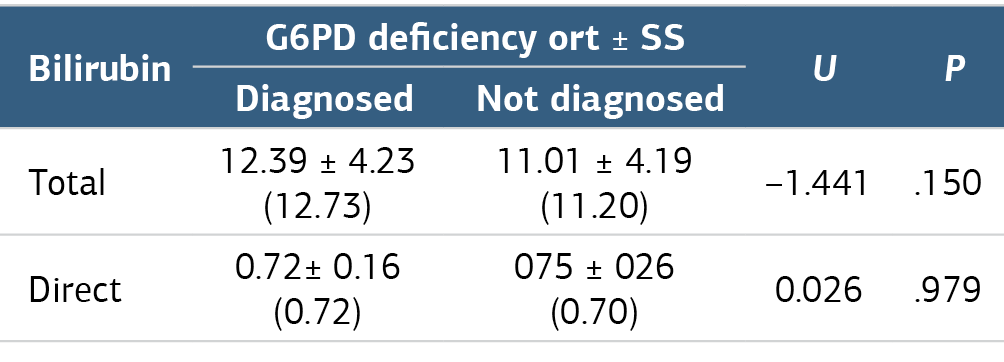
A total of 346 infants who underwent G6PD testing due to prolonged neonatal jaundice were included in the study. G6PD deficiency was detected in 16 of them (4.6%), while G6PD levels were found to be normal in 330 (95.4%) (Table 1). Although the mean total bilirubin level in infants with G6PD deficiency was higher than in those without G6PD deficiency, this difference was not statistically significant (12.39±4.23 mg/dL vs 11.01±4.19 mg/dL, P = .150). Similarly, direct bilirubin levels did not differ between the two groups (P = .979) (Table 2). When hemoglobin levels were compared, it was found that hemoglobin values were significantly higher in infants with G6PD deficiency (14.97±3.24 g/dL vs 13.12±2.48 g/dL, P = .022) (Table 3). When thyroid function tests were evaluated, the level of free T4 was found to be significantly higher in infants with G6PD deficiency (1.53±0.21 vs 1.37±0.24 ng/dL, P = .005). However, no significant difference was observed between the groups in terms of TSH levels (P = .117) (Supplementary Table 1). In 162 (46.8%) of the infants in the study group, no urinary tract infection was detected. On the other hand, 179 (51.7%) had a confirmed urinary tract infection, and 5 (1.5%) had a possible urinary tract infection. When confirmed and possible urinary tract infection cases were evaluated together, a total of 184 (53.2%) infants had a urinary tract infection (Supplementary Table 2). In the analysis conducted for control purposes, in which confirmed and possible urinary tract infection cases were evaluated together, the total bilirubin level was higher than in infants with normal urine findings, but this difference did not reach the threshold for statistical significance (11.31±4.38 mg/dL vs 10.81±3.98 mg/dL, P = .060). Direct bilirubin levels were also similar between the two groups (P = .217) (Supplementary Table 3). In Supplementary Table 4, the relationship between G6PD and bilirubin levels was evaluated using Spearman correlation analysis. Accordingly, although a weak negative correlation was found between G6PD and total bilirubin (r = -0.102), this relationship was not found to be statistically significant (P = .058). Similarly, a very weak negative correlation was also found between G6PD and direct bilirubin (r = -0.028), but this relationship was also not statistically significant (P = .609).
In logistic regression analysis, only hemoglobin level was found to be independently associated with G6PD deficiency (OR=1.288; 95% CI: 1.058–1.567; P = .0117). Total bilirubin level, on the other hand, was not an independent determinant (P = .518) (Table 1).
In ROC analysis, the performance of hemoglobin level in distinguishing G6PD deficiency was found to be higher than that of total bilirubin (AUC=0.669 and AUC=0.608). The optimal cutoff value for hemoglobin was 13.8 g/dL, with a sensitivity of 68.8%, specificity of 62.9%, positive predictive value of 8.3%, and negative predictive value of 97.6% at this level. The optimal cutoff value for total bilirubin was 12.7 mg/dL, with a sensitivity of 56.3%, specificity of 66.9%, positive predictive value of 7.6%, and negative predictive value of 96.9%. In the model using both hemoglobin and total bilirubin together, the AUC value was calculated as 0.594, and it was seen that this did not provide greater discriminative ability than using hemoglobin alone (Table 4, Figure 1).
Discussion
The most original aspect of our study is that the diagnostic performance of routine laboratory parameters in predicting G6PD deficiency was evaluated in conjunction with ROC analysis and logistic regression. In the literature, ROC analysis is mostly used for determining G6PD enzyme activity, establishing appropriate cutoff values in newborn screening programs, and comparing the performance of different diagnostic methods.13-16 In contrast, studies evaluating the diagnostic performance of hemoglobin and total bilirubin in predicting G6PD deficiency are limited. In our study, hemoglobin was shown to have a higher AUC value than total bilirubin, and the combined use of both parameters did not improve diagnostic performance. This is likely because bilirubin reflects multiple causes of prolonged neonatal jaundice rather than G6PD deficiency alone.
In our study, infants with G6PD deficiency had significantly higher hemoglobin levels than those without G6PD deficiency. In contrast, G6PD deficiency has traditionally been associated with hemolytic anemia, and several previous studies have reported lower hemoglobin levels or a progressive decline in hemoglobin secondary to ongoing hemolysis in affected neonates.17-19 However, other investigators have found no significant difference in hemoglobin levels between infants with and without G6PD deficiency.19 One possible explanation for this discrepancy is that our study included only infants evaluated for prolonged neonatal jaundice, rather than those presenting during the acute hemolytic phase. While hemoglobin levels are expected to decrease during active hemolysis, infants evaluated at a later stage may have already experienced resolution of hemolysis together with compensatory erythropoiesis, resulting in partial recovery or preservation of hemoglobin levels.17 Therefore, hemoglobin concentration in G6PD deficiency may reflect not only the presence of enzyme deficiency itself but also the timing of clinical evaluation and the current hemolytic status of the patient.
In our study, although the total bilirubin level was higher in infants with G6PD deficiency, this difference was not statistically significant. Moreover, in the Spearman correlation analysis, a weak negative relationship, very close to the threshold of significance, was found between G6PD and total bilirubin (r = -0.102; P = .058). In the literature, however, many studies have demonstrated that G6PD deficiency is associated with higher serum bilirubin levels, more severe hyperbilirubinemia, and an increased need for exchange transfusion.20,21 Nevertheless, the fact that not all studies have identified a significant difference in bilirubin levels suggests that G6PD deficiency alone is not a factor determining the severity of hyperbilirubinemia (infections, nutritional status, thyroid functions, etc.). Larger prospective studies are needed to further clarify the relationship between G6PD deficiency and bilirubin levels.
In our study, no significant relationship was found between G6PD deficiency and definitive urinary tract infection. Additionally, a second analysis was performed to determine whether the inclusion of possible urinary tract infection cases influenced the results. In the literature, studies directly evaluating the association between G6PD deficiency and urinary tract infection are limited. In contrast, several studies have identified urinary tract infection as an important and frequently overlooked cause of prolonged neonatal jaundice, particularly in infants without an identifiable etiology, and therefore recommend routine investigation in such cases.22-24 The relatively high prevalence of urinary tract infection observed in our cohort may be partly explained by the fact that the study population consisted exclusively of infants undergoing etiological evaluation for prolonged neonatal jaundice rather than a general neonatal population. In addition, contamination related to urine collection, particularly when non-invasive collection methods are used, may have contributed to an overestimation of urinary tract infection prevalence. Although contamination may have contributed to the high UTI rate, secondary analyses showed that this did not materially affect the results. Therefore, the reported prevalence reflects infants evaluated for prolonged neonatal jaundice rather than the general neonatal population. These findings further support that G6PD deficiency and urinary tract infection should be considered two independent etiologies in the evaluation of prolonged neonatal jaundice rather than mutually exclusive diagnoses.
In our study, while the free T4 level was found to be significantly higher in infants with G6PD deficiency, no significant differences were detected between the groups in terms of TSH levels. The number of studies in the literature evaluating the relationship between G6PD deficiency and thyroid function is quite limited. Although existing studies have considered hypothyroidism to be an important cause that should be investigated in the differential diagnosis of prolonged neonatal jaundice, a direct relationship between G6PD deficiency and thyroid function tests has not been demonstrated.18,20,25
Limitations
First, the retrospective and single-center design of the study may limit the generalizability of the findings. Second, the G6PD test was not routinely performed on all infants with prolonged jaundice; it was only requested for patients deemed clinically necessary. This may have led to selection bias. Third, the low number of cases with G6PD deficiency detected may have reduced the statistical power of the multivariate analyses. Fourth, laboratory markers indicating hemolysis, such as reticulocyte count, lactate dehydrogenase, and haptoglobin, could not be evaluated in all patients. Fifth, due to the lack of records of the urine culture collection method, the high rate of detected urinary tract infections may have been influenced by contamination. Therefore, the findings should be interpreted with caution. Finally, G6PD genotyping was not performed, and the patients’ long-term clinical outcomes were not examined.
Conclusion
• The most significant strength of this study is that G6PD deficiency, hemoglobin, bilirubin, urinary tract infection, and thyroid function were evaluated together within the same patient group in infants with prolonged neonatal jaundice.
• In addition, the combined use of advanced statistical methods such as ROC analysis, Spearman correlation analysis, and logistic regression increases the reliability and clinical interpretability of the findings. In this study, the prevalence of G6PD deficiency among infants evaluated for prolonged neonatal jaundice was found to be 4.6%. Among routine laboratory parameters, hemoglobin level demonstrated higher diagnostic performance than total bilirubin in predicting G6PD deficiency and was found to be independently associated with G6PD deficiency in logistic regression analysis. Although total bilirubin level was higher in infants with G6PD deficiency, it was not a sufficient predictor of G6PD deficiency on its own.
• This finding suggests that focusing solely on bilirubin level may not be adequate in the assessment of G6PD deficiency.
• No significant relationship was found between G6PD deficiency and urinary tract infection or thyroid dysfunction. However, given the high incidence of urinary tract infection in infants with prolonged neonatal jaundice, this possibility should not be overlooked in etiological evaluation.
Declarations
Animal and Human Rights Statement
All procedures performed in this study were in accordance with the ethical standards of the institutional and/or national research committee and with the 1964 Declaration of Helsinki and its later amendments, or comparable ethical standards.
Informed Consent
Written informed consent was obtained from all participants.
Data Availability
The data supporting the findings of this study are available from the corresponding author on reasonable request.
Conflict of Interest
The authors declare that there is no conflict of interest.
Funding
None.
Author Contributions (CRediT Taxonomy)
Conceptualization: Y.D., S.E.
Methodology: Y.D., S.E.
Formal Analysis: Y.D., S.E.
Investigation: Y.D., S.E.
Data Curation: Y.D., S.E.
Writing – Original Draft Preparation: Y.D.
Writing – Review & Editing: S.E.
Supervision: Y.D., S.E.
AI Usage Disclosure
The authors declare that no AI-assisted technologies were used.
Abbreviations
AAP: American academy of pediatrics
ATA: American thyroid association
AUC: Area under the curve
CI: Confidence interval
G6PD: Glucose-6-phosphate dehydrogenase
NPV: Negative predictive value
OR: Odds ratio
PPV: Positive predictive value
ROC: Receiver operating characteristic
STROBE: Strengthening the reporting of observational studies in epidemiology
TSH: Thyroid-stimulating hormone
UTI: Urinary tract infection
References
- Javadi M, Deravi S, Zarei S, Mahdavi N, Ranjbaran M. Prevalence of G6PD deficiency in Iranian neonates with jaundice: a systematic review and meta-analysis. J Matern Fetal Neonatal Med. 2022;35(25):5813-5820. doi:10.1080/14767058.2021.1895738
- Nazari H, Najar H, Emadi A, et al. Prevalence of G6PD deficiency in neonates referred to Semnan University of Medical Sciences screening laboratory. Med Lab J. 2014;2(2):69-73.
- Iqbal R, Tahira A, Riaz Z, Haidar S, Khan KU, Mehmood Z. Prevalence of G6PD deficiency amongst neonates with neonatal jaundice admitted to the Children Ward of Sheikh Zayed Hospital Rahim Yar Khan. Pak J Pathol. 2025;36(3):234-239. doi:10.55629/pakjpathol.v36i3.939
- Kaplan M, Hammerman C. Glucose-6-phosphate dehydrogenase deficiency: a hidden risk for kernicterus. Semin Perinatol. 2004;28(5):356-364. doi:10.1053/j.semperi.2004.09.001
- Frank JE. Diagnosis and management of G6PD deficiency. Am Fam Physician. 2005;72(7):1277-1282.
- Günay İ. G6PD eksikliğinin yenidoğan hiperbilirubinemisi üzerine etkisi. J Behcet Uz Cocuk Hast Derg. 2011;1(3):115-120.
- World Health Organization Working Group. Glucose-6-phosphate dehydrogenase deficiency. Bull World Health Organ. 1989;67(6):601-611.
- Cunningham AD, Hwang S, Mochly-Rosen D. Glucose-6-phosphate dehydrogenase deficiency and the need for a novel treatment to prevent kernicterus. Clin Perinatol. 2016;43(2):341-354. doi:10.1016/j.clp.2016.01.010
- American Academy of Pediatrics. Management of hyperbilirubinemia in the newborn infant 35 or more weeks of gestation. Pediatrics. 2022;150(3).
- Bilgen H, Özek E, Unver T, et al. Urinary tract infection and prolonged jaundice in newborns. Turk J Pediatr. 2006;48(4):314-317.
- Garcia FJ, Nager AL. Jaundice as an early diagnostic sign of urinary tract infection in infancy. Pediatrics. 2002;109(5):846-851. doi:10.1542/peds.109.5.846
- Rose SR, Wassner AJ, Wintergerst KA, et al. Congenital hypothyroidism: screening and management. Pediatrics. 2023;151(1).
- Fu C, Luo S, Li Q, et al. Newborn screening of glucose-6-phosphate dehydrogenase deficiency in Guangxi, China: determination of optimal cutoff value to identify heterozygous female neonates. Sci Rep. 2018;8:833. doi:10.1038/s41598-017-17667-6
- Pengboon P, Thamwarokun A, Changsri K, et al. Evaluation of quantitative biosensor for glucose-6-phosphate dehydrogenase activity detection. PLoS One. 2019;14(12). doi:10.1371/journal.pone.0226927
- Pal S, Bansil P, Bancone G, et al. Evaluation of a novel quantitative test for glucose-6-phosphate dehydrogenase deficiency: bringing quantitative testing for glucose-6-phosphate dehydrogenase deficiency closer to the patient. Am J Trop Med Hyg. 2019;100(1):213-221.
- Pimpakan T, Kangsadalampai O, Tangvarasittichai O, et al. Effect of neonatal reticulocytosis on glucose-6-phosphate dehydrogenase activity and G6PD deficiency detection: a cross-sectional study. BMC Pediatr. 2022;22:742.
- Kaplan M, Hammerman C, Renbaum P, Levy-Lahad E, Vreman HJ, Stevenson DK. Differing pathogenesis of perinatal bilirubinemia in glucose-6-phosphate dehydrogenase-deficient versus normal neonates. Pediatr Res. 2001;50(4):532-537. doi:10.1203/00006450-200110000-00018
- Isa HM, Mohamed MS, Mohamed AM, Abdulla A, Abdulla F. Neonatal indirect hyperbilirubinemia and glucose-6-phosphate dehydrogenase deficiency. Korean J Pediatr. 2017;60(4):106-111. doi:10.3345/kjp.2017.60.4.106
- Moiz B, Nasir A, Khan SA, Kherani SA, Qadir M. Neonatal hyperbilirubinemia in infants with G6PD c.563C>T variant. BMC Pediatr. 2012;12:126. doi:10.1186/1471-2431-12-126
- Atay E, Bozaykut A, Ipek IO. Glucose-6-phosphate dehydrogenase deficiency in neonatal indirect hyperbilirubinemia. J Trop Pediatr. 2006;52(1):56-58. doi:10.1093/tropej/fmi042
- Kilicdag H, Gökmen Z, Ozkiraz S, Gulcan H, Tarcan A. Is it accurate to separate glucose-6-phosphate dehydrogenase activity in neonatal hyperbilirubinemia as deficient and normal? Pediatr Neonatol. 2014;55(3):202-207. doi:10.1016/j.pedneo.2013.10.006
- Bilgen H, Ozek E, Unver T, et al. Urinary tract infection and hyperbilirubinemia. Turk J Pediatr. 2006;48(1):51-55.
- Shahian M, Rashtian P, Kalani M. Unexplained neonatal jaundice as an early diagnostic sign of urinary tract infection. Int J Infect Dis. 2012;16(7). doi:10.1016/j.ijid.2012.02.011
- Chen I, Hsu LS, Yao CS, Chang JT, Wang HP, Fang NW. Risk factors for urinary tract infection in infants with unexplained hyperbilirubinemia: a single-center case-control study. Front Pediatr. 2024;12:1332052. doi:10.3389/fped.2024.1332052
- Lee HY, Ithnin AI, Azma RZ, et al. Glucose-6-phosphate dehydrogenase deficiency and neonatal hyperbilirubinemia: insights on pathophysiology, diagnosis, and gene variants in disease heterogeneity. Front Pediatr. 2022;10:875877. doi:10.3389/fped.2022.875877
Tables
Table 1. Prevalence of Glucose-6-Phosphate Dehydrogenase (G6PD) Deficiency Among Infants with Prolonged Neonatal Jaundice
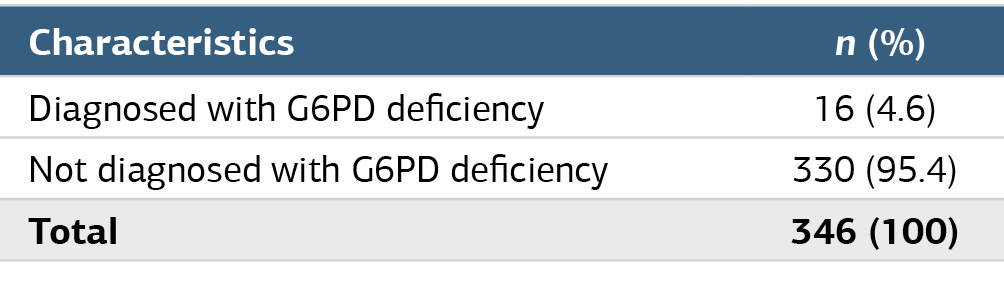
Table 2. Comparison of Bilirubin Levels Between Infants with and without G6PD Deficiency
Figures
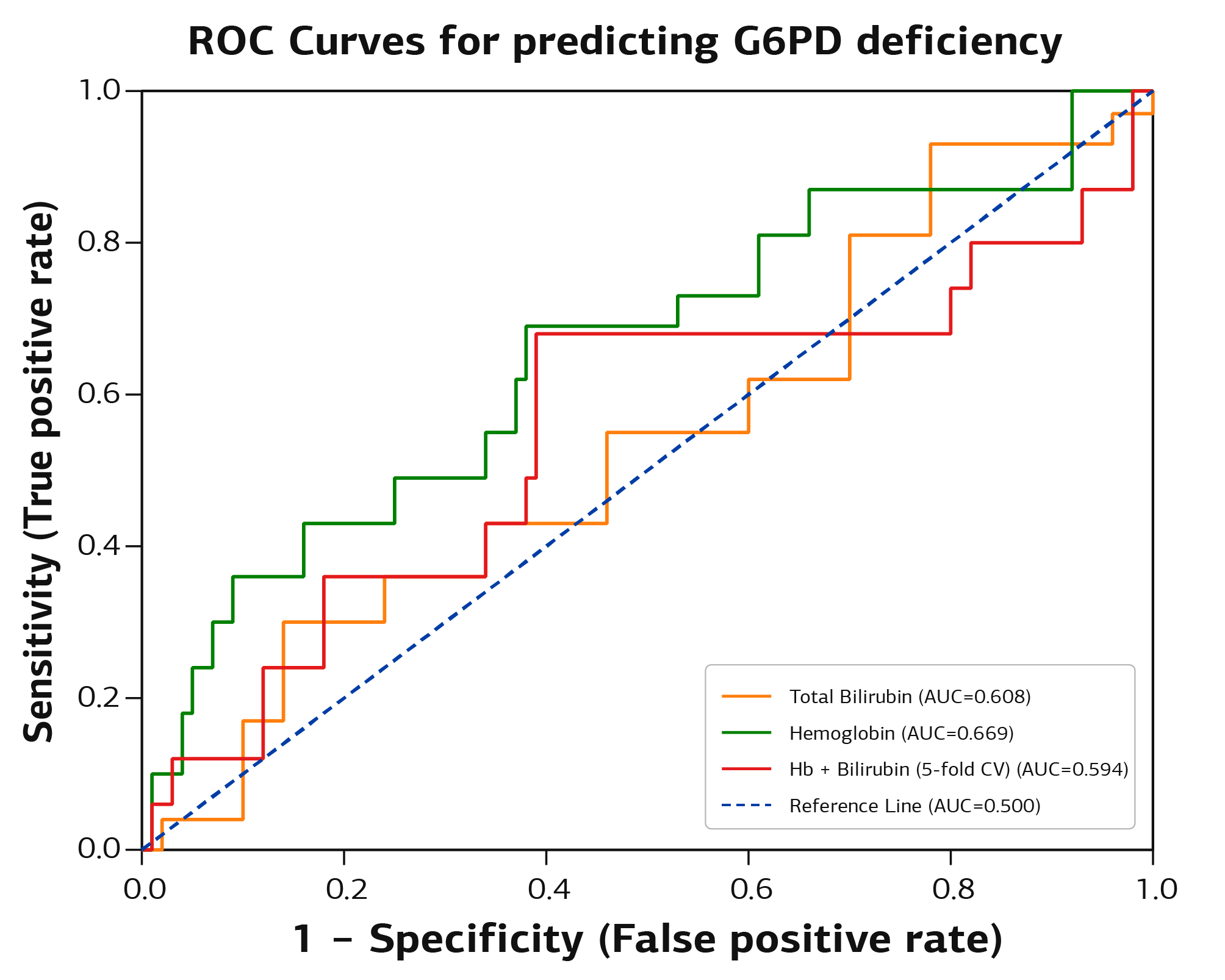
Figure 1. Receiver operating characteristic (ROC) curves of hemoglobin and total bilirubin for predicting G6PD deficiency
Additional Information
Publisher’s Note
Bayrakol MP remains neutral with regard to jurisdictional and institutional claims.
Rights and Permissions

This work is licensed under a Creative Commons Attribution-NonCommercial 4.0 International License (CC BY-NC 4.0). To view a copy of the license, visit https://creativecommons.org/licenses/by-nc/4.0/
About This Article
How to Cite This Article
Yusuf Deniz, Sadrettin Ekmen. Glucose-6-phosphate dehydrogenase deficiency in infants with prolonged neonatal jaundice: prevalence, laboratory findings, and diagnostic performance. Ann Clin Anal Med 2026;17(9):930-934. doi:10.4328/ACAM.50282
Publication History
- Received:
- 07.07.2026
- Accepted:
- 09.08.2026
- Published Online:
- 09.08.2026
- Printed:
- 01.09.2026